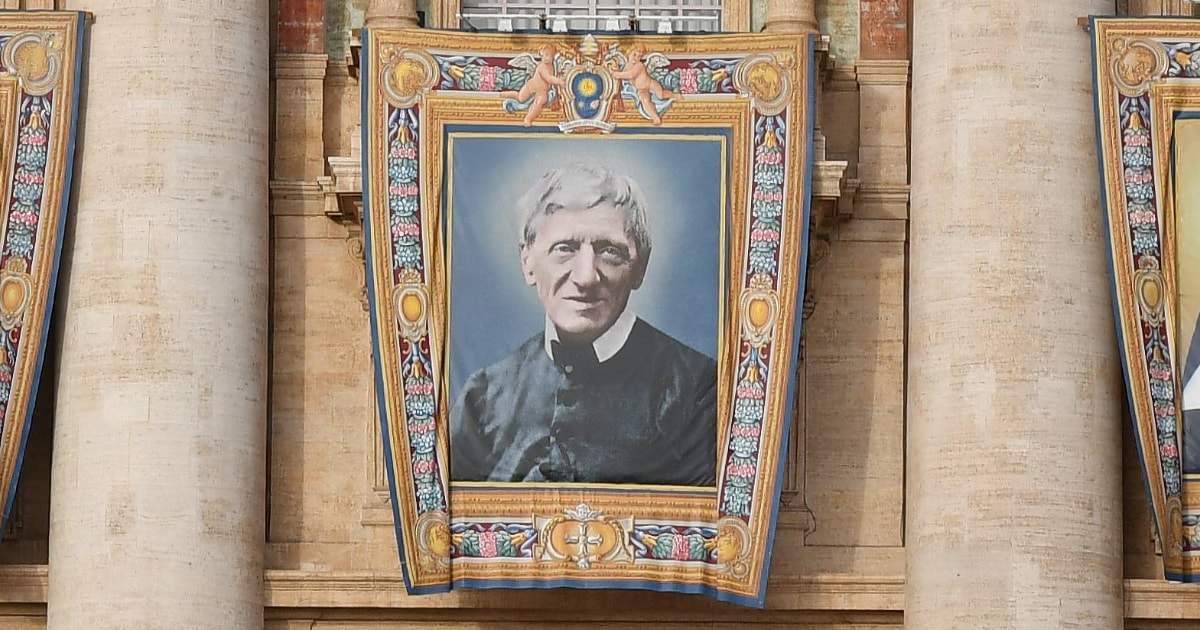
St John Henry Newman occupies a singular place in the story of English Catholicism. This 19th-century convert and cardinal might be the Church’s most erudite thinker since St Thomas Aquinas, and the Irish poet James Joyce went so far as to call him ‘the greatest of English prose writers’. Since November 2025, Newman has also had the distinction of being one of only two English Doctors of the Church, the other being St Bede the Venerable.
While Newman’s prodigious intellectual gifts are well known, less commonly acknowledged are the numerous setbacks and trials that he experienced throughout his long decades of discipleship. By his own admission, the saint’s life seemed to be ‘a history of failures’. Many of these failures are chronicled in Fr Zeno’s masterful biography John Henry Newman: His Inner Life.
Fr Zeno records how Newman’s younger years were marked by difficulty. His father barely escaped bankruptcy in the economic recession that followed the Napoleonic Wars. His youngest and favourite sister, Mary, died suddenly and unexpectedly at the age of 19. Later in life Newman would suffer from having one brother who was troublesome and irreligious, and another who was theologically heterodox and puritanically minded.
In 1820, Newman partially failed his final examinations at Oxford University. Despite his extraordinary intelligence, he had allowed himself to become overworked almost to the point of a mental breakdown. This would be a recurring theme at different points in Newman’s life. He never possessed a strong physical constitution, and he was continually prone to anxiety, stress and burnout. He was also extremely shy, which often led to painful misunderstandings with the people around him.
In 1828, Newman was effectively dismissed as a tutor at Oriel College following a disagreement with the Provost. In 1830, he was removed as secretary of the Church Missionary Society on account of a pamphlet he had written. In 1834, he tried unsuccessfully to become professor of moral philosophy. In 1836, he suffered the devastating loss of one of his closest friends, Richard Hurrell Froude. Froude was just 32 years old, and he had become one of the early leaders of the Oxford Movement.
The 1840s saw the beginning of Newman’s turn towards Rome, which was for him a time of severe interior turmoil and social isolation. In 1841, Newman published his famous Tract 90, which sought to show that the Anglican Thirty-Nine Articles could be interpreted in a Catholic light. The ensuing fall-out led to Newman being publicly condemned by the vice-chancellor of Oxford University as well as by various bishops and theologians.
Newman finally crossed the Tiber in 1845, yet his Catholic years fared no better than his Anglican ones. In 1851, he was appointed president of a new Catholic university in Ireland, which he hoped would become the premier Catholic institution of higher education in the English-speaking world. Seven years later Newman resigned his position when it became clear that the university lacked the funding, accreditation and ecclesiastical support necessary for it to become the success that he had dreamt of.
In 1852, Newman was sued for libel in a case known as the Achilli lawsuit. Perhaps needless to say by now, Newman lost the case. In 1859, he reluctantly consented to become the editor of a journal known as The Rambler, only to be denounced to the Holy See for something he wrote regarding the consultation of the laity in matters of doctrine.
Later in life, Newman continued to face various trials and misunderstandings. He experienced more than one falling-out with his fellow Oratorians, as well as with the senior English Catholic prelates of his day. In a letter he penned in 1882, eight years before his death, Newman lamented: ‘It is the rule of God’s Providence that we should succeed by failure.’
While Newman has sometimes been described as the patron saint of the disappointed, he himself wrote a powerful and moving sermon titled ‘Jeremiah, a Lesson for the Disappointed’. Taking the weeping prophet as the starting point for his reflection, Newman observes that ‘Jeremiah’s ministry may be summed up in three words, good hope, labour, disappointment’. He then proceeds to explain how, from a Christian perspective, ‘resignation [is] a more blessed frame of mind than sanguine hope of present success’.
Newman’s own experience of providence had taught him that the theological virtue of hope cannot be reduced to mere optimism. Optimism naively asserts that all our present endeavours will be prosperous and successful. Hope, by contrast, is a gritty virtue that resigns itself to the truth that many setbacks and obstacles may yet lie between us and our heavenly goal. Near the end of his sermon, Newman offers his listeners words of encouragement: ‘Give not over your attempts to serve God, though you see nothing come of them. Watch and pray, and obey your conscience, though you cannot perceive your own progress in holiness.’
Perhaps the story of Newman’s life can inspire and console us on our own pilgrim journey to our heavenly homeland. Here was a man gifted with extraordinary talents, yet so many of his efforts seemed to come to nothing in the eyes of men. Even so, he never once lost faith in the God who is always at work amid the messiness and confusion of our lives. As he wrote in a letter in 1863, ‘When we get to heaven, if we are worthy, we shall enjoy the sight of how all our failures and disappointments, if borne well, have been for God’s glory and our own salvation’.
Despite his repeated misfortunes, Newman understood that his many trials were simply the context in which God was calling him to become holy: ‘Therefore I will trust Him… He does nothing in vain… He knows what He is about.’ Such was the hard-won confidence of a man who learned, through many disappointments, to entrust everything to God.