August 19, 2026

Nigerian bishop warns Church is losing ‘moral authority’ in Europe

Michael Haynes
More
Related
Min read
share

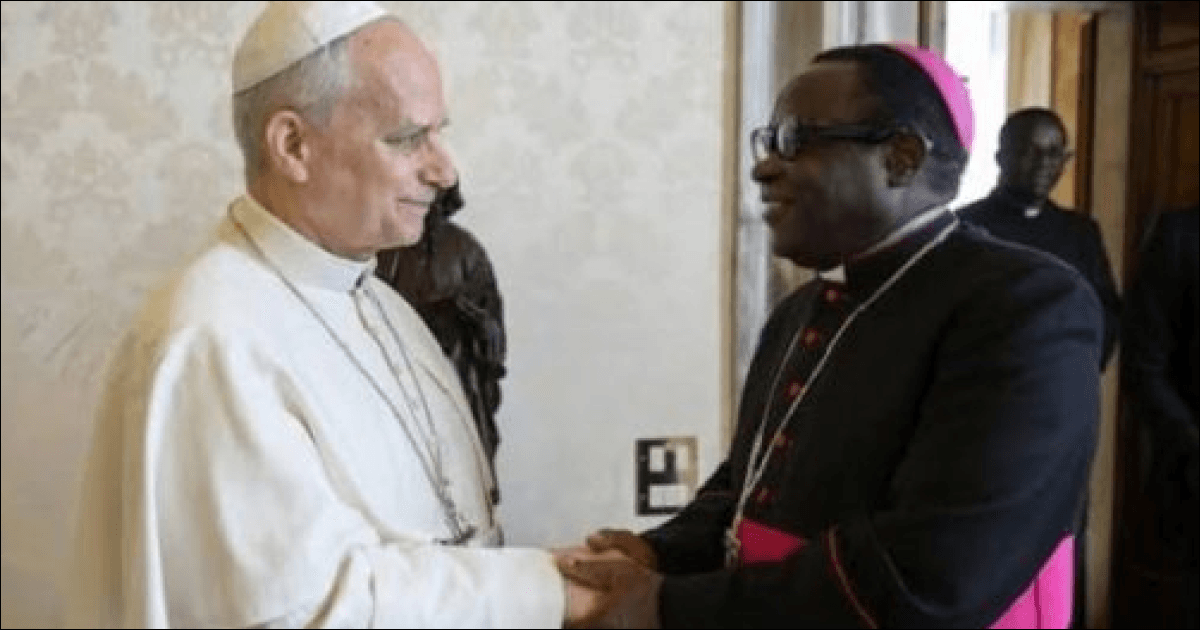
A Nigerian diocesan bishop has warned that the “moral authority” of the Church in Europe has been undermined by the “embrace of secular power”.

Missionaries were once sent from Europe to Africa, but now the relationship is a two-way street with African clergy often having to assist European dioceses due to lack of clergy numbers amid a more general decline of the Faith in the West.  

For Bishop Matthew Hassan Kukah of the Diocese of Sokoto in northern Nigeria, the Church must recall the Apostolic days and the spirit of the first bishops. “We should continue to ask ourselves why and how a group of eleven frightened and largely uneducated men would have taken the gospel to the ends of the earth as the apostles did?,” he said during a recent interview with Catholic World Report.  
The Apostles “did not seek secular power, but relied on the power of the Holy Spirit”, which is where Kukah suggested the Church in Europe has been lacking. Questioned about the notable demise of the faith in once Christian Europe, Kukah opined:

“I think what eroded the moral authority of the Church was the warm romance and embrace of secular power. Once the Church leaves the ground floor where the people are and ascends to the upper chambers of power, it gradually loses its moral force.”

Kukah – who has led his diocese since 2011 – stated that secularism “exploited” the opening provided by the Church. “The Church embraced the world and became like the world it was supposed to change.”

In order to reverse this process, he called for Catholics to understand how to properly “manage the attractions of modernity while ensuring that we leave no room for what both St. John Paul and Pope Benedict warned us about: falling victim to the culture of relativism.”

Nigeria is one of the most dangerous nations on earth to be a Christian. It was named in the 2025 Global Christian Relief (GCR) Red List report as the most dangerous region for Christians in the world. Around 8,000 Christians were murdered by Islamic militants in 2023 by Islamic militants, and more than 50,000 Christians have been killed in Nigeria since 2009.

Given this persecution, any suggestion of Christians moving away from Nigeria to seek a safer existence might be deemed very understandable. However, Kukah warned that the egress of Nigerian Christians out of the country is harming the faith of the next generation. For him, the danger of secularism and loss of faith is even greater than that of religious persecution.

“The diminishing moral force of the Church is a warning to us,” he said. “There is no immunity for this virus” of secularism.  

Kukah lamented the rise in numbers of Catholics sending their children far away for education, to places with “very poor levels of emotional, physical, and spiritual maturity.” This, he said, “poses a danger for the future.”  

While he was not opposed to foreign education – acknowledging himself a recipient of such – he nevertheless urged that the “solid formation of our children and youth” be “uppermost in our minds as parents and pastors” since it is the “only guarantee of the future of the Church.”

This focus on the problem of secularism over Islam and religious persecution is not a passing whim for Bishop Kukah. In his assessment, notwithstanding the figures of persecution in Nigeria, Christians should not run away from their daily reality. “I have remained persistent and consistent in my firm belief that for the real Christian, persecution is not something we should run away from or go around crying for help from abroad,” he said.

Drawing from personal experience of some of his own seminarians being abducted, Kukah noted that the Church’s history is “of innocent blood and martyrdom. We all want to live in peace and safety. However, we know from our history that persecution has only made us strong.”

“Those who threaten to kill for God are idol worshippers, and we know they have mouths that cannot speak, eyes that cannot see, and ears that cannot hear. We cannot fear them because our faith is built on the blood of martyrs.”

Turning 74 at the end of August, Kukah has a well informed insight into the workings of the Church in Nigeria along with the reality of the Church further afield. Prior to his episcopal consecration, he served for ten years as deputy and then lead Secretary General of the Nigerian bishops conference. Kukah also completed post-graduate studies in the University of Bradford, University of London, along with Oxford and Harvard.

He previously served in the (now renamed) Pontifical Council for Inter-religious Dialogue for nearly two decades, and is currently a member of the Vatican’s Dicastery for Integral Human Development.

Michael Haynes is an English journalist in the Holy See Press Corps. He serves as Vatican Correspondent for the Catholic Herald, while readers can follow him at Per Mariam and on X @MLJHaynes.

Continue reading with a free account

Create a free account to read up to five articles each month
Create free account

You have # free articles remaining this month.

Subscribe to get unlimited access.
Sign up

subscribe to the catholic herald today

Our best content is exclusively available to our subscribers. Subscribe today and gain instant access to expert analysis, in-depth articles, and thought-provoking insights—anytime, anywhere. Don’t miss out on the conversations that matter most.
Subscribe