




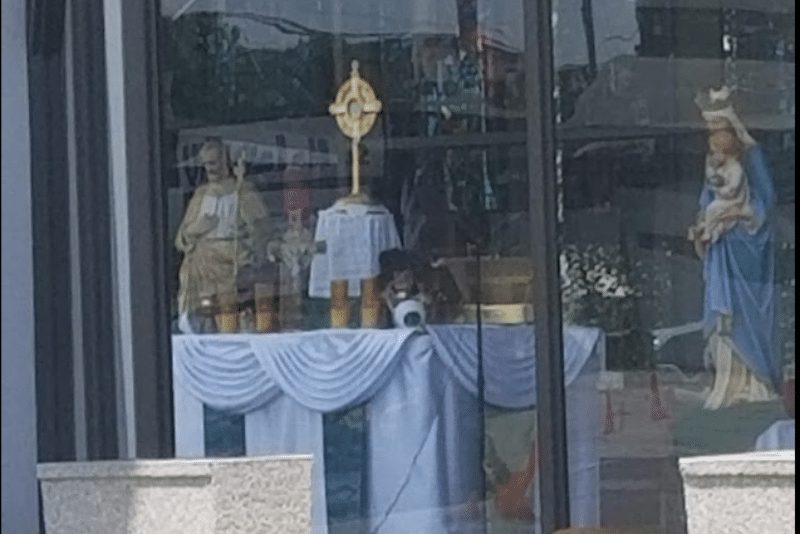
I’d long regarded as shallow irony the curse, “May you live in interesting times.” But thanks to the SARS-COV-2 pandemic, I now appreciate its ironic depths: People actively want to think of themselves as living through “interesting times,” and they thus make the times — well, more interesting. Already in mid-March, as civil authorities warned of imminent interventions, my bishop prudently consulted his advisors. My own contribution was limited: “Don’t say, ‘Masses are cancelled.’ Even if now the faithful can’t be present, the priests will offer the sacrifice of the Mass for the salvation of the world.” The bishop responded with understanding. A few days later, the communications team — some of whom had been in the room — put out press releases headlined, “All Masses Cancelled.” Maybe they feared subtler language would not dissuade the faithful from crowding the locked doors of our churches. But when we had the city’s attention, we missed the evangelical opportunity to describe the efficacy of the Mass as a participation in the sacrifice of Christ, whether or not the faithful attend. And I can’t help wonder if a few preferred the hyperbole as a hint of the drama of their leadership through interesting times. I fared no better in my own parish. I’d only arrived 18 months earlier, and hadn’t moved quickly to install effective wifi, live-streaming equipment, or other audiovisual capture tools, so we were reduced to broadcasting Lenten and Easter Masses pitiably via mobile phones and a parish Facebook feed. Unlike other pastors foresighted enough to buy disinfectant sprayers as soon as the pandemic loomed, I delayed my orders until the sanitizing equipment was on months’ backorder. I got one thing right: When public officials still warned us not to use masks needed by healthcare workers, I intuited that even non-medical masks might help slow contagiousness. On March 25, I asked my staff to wear face coverings. (Some of them still need to report for duty to, say, livestream a Mass or aid vulnerable community residents with groceries or medicine.) But my vindication in later policy was short-lived as the anti-mask movement mounted. Once we were permitted to resume publicly-attended Masses, my brother priests and I celebrated them outdoors, under canopies and shelters. The faithful came in substantial numbers — God bless them! — but many began to practice a liberation theology in which the oppressors were those of us keeping them out of the churches and requiring masks and social distancing. I received a steady stream of articles and petitions:
12:00 AM
Please Don't Say 'All Masses Cancelled': A Parish Priest on Life During the Pandemic
Fr David Poecking

7 min read



Already a subscriber? Sign in
5freearticles every month
Continue reading with a free account. No card needed.
- Five free articles every thirty days, on any device you sign in on
- The Catholic Herald newsletter, every morning
- Subscribe whenever you like for everything: every article and the magazine
Related articles
 Newsroom
Church leaders urge Drumcree dialogue: ‘Too much is at stake’
The Catholic and Church of Ireland Archbishops of Armagh have urged a renewed commitment to peace and reconciliation amid the Drumcree stand-off
Corrie Douglas-Young Newsroom
Thousands of Irish children to join global Rosary campaign
Corrie Douglas-Young Newsroom
TikTok priest urges young people to stand with persecuted Christians
Nathalie Raffray Newsroom
Baby born at 25 weeks reunites with neonatologist two years after leaving hospital
The Catholic Herald Newsroom
Joe Biden honoured by Planned Parenthood after defending abortion rights
Christine Rousselle
subscribe to the catholic herald today
Our best content is exclusively available to our subscribers. Subscribe today and gain instant access to expert analysis, in-depth articles, and thought-provoking insights—anytime, anywhere. Don’t miss out on the conversations that matter most.
Subscribe



