




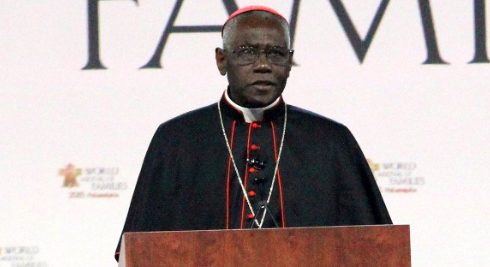
The Vatican will not “impose” a specific liturgical translation on bishops’ conferences, but rather is called to recognise the bishops’ authority and expertise in determining the best way to faithfully translate Latin texts into their local languages, Pope Francis has said in a letter to Vatican officials. In the letter, released by the Vatican on Sunday, Pope Francis said he wanted to correct several points made in a “commentary” which Cardinal Robert Sarah sent him, which was published on several websites in a variety of languages. The letter said that most of the websites “erroneously” cited Cardinal Sarah as the author of the commentary. The commentary looked at changes Pope Francis made to the Code of Canon Law in the process for approving liturgical translations. The changes were ordered in his document, Magnum Principium (“The Great Principle”), which was published in September. Explaining that he wanted to “avoid any misunderstanding”, Pope Francis said the commentary could give an erroneous impression that the level of involvement of the congregation remained unchanged. However, while in the past “the judgment regarding the fidelity to the Latin and the eventual corrections necessary was the task of the congregation,” the Pope said, “now the norm concedes to episcopal conferences the faculty of judging the worth and coherence of one or another term in translations from the original, even if in dialogue with the Holy See”. The commentary attributed to Cardinal Sarah insisted on the ongoing validity of the norms for translation contained in Liturgiam authenticam, the Congregation for Divine Worship’s 2001 instruction on translations. But Pope Francis said the changes to canon law take precedence, and “one can no longer hold that translations must conform in every point to the norms of Liturgiam authenticam as was done in the past”. The texts for Mass and other liturgies must receive a confirmation from the Congregation for Divine Worship, he said, but this “no longer supposes a detailed, word by word examination, except in obvious cases that can be presented to the bishops for further reflection”. Pope Francis also said the fidelity called for in translations has three layers: “first, to the original text; to the particular language into which it is being translated; and, finally, to the intelligibility of the text” by the people.
1:00 PM
Pontiff clarifies translation rules
Staff writers

4 min read



Already a subscriber? Sign in
5freearticles every month
Continue reading with a free account. No card needed.
- Five free articles every thirty days, on any device you sign in on
- The Catholic Herald newsletter, every morning
- Subscribe whenever you like for everything: every article and the magazine
Related articles
 Newsroom
Church leaders urge Drumcree dialogue: ‘Too much is at stake’
The Catholic and Church of Ireland Archbishops of Armagh have urged a renewed commitment to peace and reconciliation amid the Drumcree stand-off
Corrie Douglas-Young Newsroom
Thousands of Irish children to join global Rosary campaign
Corrie Douglas-Young Newsroom
TikTok priest urges young people to stand with persecuted Christians
Nathalie Raffray Newsroom
Baby born at 25 weeks reunites with neonatologist two years after leaving hospital
The Catholic Herald Newsroom
Joe Biden honoured by Planned Parenthood after defending abortion rights
Christine Rousselle
subscribe to the catholic herald today
Our best content is exclusively available to our subscribers. Subscribe today and gain instant access to expert analysis, in-depth articles, and thought-provoking insights—anytime, anywhere. Don’t miss out on the conversations that matter most.
Subscribe



