


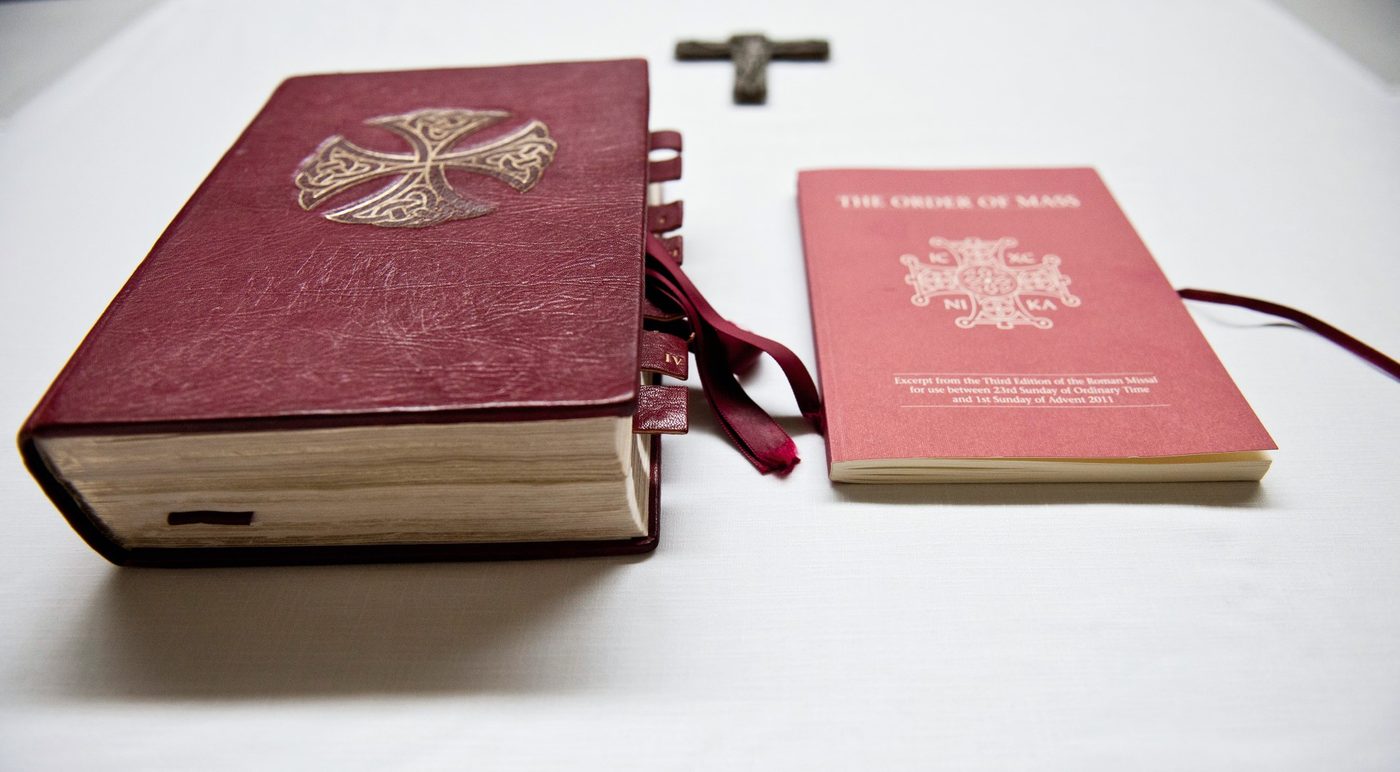
Pope francis has published an apostolic letter giving bishops’ conferences greater control over the translation of liturgical texts. Commentators described the document as a “momentous” shift that could provoke a new era of liturgy wars. The document, entitled Magnum Principium (“The Great Principle”), was released by the Vatican as Pope Francis was travelling in Colombia. It changes two clauses in Canon 838 of the Code of Canon Law. The Vatican will no longer “review” translations submitted by bishops’ conferences, but will “recognise” them. And, rather than being called to “prepare and publish” the translations, the bishops are to “approve and publish” them. Archbishop Arthur Roche, secretary of the Congregation for Divine Worship, said that under the new rules the Vatican’s confirmatio [confirmation] of a translation was “ordinarily granted based on trust and confidence” and “supposes a positive evaluation of the faithfulness and congruence of the texts produced with respect to the typical Latin text”. The document’s title refers to what Pope Francis called the “great principle” of the Second Vatican Council that liturgical prayer “should be accommodated to the comprehension of the people”. Pope Francis said that previous documents issued by the Vatican to guide translations were “general guidelines” that should be followed “as far as possible” to ensure “integrity and accurate faithfulness, especially in translating some texts of major importance in each liturgical book”. He wrote: “While fidelity cannot always be judged by individual words but must be sought in the context of the whole communicative act and according to its literary genre, nevertheless some particular terms must also be considered in the context of the entire Catholic faith, because each translation of texts must be congruent with sound doctrine.” The Pope said the changes would go into effect on October 1, and he ordered the Congregation for Divine Worship to “modify its own ‘Regulations’ on the basis of the new discipline and help the episcopal conferences to fulfil their task as well as working to promote ever more the liturgical life of the Latin Church.” The greater oversight provided earlier by the Vatican was understandable, Pope Francis said, given the supreme importance of the Mass and other liturgies in the life of the Church. The main concerns, he said, were to preserve “the substantial unity of the Roman Rite”, even without universal celebrations in Latin, but also to recognise that vernacular languages themselves could “become liturgical languages, standing out in a not dissimilar way to liturgical Latin for their elegance of style and the profundity of their concepts with the aim of nourishing the faith”. Another teaching of the Second Vatican Council that needed to be strengthened, he said, was a recognition of “the right and duty of episcopal conferences”, which are called to collaborate with the Vatican. Fr John Baldovin, writing for America magazine, said the new document might not be a “bombshell”, but marked a “significant change in direction with regard to who has responsibility for liturgical translations”. He said that, while Rome still had a “final say”, the document gave bishops’ conferences that were at odds with the Vatican over texts “much more breathing room in deciding what is best”. It also made Vox Clara, a commission set up to scrutinise translations prepared by English bishops’ conferences, “redundant”. John Allen, writing at Crux, described the text as “momentous”. “Immediately, this decision doesn’t mean much … Over time, however, it could have significant implications for the look and sound of Catholic worship,” he wrote. Many commentators recalled the battle between bishops’ conferences and the Vatican over the English Mass translation. A 1998 text approved by English-speaking bishops’ conferences was rejected by the Vatican, which “effectively took control of the translation endgame”, according to Allen, leading to the new Mass text approved in 2010. Fr Hugh Somerville-Knapman, writing at his blog Dominus mihi adjutor, said: “The 1998-ers were generally implacably opposed to the 2011 translation. Now they have their chance to turn the tables. If they can browbeat a conference into submission, we might see theology-lite, secular-friendly liturgical texts once again.” Fr John Zuhlsdorf said the changes in the law seemed to be a “middle path”, limiting the role of the Vatican liturgy congregation but still asking that it uphold norms such as Liturgiam Authenticam, which stipulates that texts should be faithful to the original Latin. He predicted that Vatican liturgy officials would face “great pressure” to approve “whatever comes their way. The results could be disastrous.”
1:00 PM
Pope gives bishops more say over Mass texts
Staff writers

4 min read



Already a subscriber? Sign in
5freearticles every month
Continue reading with a free account. No card needed.
- Five free articles every thirty days, on any device you sign in on
- The Catholic Herald newsletter, every morning
- Subscribe whenever you like for everything: every article and the magazine
Related articles
 Newsroom
Church leaders urge Drumcree dialogue: ‘Too much is at stake’
The Catholic and Church of Ireland Archbishops of Armagh have urged a renewed commitment to peace and reconciliation amid the Drumcree stand-off
Corrie Douglas-Young Newsroom
Thousands of Irish children to join global Rosary campaign
Corrie Douglas-Young Newsroom
TikTok priest urges young people to stand with persecuted Christians
Nathalie Raffray Newsroom
Baby born at 25 weeks reunites with neonatologist two years after leaving hospital
The Catholic Herald Newsroom
Joe Biden honoured by Planned Parenthood after defending abortion rights
Christine Rousselle
subscribe to the catholic herald today
Our best content is exclusively available to our subscribers. Subscribe today and gain instant access to expert analysis, in-depth articles, and thought-provoking insights—anytime, anywhere. Don’t miss out on the conversations that matter most.
Subscribe



