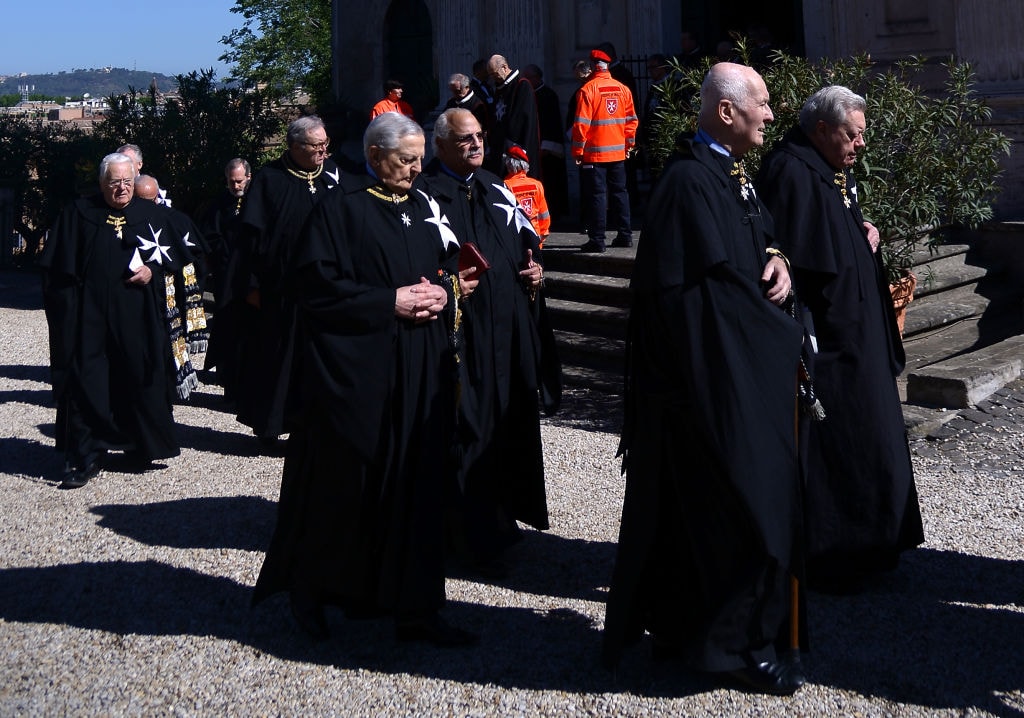

Pope Leo XIV received Cardinal Gianfranco Ghirlanda SJ and Fra’ John Timothy Dunlap, Grand Master of the Sovereign Military Order of Malta, in a private audience on Thursday as efforts continue to resolve tensions over the Order’s constitutional reform.
The meeting comes as questions mount over both its internal governance and the future role of the cardinal patron.
Reports have circulated in recent weeks suggesting that Cardinal Ghirlanda, appointed by Pope Francis in June 2023 with sweeping powers to oversee reform, could in time be replaced. Among those mentioned as possible successors are Cardinal Arthur Roche, prefect of the Dicastery for Divine Worship, and Cardinal Timothy Dolan, Archbishop Emeritus of New York, though sources close to the discussions indicate that no immediate decision on succession formed part of the agenda.
According to the Vatican journalist Diane Montagna, the principal focus of the audience was instead the resolution of disputes concerning specific articles of the Order’s revised Constitutional Charter, drafted under Cardinal Ghirlanda’s supervision.
The Pope is understood to have met first with Cardinal Ghirlanda and Fra’ Dunlap together before holding separate conversations with each.
Nico Spuntoni, Vatican correspondent for iL Giornale, said: “The hearing had been scheduled for the review of certain articles of the Order’s Constitution and to update the text of the Regulations and Comments. The change with Roche, as much as possible, seems more likely once the year of extension of Ghirlanda’s special powers has been overcome.”
Today’s meeting is rooted in the far-reaching process of reform initiated under Pope Francis, culminating in a decisive intervention in 2022. At that time, the late pontiff promulgated a new constitution for the Order and simultaneously appointed a provisional Sovereign Council, revoking the existing leadership structures and calling an Extraordinary Chapter General in January 2023.
At the same time, Cardinal Ghirlanda was entrusted with extensive prerogatives, including the authority “to convene” and “co-preside” over the Extraordinary Chapter General, to define ad hoc regulations, to approve the Constitutional Charter, and to summon the Council of State responsible for electing the Grand Master.
These measures effectively placed the governance of the Order under closer ecclesiastical supervision, marking what observers have described as a profound shift in the balance between its religious character and its claims to sovereignty.
Fra’ John Dunlap, elected Grand Master on 3 May 2023, now exercises his office within this revised framework, in which his authority is more explicitly conditioned by the Holy See. The restructuring has not been without controversy among members of the Order, who have voiced concern that its historic autonomy has been diminished.
Cardinal Ghirlanda previously served as pontifical adviser to the Legionaries of Christ during efforts to address the legacy of abuse associated with its founder. He also played a significant part in the revision of the statutes of Opus Dei, where changes included transferring oversight from the Dicastery for Bishops to the Dicastery for the Clergy, as well as introducing an annual reporting requirement to the Holy See.
The Holy See has consistently maintained that the Order’s sovereignty is not absolute. In promulgating the 2022 reforms, Pope Francis recalled that the Order’s prerogatives “do not constitute the set of powers and prerogatives proper to sovereign entities ‘in the full sense of the word’”, citing a 1953 ruling of the Tribunal of Cardinals. As a religious order, he said, it “depends in its various forms, on the Holy See”.
Despite these attributes, the new constitution has sought to reconcile these two aspects of identity by preserving the Order’s international role while reinforcing its religious character and accountability to the Church. Among the changes introduced were the removal of requirements for noble lineage among senior members and the end of life tenure for Grand Masters, measures intended to broaden participation and modernise governance.
The Sovereign Military Order of Malta, formally known as the Sovereign Military Hospitaller Order of St John of Jerusalem, of Rhodes and of Malta, traces its origins to the eleventh century, when it was established to provide care for pilgrims in the Holy Land. Today it operates as a global humanitarian organisation, with more than 13,000 members, 95,000 volunteers and 52,000 medical personnel engaged in relief work, refugee assistance and healthcare provision across numerous countries.