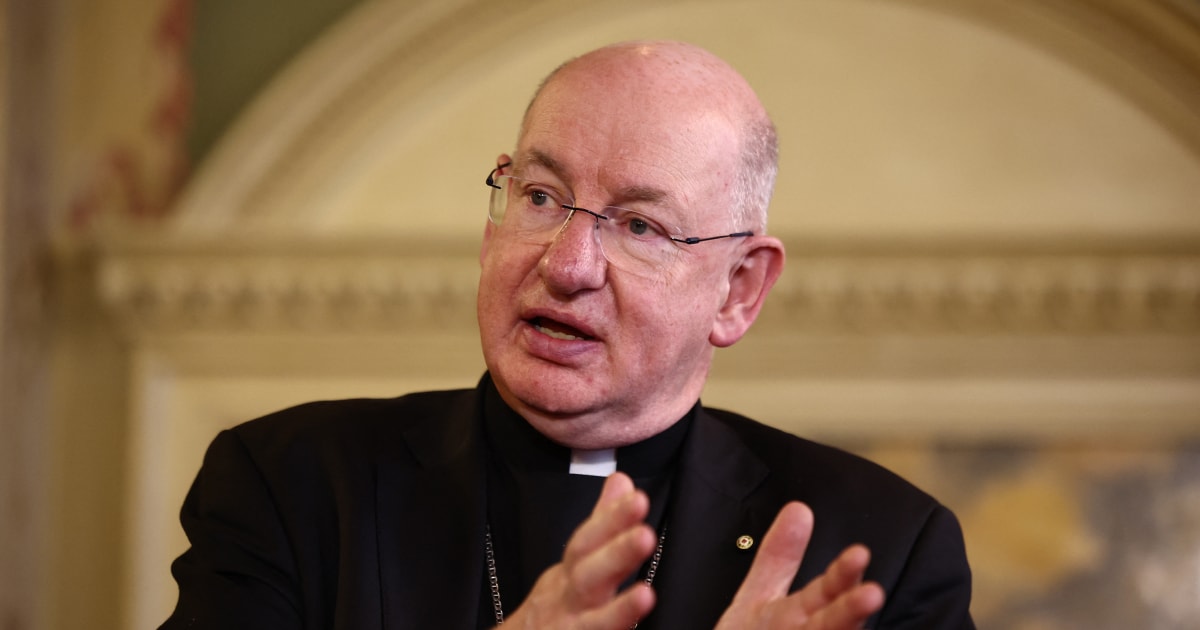




The Archbishop of Westminster has welcomed the publication of Pope Leo XIV’s first encyclical, Magnifica Humanitas, saying it offers an important contribution to the Church’s reflection on artificial intelligence and human dignity.
Archbishop Richard Moth, president of the Bishops’ Conference of England and Wales, said the document addressed “preserving the human person in the age of artificial intelligence”.
The encyclical is Pope Leo’s first since his election and follows one of his earliest interventions as Pope, in which he drew attention to the “profound challenges” that AI will bring to humanity.

Archbishop Moth noted that Pope Leo signed Magnifica Humanitas on May 15, the 135th anniversary of the publication of Rerum Novarum, Pope Leo XIII’s landmark encyclical on the social and economic effects of the Industrial Revolution.
Rerum Novarum is widely regarded as the foundation of modern Catholic social teaching. It promoted workers’ rights and emphasised the rights and duties of both workers and owners.
“The Church’s social teaching in the years since Rerum Novarum contains a great deal to help us in our seeking of the common good,” Archbishop Moth said.
He said that every age faces change, and that the development of AI calls for renewed reflection on both the opportunities and challenges it presents.
“We must respond to these, placing the centrality of humanity above all else, most especially the solidarity that is needed if we are to seek peace amongst peoples,” he said.
“We are made in the image of God and must never forget that we have a responsibility to one another, especially the most vulnerable. Pope Leo reminds us that ‘more powerful does not necessarily mean better.’”
Archbishop Moth said technologies created through human skill should be used in the service of truly human ends.
“Technology must not be used to embed unjust economic systems and abuses of power, but must always be at the service of human development,” he said.
He commended the encyclical “to all Catholics and people of good will” and said it demanded careful study.
The Bishops’ Conference of England and Wales has set up a working group to study the encyclical and examine the issues generated by AI.
Archbishop Moth said the group would approach those questions while “always putting the human at the centre”.