


May 23, 2026

Pope Leo turns to AI while synodality returns to centre stage

Michael Haynes
More
Related
Min read
share

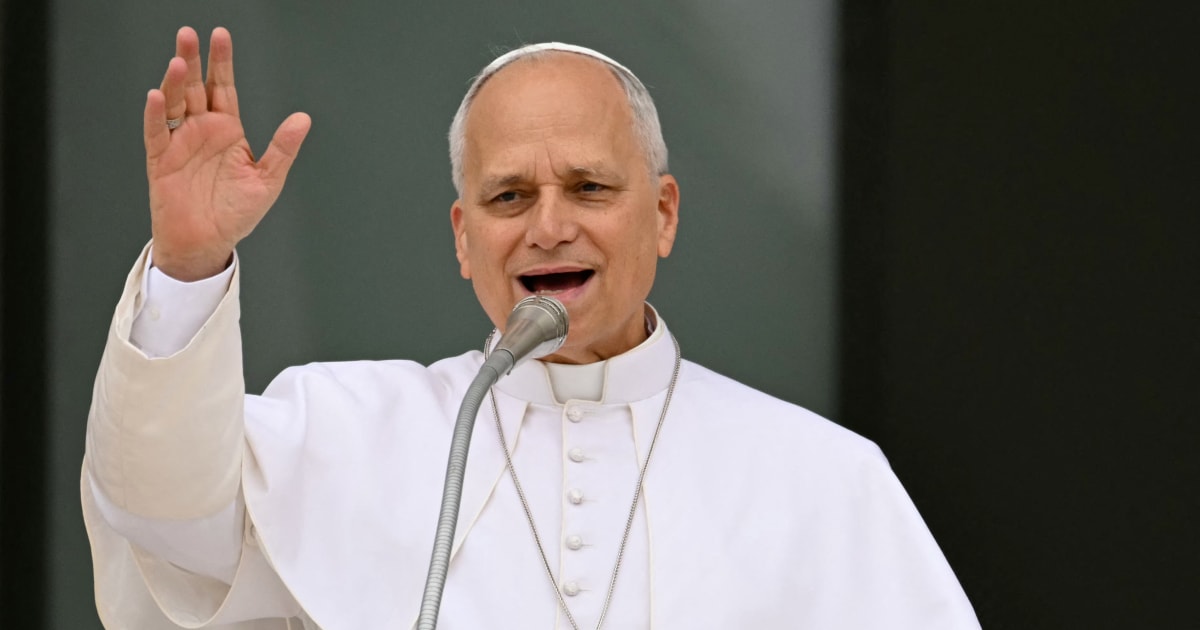
As 25 May approaches, all eyes are now turned with great anticipation to the Pontiff’s first encyclical, while the Vatican announces new foreign travels for Leo and what largely amounts to a re-run of the Synod on Synodality.

The launch of a new Pope’s first major text is always viewed with great interest, as a “tell” of the priorities of the new occupant of the See of Peter, along with his manner of governance. Pope Benedict issued his first encyclical, Deus Caritas Est, after eight months as Pope; Pope Francis published his first, Lumen Fidei, after only three months, partly because it had already been largely written by Benedict. Leo’s comes a little over one year into his reign and, as such, is more in line with his very measured, almost slow, approach to tackling issues. Entitled Magnifica Humanitas, the text is understood to be a weighty tome devoted to “the protection of the human person in the age of artificial intelligence”.
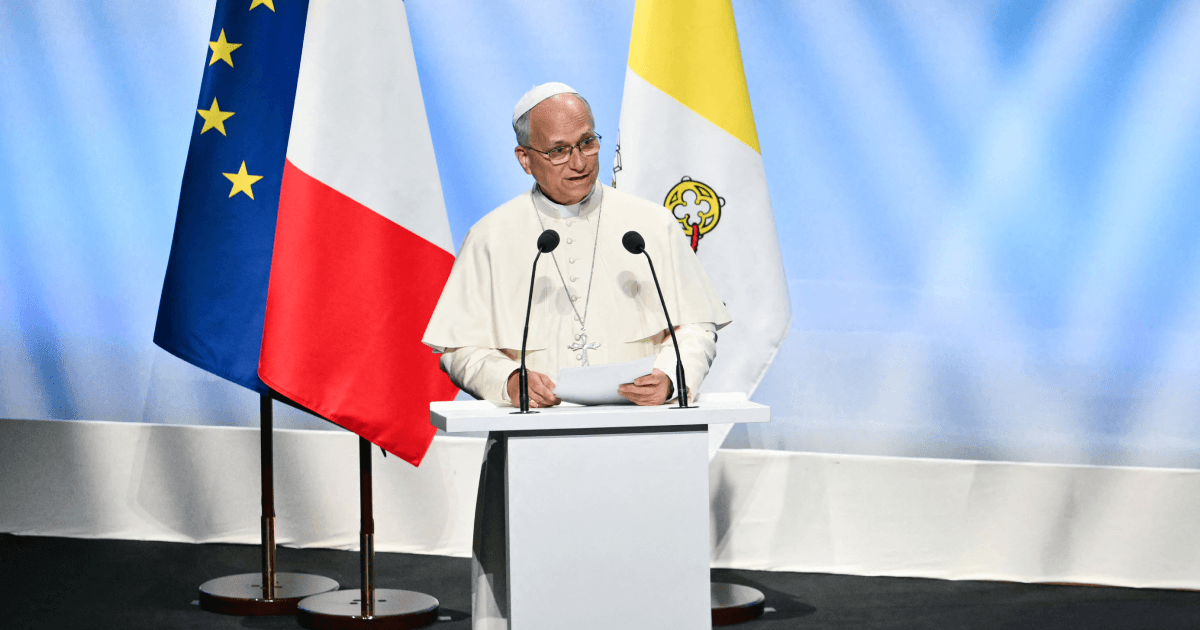
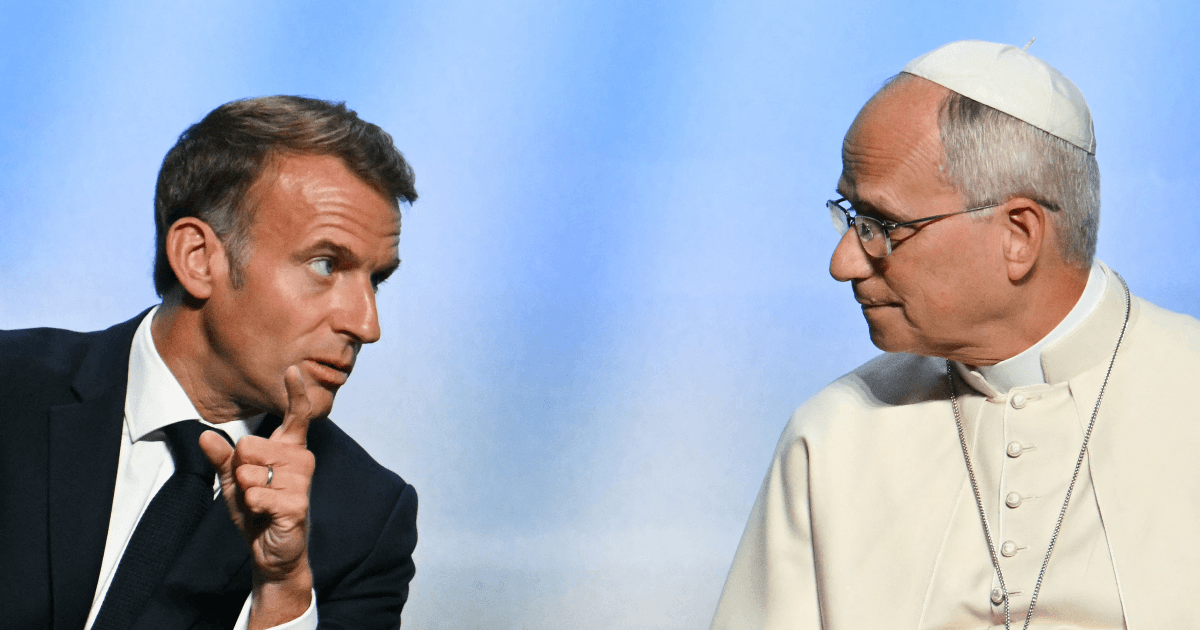
The timeline notwithstanding, the content is no surprise. During his first meeting with the College of Cardinals on 10 May last year, Leo noted the reason for his regnal name was largely “because Pope Leo XIII in his historic encyclical Rerum Novarum addressed the social question in the context of the first great industrial revolution”.

“In our own day,” he added, “the Church offers to everyone the treasury of her social teaching in response to another industrial revolution and to developments in the field of artificial intelligence that pose new challenges for the defence of human dignity, justice and labour.”

The American Pontiff is not opposed to artificial intelligence; indeed, to seek to be so would be almost futile in the rapidly changing digital world. But he is keen to ensure the voice of the Church is heard on an issue which looks set to drastically impact society, workers’ lives and potentially even people’s perception of reality.

Leaks have been fairly non-existent about the text, other than the title and overall theme. Hence, if one is to seek a preview, then Leo’s prior messages on AI give an indication. “If AI is to serve human dignity and the effective provision of healthcare, we must ensure that it truly enhances both interpersonal relationships and the care provided,” he told a conference in November.

Another sign of the Pontiff’s active engagement with the changing world is his formation of an inter-dicasterial Vatican body to look at AI, its uses and the risks it poses to human dignity. Cardinal Michael Czerny, Prefect of the Dicastery for Promoting Integral Human Development, will lead the body for the first year, after which other members of the seven key Vatican offices involved will rotate in pioneering the work. Those involved also include the Congregation for the Doctrine of the Faith, the Dicastery for Culture and Education, the Dicastery for Communication, the Pontifical Academy for Life, the Pontifical Academy of Sciences and the Pontifical Academy of Social Sciences.

Attention given by the Pontiff in such a manner is welcome. The use of AI to twist reality through the creation of images has already revealed the power it has to alter the perception of the world for many. AI is beyond an emerging technology and reality: it is already front and centre.

However, some Vatican observers have questioned the order of priority. Certainly the Church should make Her voice heard on the issue, but given the wide array of doctrinal and moral crises already filling Leo’s roster, the topic of AI is – for some – a disappointing choice.

Doubtless fuelling that concern about the integrity of doctrine in an age of endless questioning will have been the news emerging from the General Secretariat of the Synod of Bishops this week. In order to continue the implementation phase of the Synod on Synodality – the synod which formally closed in 2024 – the Secretariat has drawn up fresh plans for the entire Church. These largely mirror the process seen during the synod. Starting in January, local or diocesan assemblies are to be held, before national and then continent-wide assemblies. All such events will culminate in the Synodal Assembly being held in the Vatican in October 2028.

Why is this happening? According to the Secretariat, the threefold level of assemblies are to answer the following question with two written documents each: “In light of the journey undertaken after the conclusion of the 2021-2024 Synod, and with a view to offering its fruits as a gift to the other Churches and to the Holy Father: what concrete form of a missionary synodal Church and what new paths of synodality are emerging in your community?”

Given the time since the close of the Synod on Synodality, and the change in atmosphere which has come with the arrival of Pope Leo, many of the less-convinced synod members have voiced their concerns about the process. The Synod Secretariat’s current officials live and breathe synodality, although few have been able to define it. Yet they may well find that bishops around the world are reluctant once again to devote time and money to staging events that are essentially a re-run of those held just a few years prior.

One prelate who is particularly pleased is Cardinal Jean-Marc Aveline, the president of the French bishops’ conference. On 16 May, the Vatican formally announced Leo’s visit to France from 25-28 September. The first state voyage of a Pontiff to France since Benedict XVI visited in 2008, Leo’s trip to the eldest daughter of the Church will probably take in Lourdes and perhaps even the reconstructed Notre-Dame Cathedral in Paris, although details are yet to be formalised. Speaking to Vatican News, Cardinal Aveline commented that Leo is “coming to listen to us, encourage us, and also give us a roadmap so that we may continue our mission in communion with the universal Church”.

Meanwhile, a diplomatic incident was suggested by some on social media this week, who – as often happens – dip into Vatican politics occasionally in order to farm engagement. Iran’s ambassador to the Holy See, Mohammad Hossein Mokhtari, was awarded the title of Knight or Dame Grand Cross of the Order of Pius IX on 12 May.

Iranian media claimed the award was the Vatican’s way of backing the regime, though the Vatican and the US Embassy to the Holy See both dispelled this notion. Rather, the award was a customary honour given to ambassadors after two years’ accreditation at the Holy See, and Mokhtari was among 13 recipients this week.

While current links with Iran may be particularly scrutinised at this time, the Vatican’s desire not to jeopardise its international diplomatic relations, nor descend into political moves practised by other countries, demonstrates its method of diplomacy, which makes the city state a respected figure in the global arena.

Continue reading with a free account

Create a free account to read up to five articles each month
Create free account

You have # free articles remaining this month.

Subscribe to get unlimited access.
Sign up

subscribe to the catholic herald today

Our best content is exclusively available to our subscribers. Subscribe today and gain instant access to expert analysis, in-depth articles, and thought-provoking insights—anytime, anywhere. Don’t miss out on the conversations that matter most.
Subscribe



