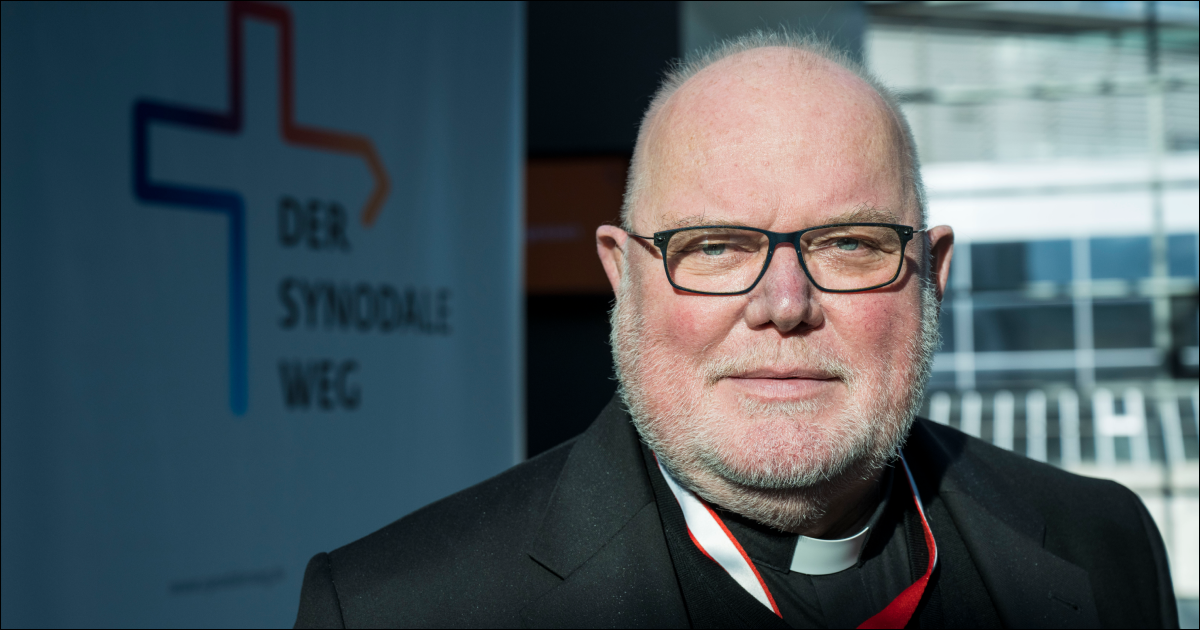


Cardinal Reinhard Marx has been reappointed as coordinator of the Holy See’s Council for the Economy, as Pope Leo named new cardinal and lay members to the Vatican’s economic oversight body.
As announced via the Holy See Press Office on August 11, the German cardinal was confirmed as coordinator of the Council by the Pope. He has held the role since the Council's inception in 2014. The cardinal’s right-hand woman – Professor Charlotte Kreuter-Kirchhof – was also confirmed in her role as deputy coordinator, after having joined in 2021.
Marx previously offered his resignation as Archbishop of Munich and Freising in 2021, but Pope Francis did not accept it. Turning 73 next month, Marx appears set to remain a fixture around the Vatican, which is notable given that he has championed same-sex blessings in a manner which exceeds even that envisioned by Fiducia Supplicans, and has even earned the direct critique of Pope Leo in doing so.
Today’s news continues Leo XIV’s gradual reworking of the various offices of the Roman Curia, something which he is taking a very measured approach to.
The overhaul of the Council for the Economy included a mix of new appointments and confirmation of some existing members. Among the other already existing members who return to serve in the Council are Cardinals Odilo Pedro Scherer, Gérald Cyprien Lacroix and Joseph William Tobin.
England has two members in the Council, with Monsignor Brian Edwin Ferme – an Australian priest incardinated into the Diocese of Portsmouth – serving as the Council’s secretary, and Dr Leslie Jane Ferrar who is trustee of the Archdiocese of Westminster.
The newly appointed cardinal members of the Council include: Cardinal Ladislav Nemet, the archbishop of Belgrade; Cardinal Jean-Paul Vesco, O.P., the archbishop of Algiers; Cardinal Roberto Repole, the archbishop of Turin and bishop of Susa.
Seven cardinals thus are present in the Council, meaning that three others have left the office after having completed their five year terms. The exiting prelates are Cardinals Anders Arborelius, Peter Erdo and Guiseppe Petrocchi. Cardinal Raphael Sako is also no longer a member, due to not being reconfirmed in the post, although his five year term would not have expired until next year.
Pope Leo also appointed four new lay members of the Council for the Economy, keeping in continuity with the original formation style of the office as envisaged by Pope Francis when he established it in 2014.
The Council for the Economy is closely linked to, but separate from, the Secretariat for the Economy. As outlined in the motu proprio which announced both offices, the Council is a body which has “oversight for the administrative and financial structures and activities of the dicasteries of the Roman Curia, the institutions linked to the Holy See, and the Vatican City State.”
It has responsibility for establishing policies for the Secretariat to operate under. However the Secretariat – whilst required to submit to the Council’s financial examination – answers directly to the pope.
Cardinal George Pell was famously the inaugural prefect of the Secretariat for the Economy, with the role currently held by Mr. Maximino Caballero Ledo.
The murky and confusing world of Vatican finances has been a subject of intense scrutiny for many years, especially given the controversy surrounding the former Vatican sostituto Cardinal Angelo Becciu and the multi-year lawsuit against the Vatican filed by former Vatican auditor general Libero Milone. Financial reforms which Pell and Milone tried to enact were reportedly opposed by Becciu, and trust in the Holy See’s financial system was further weakened by a series of punitive measures enacted by Pope Francis against curial cardinals. Leo XIV quietly overturned that measure earlier this year.
Marx has mostly avoided being publicly entangled in the swirling scandals of Vatican finances, but his stance on dogma and morals have themselves been a cause of controversy. The German prelate has been a leading voice calling for female ordination and married priests, alongside championing LGBT issues and questioning the Church’s teaching on homosexuality.
Despite his public advocacy for such issues, Marx has remained a fixture in Rome, with his confirmed term now set to last for another five years as per curial norms.
Praising Pope Leo on the anniversary of his papal election, Marx described the American Pope as being “in clear continuity with Pope Francis, who always drew the world’s attention to those pushed to the margins and worked tirelessly for peace and reconciliation.”
In recent weeks, as the Catholic Herald reported, some 26 priests of his diocese issued a public letter to Marx, questioning his push for same-sex blessings. They accused him of asking them to choose between obeying their local ordinary or the Pope. Marx sought to diffuse the immediate resistance by asking the priests to trial the measure for a year before reaching a final conclusion.
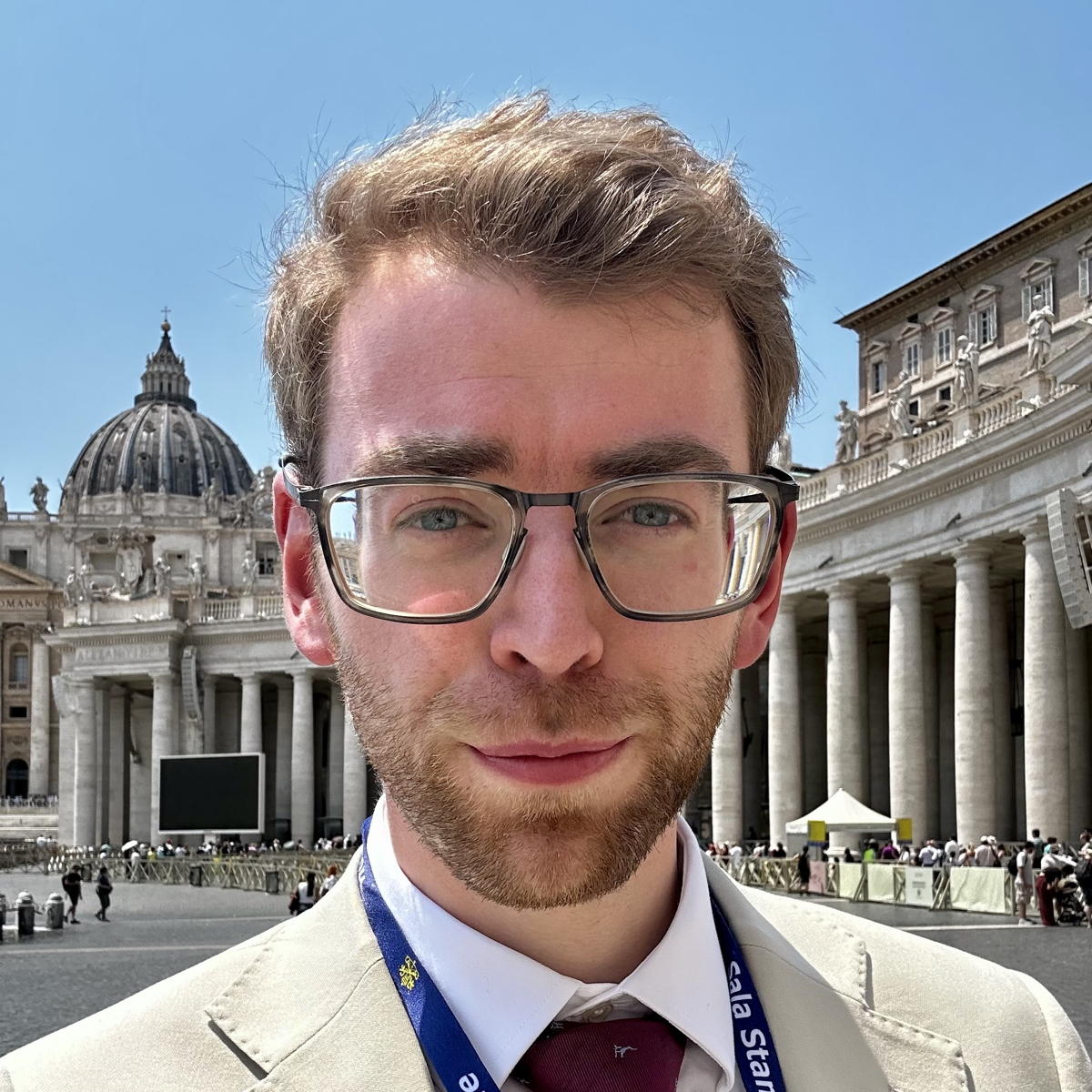
Michael Haynes is an English journalist in the Holy See Press Corps. He serves as Vatican Correspondent for the Catholic Herald, while readers can follow him at Per Mariam and on X @MLJHaynes.