January 7, 2026
January 6, 2026

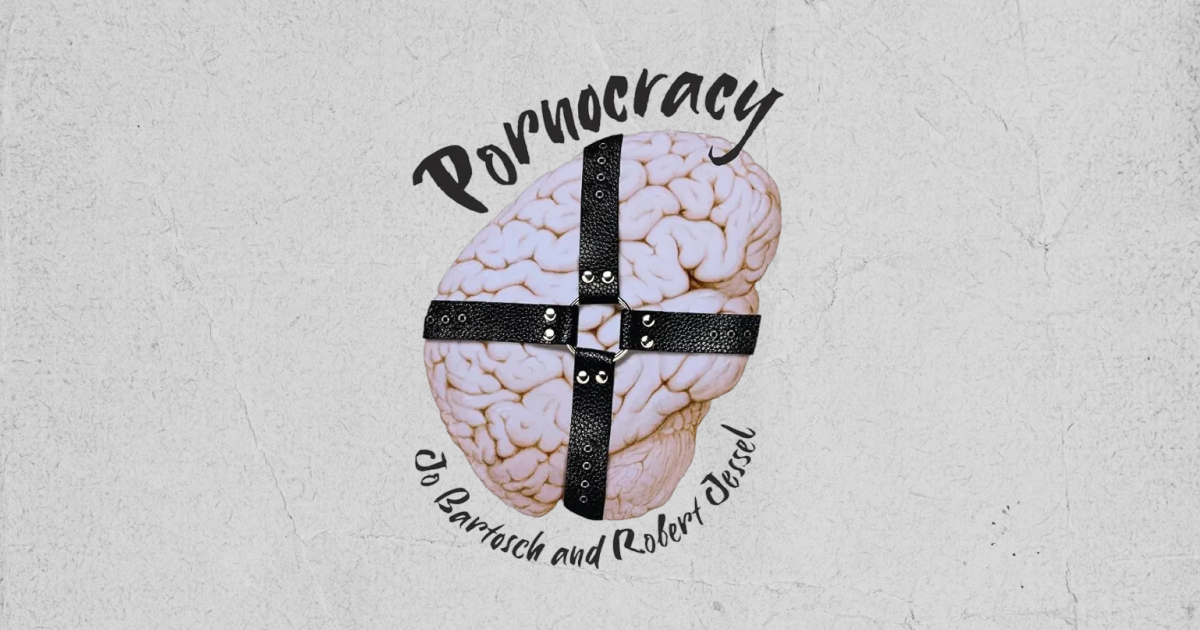
Review: Pornocracy by Jo Bartosch and Robert Jessel

Min read
share

Some of the most effective revolutions occur without a single gunshot ever being fired. Indeed, “from rewiring our brains and normalising sexual violence to shaping new protest movements, the pornographic revolution has achieved a stunning and near-total victory”.

This is the grim new regime which Jo Bartosch and Robert Jessel’s new volume Pornocracy tears apart in excruciating detail. Through no fault of its authors, their slim volume is gruelling from start to finish. Within the first few pages, readers learn that explicit footage simulating rape, torture, incest, and paedophilia is wildly popular online, and that millions of people are addicted to viewing it.

Despite this, the authors lament that campaigning to end pornography is just as unpopular as the erstwhile push against the Atlantic slave trade. Like slavery, pornography concerns the buying and selling of people, and is similarly framed by its defenders as a “private matter”, or even a human right. But pornography is no more a form of “free expression” than an ISIS beheading video.

Bartosch and Jessel do not merely explain how nasty pornography is, but its devastating scale. An entire generation that likely viewed this material before having their first kiss has already reached adulthood. Pornography use was cited as a factor in 56 per cent of divorces in a survey of American divorce attorneys in 2002–2003. How dire are these statistics in our smartphone age? This book cannot answer, as wherever pornography rears its head, vagueness and mystery follow suit. We do not know how much money this pseudo-industry really makes, nor precisely how much harm it inflicts, because the operation does not benefit from such transparency. Nor is the average addict always willing to admit what can quickly be deleted from their browsing history, if not their memory. In the words of Surveillance Capitalism author Shoshana Zuboff, “if the service is free”, as the majority of internet pornography is, “you are the product being sold”.

The authors also highlight how modern social codes are disproportionately keen to police much more dubious and less significant aspects of human behaviour, termed “microaggressions”, rather than tackle vast problems of exploitation such as pornography and prostitution. What Bartosch terms “zombie feminism” is programmed to defend the commodification of sexuality as a matter of personal taste, or even liberation. There is also the fact that clamping down on these billion-pound systems, which know well how to hook politicians and consumers alike, is more difficult than attempting to ostracise individuals as hateful of sex, women, same-sex-attracted people, or “fetishes” for daring to question them. Policing language is easier than policing genuine violent or sexual crime.

Unlike many works written from an expressly feminist angle, this book does not wander into misandry, but instead sensibly frames the “pornocracy” we live under as a “threat to the species” as a whole. Children, in particular, having easy access to pornography is nothing less than grooming on a global scale, substituting youthful innocence and joy with cold, sterile self-abuse.

On the book’s penultimate page, Jessel asks: “How did we lose the idea that it’s shameful to turn humans into objects?” To Herald readers, the answer should be obvious. I do not think that this ideal was ever universally held and honoured in the post-lapsarian world, but the biblical vision of human beings created in God’s image, spread globally through Christian evangelisation, has been the single greatest historic force for it. It may not always be palatable to liberals, but perhaps the single greatest campaigner against the misery of prostitution and extreme poverty is the Catholic Church.

In Julie Bindel’s 2017 The Pimping of Prostitution: Abolishing the Sex Work Myth, the pro-abortion feminist and self-described “political lesbian” describes how many vulnerable people trapped in grim, third-world brothels to avoid starvation simply have packets of condoms and pills thrown at them by “progressive” NGOs. Bindel admits that the Christian charities she is often at odds with are sometimes the only ones offering these desperate victims an exit route.

Bartosch references lesbian separatism, the idea of forming women-only societies, as one possible response to mass male pornography use. She does, however, admit this would “not necessarily be a desirable model of society”, perhaps the understatement of the century. The relationship ancien régime was not perfect, because mankind is not, but it pushed people to build relationships with others, which generally involves effort, uncertainty, and self-sacrifice. This may be far more hassle than staring at a “cluster of pixels”, but it is evidently superior.

The ever-mutating secular “rules” regarding consent are a pale, and often dangerous, imitation of the Catholic conception of “love and responsibility”, the titular values of Saint John Paul II’s landmark work on human sexuality. They are an attempt to re-erect the standards torn down by post-war culture, but without confronting the inconvenience of Christian teaching on contraception, abortion, and chastity. Unless we honour Catholic teaching on marriage, our sexual dynamics are bound to fixate on fleeting pleasures rather than building lasting bonds and families. While Bartosch and Jessel do not come to such a conclusion in this book, their work is an excellent summary of precisely why greater confidence in the Catholic approach to sexuality is needed. The question is how exactly this can be done in the technological age.


Some of the most effective revolutions occur without a single gunshot ever being fired. Indeed, “from rewiring our brains and normalising sexual violence to shaping new protest movements, the pornographic revolution has achieved a stunning and near-total victory”.

This is the grim new regime which Jo Bartosch and Robert Jessel’s new volume Pornocracy tears apart in excruciating detail. Through no fault of its authors, their slim volume is gruelling from start to finish. Within the first few pages, readers learn that explicit footage simulating rape, torture, incest, and paedophilia is wildly popular online, and that millions of people are addicted to viewing it.

Despite this, the authors lament that campaigning to end pornography is just as unpopular as the erstwhile push against the Atlantic slave trade. Like slavery, pornography concerns the buying and selling of people, and is similarly framed by its defenders as a “private matter”, or even a human right. But pornography is no more a form of “free expression” than an ISIS beheading video.

Bartosch and Jessel do not merely explain how nasty pornography is, but its devastating scale. An entire generation that likely viewed this material before having their first kiss has already reached adulthood. Pornography use was cited as a factor in 56 per cent of divorces in a survey of American divorce attorneys in 2002–2003. How dire are these statistics in our smartphone age? This book cannot answer, as wherever pornography rears its head, vagueness and mystery follow suit. We do not know how much money this pseudo-industry really makes, nor precisely how much harm it inflicts, because the operation does not benefit from such transparency. Nor is the average addict always willing to admit what can quickly be deleted from their browsing history, if not their memory. In the words of Surveillance Capitalism author Shoshana Zuboff, “if the service is free”, as the majority of internet pornography is, “you are the product being sold”.

The authors also highlight how modern social codes are disproportionately keen to police much more dubious and less significant aspects of human behaviour, termed “microaggressions”, rather than tackle vast problems of exploitation such as pornography and prostitution. What Bartosch terms “zombie feminism” is programmed to defend the commodification of sexuality as a matter of personal taste, or even liberation. There is also the fact that clamping down on these billion-pound systems, which know well how to hook politicians and consumers alike, is more difficult than attempting to ostracise individuals as hateful of sex, women, same-sex-attracted people, or “fetishes” for daring to question them. Policing language is easier than policing genuine violent or sexual crime.

Unlike many works written from an expressly feminist angle, this book does not wander into misandry, but instead sensibly frames the “pornocracy” we live under as a “threat to the species” as a whole. Children, in particular, having easy access to pornography is nothing less than grooming on a global scale, substituting youthful innocence and joy with cold, sterile self-abuse.

On the book’s penultimate page, Jessel asks: “How did we lose the idea that it’s shameful to turn humans into objects?” To Herald readers, the answer should be obvious. I do not think that this ideal was ever universally held and honoured in the post-lapsarian world, but the biblical vision of human beings created in God’s image, spread globally through Christian evangelisation, has been the single greatest historic force for it. It may not always be palatable to liberals, but perhaps the single greatest campaigner against the misery of prostitution and extreme poverty is the Catholic Church.

In Julie Bindel’s 2017 The Pimping of Prostitution: Abolishing the Sex Work Myth, the pro-abortion feminist and self-described “political lesbian” describes how many vulnerable people trapped in grim, third-world brothels to avoid starvation simply have packets of condoms and pills thrown at them by “progressive” NGOs. Bindel admits that the Christian charities she is often at odds with are sometimes the only ones offering these desperate victims an exit route.

Bartosch references lesbian separatism, the idea of forming women-only societies, as one possible response to mass male pornography use. She does, however, admit this would “not necessarily be a desirable model of society”, perhaps the understatement of the century. The relationship ancien régime was not perfect, because mankind is not, but it pushed people to build relationships with others, which generally involves effort, uncertainty, and self-sacrifice. This may be far more hassle than staring at a “cluster of pixels”, but it is evidently superior.

The ever-mutating secular “rules” regarding consent are a pale, and often dangerous, imitation of the Catholic conception of “love and responsibility”, the titular values of Saint John Paul II’s landmark work on human sexuality. They are an attempt to re-erect the standards torn down by post-war culture, but without confronting the inconvenience of Christian teaching on contraception, abortion, and chastity. Unless we honour Catholic teaching on marriage, our sexual dynamics are bound to fixate on fleeting pleasures rather than building lasting bonds and families. While Bartosch and Jessel do not come to such a conclusion in this book, their work is an excellent summary of precisely why greater confidence in the Catholic approach to sexuality is needed. The question is how exactly this can be done in the technological age.

share

subscribe to the catholic herald today

Our best content is exclusively available to our subscribers. Subscribe today and gain instant access to expert analysis, in-depth articles, and thought-provoking insights—anytime, anywhere. Don’t miss out on the conversations that matter most.
Subscribe