


June 2026 is here, which means a new panoply of rainbow flags dotting our walkways, overtly homoerotic advertisements in our media and every logo-design company getting its annual boost from major corporations. Or does it? Pride Month is upon us, but it would seem that many major corporations have not been informed.
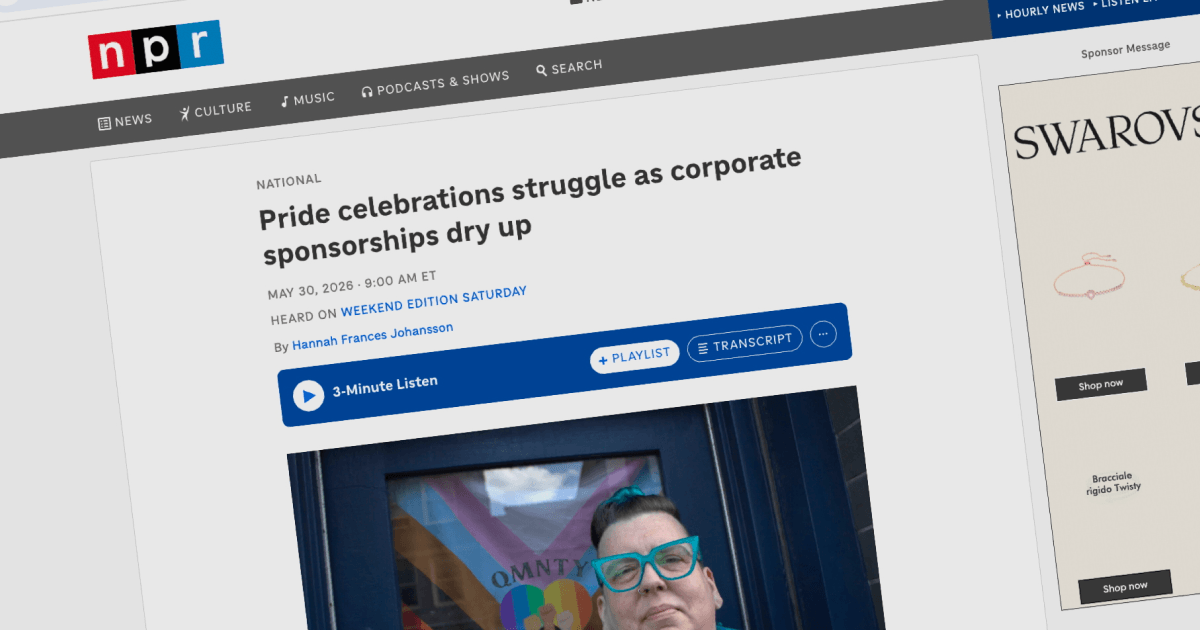
NPR has reported that Pride events across the US have been affected by a drop in corporate sponsorship this year. It would be natural to infer from Pride Month’s decline that progressivism is on the retreat, that those who are still marching have simply not received the memo that it is over.

As conservatives, it can be easy to look at lower Google search trends, decreases in corporate sponsorship or political victories as signs of success. These institutional wins are important, so long as they flow from the interior and are not merely an exterior show. Pride Month and the progressive agenda will only really end when the hearts of ordinary men and women change, not simply when our political champion holds the reins of power.
There is a danger that, with this decrease in Pride and LGBTQ activity, more conservatives will grow overconfident. Not only does this decrease not mean we have won the argument; on the contrary, the Right has lost one of its biggest talking points, while at the same time suffering criticism from all sides. All that this decrease in Pride spending indicates is that savvy businessmen understand how to respond to the market.
There has been a sentiment since Donald Trump returned to office, which he himself encouraged, that conservative ideals were now entering a golden age. My fear is that we do not see how far our neighbours are from us in their hearts. It may prove less a golden age than a golden sky at sunset, before the darkness sets in.
Cultural movements often survive political setbacks because they continue shaping institutions and public opinion long after electoral defeats. This is especially true of the Left. After Ronald Reagan’s election in the 1980s, many conservatives assumed that the cultural battle had largely been won. Meanwhile, progressives continued their work through universities, media, entertainment and cultural organisations. While conservatives focused on elections, progressives focused on forming future journalists, teachers, entertainers and professionals.
Decades later, many of the social assumptions that seemed settled had been transformed. Whatever one thinks of those changes, the lesson is clear: political victories are temporary, while cultural formation is enduring.
Let me not be mistaken: I am very glad that funding for Pride and other progressive initiatives is declining. It was only a short while ago that one’s job, reputation or public standing could be at risk for criticising such events. This is a welcome respite.
However, much that ought to be built remains undone during this period of relative calm precisely because we mistake a breather for a knockout. Cultural victories can be wasted if their champions fail to build lasting alternatives. The concern comes when the bell is rung and a new round begins.
As Catholics, we work for the transformation both of cultures and of hearts – not merely for friendlier corporations, but for the pursuit of the common good. If cultural transformation is the goal, then Christian conservatives should devote their time to investing in families, churches, schools, local communities and personal relationships. We should continue to boycott those corporations that have not responded to the changing tide. It is good that social progressives appear to be on the retreat, but that should motivate us to continue building our movement.
We ought to do more than oppose progressivism; we ought to offer a more compelling vision in its place. We must be united by a shared understanding of the human good, rooted in Christ and His Church. Such a vision is realised in the ordinary relationships that shape our lives. Rooted in the home, it recognises the dignity and value of every person and extends outward into friendships, workplaces and local communities. Corporate culture itself is downstream from these deeper formations.
For that reason, those who hold positions of influence within institutions should use this time to promote like-minded and capable individuals, and to oppose support for progressive initiatives that conflict with their convictions. If conservative Christians wish to see lasting change, they must be willing not only to critique institutions from the outside but also to shape them from within. That means articulating a positive vision of the good life and having the confidence to defend it in professional contexts where prevailing assumptions may point in a different direction.
Pride Month may be on the wane this year. Conservatives should remain wary of assuming that this represents a lasting cultural victory. The true measure of success is not how much less a corporation spends on Pride advertisements, nor which party currently occupies the White House. The real measure is whether ordinary people are being persuaded. If the culture war is ultimately about beliefs, then the battle is won not in boardrooms or campaign headquarters, but in the hearts and minds of our neighbours.

.png)