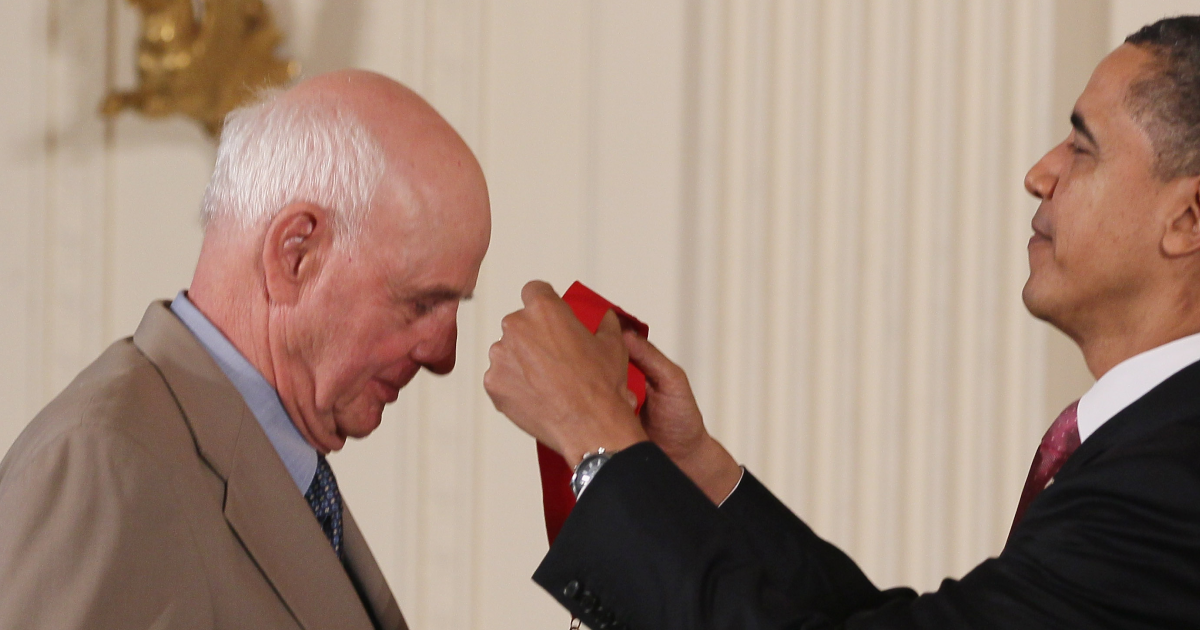


When the provisional agreement between the Holy See and Beijing was first announced in 2018, a photograph from a diocese in south-eastern China circulated widely among Catholics. In the image, representatives of the Vatican stood beside two bishops – one long associated with the state-sanctioned Church, the other recognised by Rome but previously part of the underground community. The moment was widely interpreted as a sign of reconciliation and a hopeful indication that decades of division might finally be drawing to a close.
In the years that followed, however, the story of that same diocese took a far more complicated turn. The bishop who had long led the underground community eventually stepped aside to make way for the previously excommunicated bishop associated with Patriotic structures, a move widely understood as a sacrifice for the sake of unity. Yet after the agreement, the retired bishop himself was not recognised by the authorities because he refused to join the Chinese Patriotic Catholic Association. Reports from local Catholics describe how he has since lived under close surveillance, effectively confined to his residence. Meanwhile, the once-flourishing diocese that had been presented as a model of reconciliation has struggled with renewed tension and division among the faithful.
The experience of that diocese raises a broader question that many Chinese Catholics now ask quietly: what role do the Patriotic structures governing the official Church actually play in shaping the life of Catholic communities today?
The roots of these tensions go back to the early years of the People’s Republic. In the 1950s, the Chinese government promoted a ‘Three-Self’ movement intended to reorganise religious communities along lines independent of foreign influence and more closely aligned with the state. During this period, the Chinese Patriotic Catholic Association was established in 1957 and soon assumed a central role in the life of the official Church. The first illicit episcopal ordinations followed in 1958 under the principle of ‘self-election and self-ordination’. Those ordained were also required to take an oath affirming independence from the Holy See and rejecting the authority of the Pope.
These developments prompted a strong response from Rome. On 29 June 1958, Pope Pius XII issued the encyclical Ad Apostolorum Principis, addressing the situation of the Church in China. The Pope warned that organisations established in the name of patriotism but directed towards separating the Church from the Holy See risked leading Catholics towards principles incompatible with the faith. He also described the practice of ‘self-election and self-ordination’ of bishops as a grave step towards schism. Reflecting on the situation, he wrote with obvious sorrow that it had caused him ‘deep anguish and an inexpressible sadness’ as pastor of the universal Church.
Those concerns did not disappear with time. From the 1950s until today, the Chinese Patriotic Catholic Association has remained a central feature of the official Church in China. During the Cultural Revolution, all religious activity was banned, and the Association itself was dissolved, but it was re-established in the early 1980s as religious life gradually resumed. Its founding principles, however, remained unchanged, continuing to promote the policy of an ‘independent’ Church administered without reference to the Holy See.
In 1980, the authorities also created the Bishops’ Conference of the Catholic Church in China. In practice, however, the two bodies operated in close coordination, often through joint meetings, and the authority of bishops in governing their dioceses remained significantly constrained. At the same time, the 1980s and 1990s saw the rapid growth of underground Catholic communities that had chosen to remain outside the official structures. Their vitality quietly challenged the state-administered Church and prompted reflection among some bishops within the official system itself. A number began to emphasise the pastoral responsibility of the bishop in governing the diocese and sought to limit the extent of administrative intervention by Patriotic structures in ecclesial affairs.
By the late 1990s, this produced a gradual shift in some places. The direct role of the Patriotic Association appeared to recede somewhat, while bishops exercised greater responsibility in the pastoral life of their dioceses. Yet in the years following the Vatican–China agreement, many Chinese Catholics say that this trend has reversed. The presence of the Chinese Patriotic Catholic Association has expanded not only in scale but also in depth. From national offices down to provincial, municipal and county levels, Patriotic bodies now operate alongside local state religious affairs departments. In many places, resident representatives are assigned to monitor church life, a presence that has become increasingly open and institutionalised.
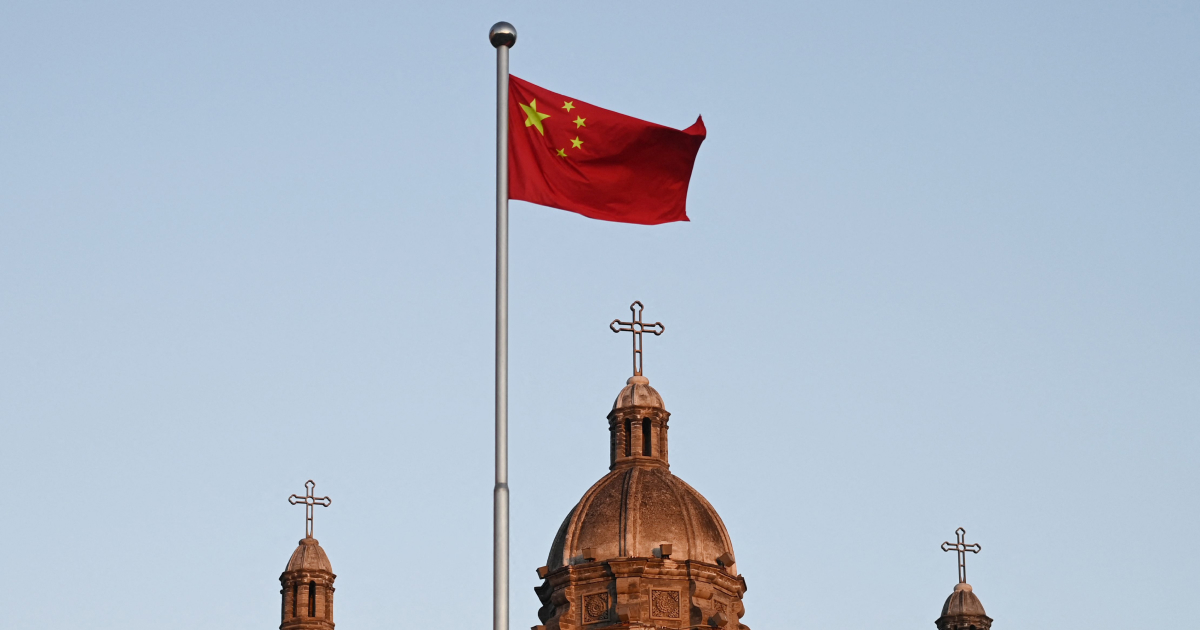
The consequences are visible in the daily life of parishes. Patriotic bodies have taken the lead in enforcing regulations such as the prohibition on minors attending religious services. Under the banner of the ‘Sinicisation’ of religion, some churches have been required to undergo architectural ‘rectification’. Gothic features have been criticised as excessively Western, while stained-glass windows have, in certain places, been removed or replaced with plain glass.
Supervision has also extended into the formation of clergy. Seminaries face closer oversight, and political reliability is now often emphasised alongside theological training. Seminarians who have studied abroad may be required to undergo additional political education upon returning to China, and in some cases, to obtain approval through Patriotic structures before they are permitted to exercise ministry. In certain instances, clergy ordained abroad have even been asked to undergo a form of re-recognition or renewed ordination within the state-sanctioned system before they are allowed to serve publicly.
In some cases, the policies have taken particularly concrete forms. Clergy and religious across the country have in recent years been required to deposit their passports with offices linked to the Chinese Patriotic Catholic Association or local religious affairs authorities, following administrative directives circulated within the official Church. For priests and sisters who once travelled abroad for study or pilgrimage, the loss of that freedom has been deeply felt.
Church closures have also become a visible symbol of tightening control. In several instances, churches that declined to comply with administrative requirements have been sealed by local officials. Photographs quietly shared among Chinese Catholics show church doors closed with official notices bearing red seals affixed to them. In such moments, the Patriotic Association appears less as a pastoral body than as an intermediary carrying out state directives.
These tensions were already recognised by Pope Benedict XVI in his 2007 Letter to the Catholics of China. Considering the very intention of Christ in founding the Church, Benedict wrote that organisations established by the state and operating outside the Church’s own structure cannot claim authority over ecclesial life. The principles of an ‘independent, self-governing and self-administered Church’, he warned, are incompatible with Catholic doctrine, which from the earliest creeds professed the Church to be ‘one, holy, catholic and apostolic’.
For decades, many underground Catholics faced surveillance, harassment and sometimes imprisonment in order to remain faithful to the principle that the Church must remain in communion with the successor of Peter. Yet after the agreement, some believe this witness has been set aside too easily in the name of institutional unity. An underground priest described the pain in stark terms. ‘When the pressure came from the authorities,’ he said, ‘we did not feel discouraged. We believed we were bearing witness to Christ.’ What wounds him now, he added, is something different: ‘In the past, it was Caesar who persecuted us. Now it feels as if a father has raised the knife against his own son.’
For many believers, the pain lies not only in renewed pressures but in the sense that the moral clarity which sustained the underground Church for decades has quietly faded. What was once a matter of conscience now risks being reduced to a matter of diplomacy. When ecclesial principles yield to political calculation, those who suffered for those principles inevitably feel abandoned.
Meanwhile, much of the commentary in Western media has adopted an unmistakably optimistic tone, presenting the agreement as the beginning of a new chapter for the Church in China. Diplomatic progress is welcomed, and the language of reconciliation is frequently invoked. For many Chinese Catholics, alas, there is a painful irony in such celebrations. The glasses raised in diplomatic circles seem, at times, to rest upon a history written with the tears and sacrifices of their own communities. History offers reasons for caution. British readers will recall the fate of the Sino–British Joint Declaration on Hong Kong, once presented as a binding international agreement guaranteeing the territory’s autonomy for 50 years after 1997. In recent years, however, Chinese officials have described the declaration as a ‘historical document’ with no continuing practical significance. If such a formally registered international treaty can be reinterpreted this way, it is understandable that some Chinese Catholics quietly wonder how durable a confidential provisional agreement concerning the life of the Church may ultimately prove to be.
At the very least, the wider Church – including Catholics in Britain – should resist the temptation of easy optimism. Genuine solidarity begins with an honest recognition of reality. For many Chinese Catholics, the deepest wound is not persecution from the state, but the fear of being forgotten by the Church they never abandoned.