



For much of human history, our emotional struggles were not primarily dealt with in private conversations with professionals. Instead, we would seek comfort and counsel within our own relationship networks: family members, neighbours, friends, faith communities and in the confessional. We would speak honestly and openly with those who knew us well and who we trusted were invested in our long-term wellbeing.
Today, however, these structures are often weaker. Extended families live further apart and friendships are fragmented by busy schedules, constant mobility and geographical distance. Many of us are hesitant to burden others with our worries, preferring instead to take them to someone we pay by the hour.
And while therapy culture has many benefits, such as normalising self-reflection instead of suffering in silence, and the ability of skilled therapists to help us process trauma, recognise unhealthy patterns and develop healthier coping strategies, we must recognise that therapy works best when it is part of a broader web of relationships, not a substitute for them. Therapy cannot carry the full weight of human connection and it cannot replace the three essential ingredients that true intimacy in friendship requires: positivity, consistency and vulnerability.
The daily grind can make consistency challenging, but it is vulnerability I want to focus on here. We are becoming a ‘catch-up’ culture, sharing highlight reels of our curated lives, where even conversations with friends and family feel like quick-fire updates, celebrating our highs and achievements while relegating our lows to the professionals.
In Britain alone, 1.2 million people sought state-funded counselling last year, a sign that we are no longer sharing our full, vulnerable selves with our communities. But can mainstream therapy truly address the moral and spiritual dimensions of life without recognising the role of forgiveness, as the Catholic tradition emphasises, in overcoming shame and guilt?
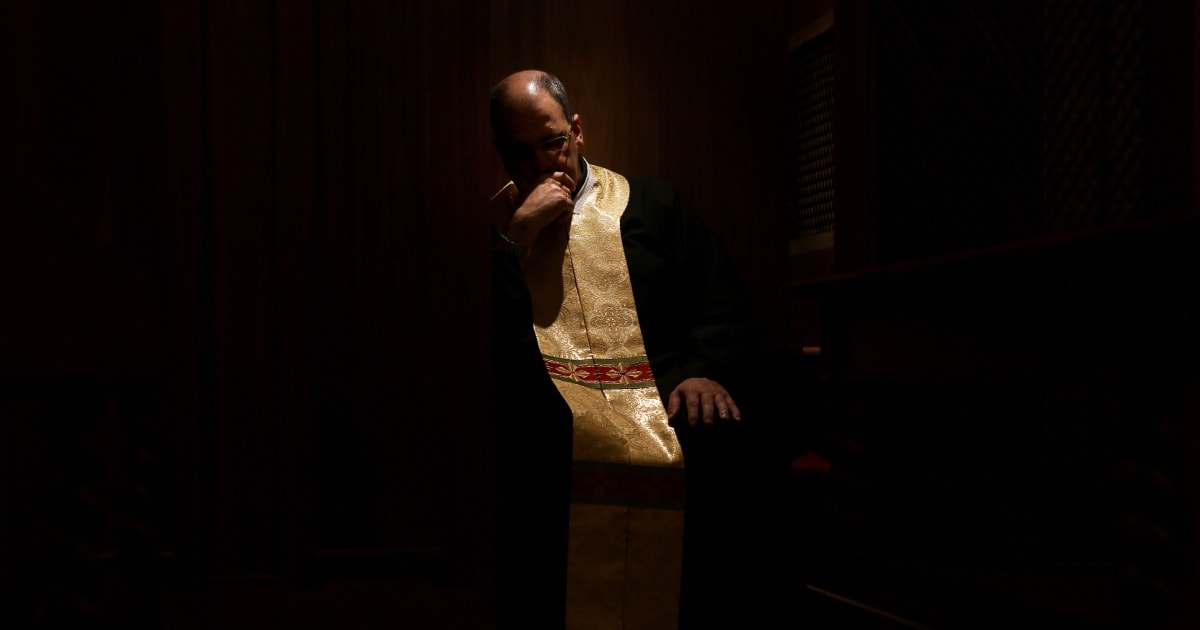
Enter Confession, one of the Church’s oldest gifts. For centuries, the sacrament of reconciliation was woven into the rhythm of our Christian life – not as a punitive exercise, but as a path to self-knowledge, a deeper closeness to God and becoming the person He created us to be.
The examination of conscience, practised before entering the confessional, requires something therapy also needs: honesty, specificity and the courage to name what one has done or failed to do. But confession goes even further. It does not simply process our experiences, but resolves them.
Reconciliation with God, the Catechism says, ‘is usually followed by peace and serenity of conscience with strong spiritual consolation’ (CCC 1468). Pope John Paul II, who went to confession at least weekly, calling it ‘the great miracle of divine mercy’, spoke with pastoral urgency about the sacrament’s particular relevance to modern life.
He noted that in an increasingly anonymous, fragmented society, people experience ‘a deeply felt need for interpersonal contact’, and that confession has a profoundly ‘humanising’ effect. Not because it replaces friendship or therapy, but because it offers something neither can: the certainty of forgiveness, spoken aloud by another human being, in persona Christi.
In today’s culture, surveys consistently show that, despite being the most digitally connected generation in history, many people feel profoundly alone. Sixty-one per cent of British adults experiencing loneliness have never shared it with anyone, and one in three adults are now turning to AI chatbots for mental health and wellbeing support. For over half of survey participants, the main barrier to talking about loneliness is internalised stigma: feelings of embarrassment, shame or fear of judgement. This is why speaking to a stranger (or even an AI chatbot) can feel safer than opening up to those closest to us.
This is why we must celebrate what the confessional offers us: a space where the very things we are most ashamed of can be brought into the light, received with mercy and left behind. Not analysed indefinitely or processed endlessly, but forgiven and resolved.
It is this combination of self-examination, humility and mercy before God that opens us to the grace to begin again. We must resist the temptation of endless self-analysis, which can slip into navel-gazing and deepen our isolation, because the Church has always understood that the spiritual life is meant to be lived within community.
Parishes should not be seen merely as places to attend Mass. Ideally, they are networks of belonging, spaces where people experience friendship, support and shared purpose. The early Christians were known for caring for one another in profoundly practical ways, offering not only intercessory prayer but also hospitality, generosity and mutual care. Likewise, Confession should never be reduced to just a ritual; it benefits profoundly from spiritual guidance and words of counsel from the priest on the other side of the confessional.
In a society where many people feel increasingly alone, that vision of community is more needed than ever. We need friends who know us (and love us) enough to challenge us, we need families who share our burden and we need priests as shepherds of their flock, guiding us when we go astray. We need communities that remind us we belong, and Confession restored to the rhythm of our daily lives so that we can be anchored in grace and connection.