December 13, 2025
December 13, 2025

Return to Narnia

Min read
share

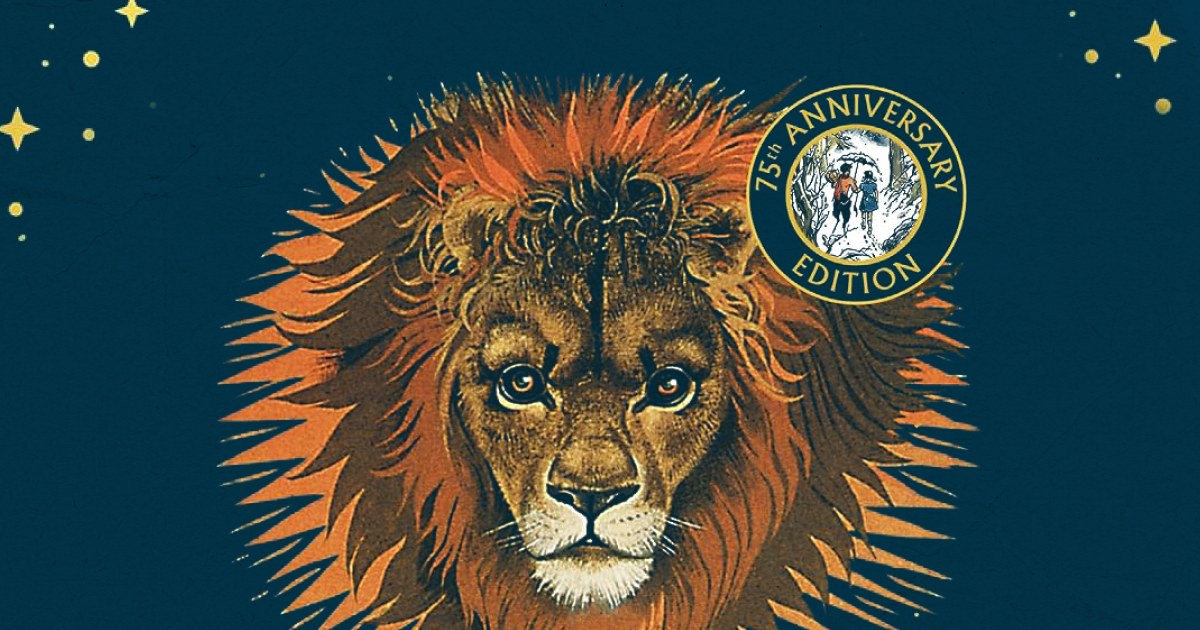
Most literary anniversaries are pointless, but they have the merit of making us think, golly, is the book really this old? So it is with The Lion, the Witch and the Wardrobe, seventy-five years old this year. To mark the occasion, the present publisher, HarperCollins, has reissued it in a lovely hardback edition with one of the original Pauline Baynes pictures on the cover, of Aslan the lion romping with the two girls of the story. For this is one of the books which is inseparable from its illustrator; the Narnia stories without Pauline Baynes’s captivating pictures of children of the 1950s and creatures of medieval legend would be incomplete.

Baynes did not much like C. S. Lewis. I interviewed her in her fascinating home in Surrey (there were Kenneth Grahame illustrations of The Wind in the Willows on the walls) not long before her death, and found her to be clever, a little acerbic and not terribly well disposed to Catholicism. She very much liked J. R. R. Tolkien, whom she also illustrated, but found Lewis unsympathetic.

But what, I argued, about that lovely image that prompted the whole story: a faun with an umbrella? “What a very odd idea that was,” she said. Not that it prevented her from giving us one of the most charming pictures in all children’s literature: Mr Tumnus, the faun, with his parcels under his arm, his tail tucked neatly over the arm, and an umbrella in his hand.

It was an odd figure, and that was precisely its charm: it was the combination of the familiar — the umbrella and the brown paper parcels — and the mythical, the faun, that was the genius of the Narnia books. For Lewis was, of course, a medievalist (his guide to the mind of the Middle Ages, The Discarded Image, is still read by students) and the creatures of the classical world as well as the legends of the Christian world frequent his stories. The White Witch is the daughter of Lilith, the legendary first wife of Adam, and of a giant, which calls to mind the most captivating verse in Genesis: “There were giants on the earth in those days.”

The story came about because Lewis felt, he said, he had to write a children’s story or burst, and there are some things that can only be said in a children’s book. And what he wrote about in The Lion, the Witch and the Wardrobe (no other title could have worked so well) was nothing less than the doctrine of the Atonement. That medieval formula, that the death of Christ was necessary “to give the devil his due” as a result of the sin of Adam, has never been so perfectly expressed. But the theology is worn lightly; it is possible for a godless child to read the book without taking it on board. Not in my case; I was scandalised as a child reading the story because I could see instantly (I was educated by nuns) what the Stone Table meant as an altar of sacrifice.

Aslan the lion (emblematic of Christ) summed up the Atonement when he told the girls of the story: “Though the Witch knew the Deep Magic, there is a magic deeper still which she did not know. Her knowledge goes back only to the dawn of time. But if she could have looked a little further back... she would have known that when a willing victim who had committed no treachery was killed in a traitor’s stead, the Table would crack and Death itself would start working backwards...”

C. S. Lewis argued that one never really grows out of children’s books, not good ones. He observed that he liked lemon squash as a child and, as an adult, he liked port, but he still also liked lemon squash. Our growth does not mean discarding our previous self; it means adding to it. Reading the book later on, you note other things: when Aslan jumps into the Witch’s castle to breathe on the creatures she had turned to stone to bring them, flickering, back to life, we have nothing less than the Harrowing of Hell, when Christ descended to the underworld to release all those held by the sin of Adam, except in this case they include a dim but nice giant, a conceited lion and centaurs.

What is more, the book upends the gender of the Fall. It is Lucy, the youngest of the children, who is truthful and loyal; it is her brother Edmund who falls for the White Witch, except not through an apple but through the irresistible Turkish delight. That vindication of the female is even more obvious in the prequel, The Magician’s Nephew. There, it is the boy, Digby, who brings evil into the world by sounding a bell which brings to life the first Witch from a room of statues; it is the girl, Polly, who tries to hold him back. Lewis thus remakes the story so that the male, not the female, is the primary culprit.

The book is dedicated to Lewis’s goddaughter, Lucy Barfield, to whom he wrote: “Some day you will be old enough to start reading fairy tales again.” And so should we all.
Most literary anniversaries are pointless, but they have the merit of making us think, golly, is the book really this old? So it is with The Lion, the Witch and the Wardrobe, seventy-five years old this year. To mark the occasion, the present publisher, HarperCollins, has reissued it in a lovely hardback edition with one of the original Pauline Baynes pictures on the cover, of Aslan the lion romping with the two girls of the story. For this is one of the books which is inseparable from its illustrator; the Narnia stories without Pauline Baynes’s captivating pictures of children of the 1950s and creatures of medieval legend would be incomplete.

Baynes did not much like C. S. Lewis. I interviewed her in her fascinating home in Surrey (there were Kenneth Grahame illustrations of The Wind in the Willows on the walls) not long before her death, and found her to be clever, a little acerbic and not terribly well disposed to Catholicism. She very much liked J. R. R. Tolkien, whom she also illustrated, but found Lewis unsympathetic.

But what, I argued, about that lovely image that prompted the whole story: a faun with an umbrella? “What a very odd idea that was,” she said. Not that it prevented her from giving us one of the most charming pictures in all children’s literature: Mr Tumnus, the faun, with his parcels under his arm, his tail tucked neatly over the arm, and an umbrella in his hand.

It was an odd figure, and that was precisely its charm: it was the combination of the familiar — the umbrella and the brown paper parcels — and the mythical, the faun, that was the genius of the Narnia books. For Lewis was, of course, a medievalist (his guide to the mind of the Middle Ages, The Discarded Image, is still read by students) and the creatures of the classical world as well as the legends of the Christian world frequent his stories. The White Witch is the daughter of Lilith, the legendary first wife of Adam, and of a giant, which calls to mind the most captivating verse in Genesis: “There were giants on the earth in those days.”

The story came about because Lewis felt, he said, he had to write a children’s story or burst, and there are some things that can only be said in a children’s book. And what he wrote about in The Lion, the Witch and the Wardrobe (no other title could have worked so well) was nothing less than the doctrine of the Atonement. That medieval formula, that the death of Christ was necessary “to give the devil his due” as a result of the sin of Adam, has never been so perfectly expressed. But the theology is worn lightly; it is possible for a godless child to read the book without taking it on board. Not in my case; I was scandalised as a child reading the story because I could see instantly (I was educated by nuns) what the Stone Table meant as an altar of sacrifice.

Aslan the lion (emblematic of Christ) summed up the Atonement when he told the girls of the story: “Though the Witch knew the Deep Magic, there is a magic deeper still which she did not know. Her knowledge goes back only to the dawn of time. But if she could have looked a little further back... she would have known that when a willing victim who had committed no treachery was killed in a traitor’s stead, the Table would crack and Death itself would start working backwards...”

C. S. Lewis argued that one never really grows out of children’s books, not good ones. He observed that he liked lemon squash as a child and, as an adult, he liked port, but he still also liked lemon squash. Our growth does not mean discarding our previous self; it means adding to it. Reading the book later on, you note other things: when Aslan jumps into the Witch’s castle to breathe on the creatures she had turned to stone to bring them, flickering, back to life, we have nothing less than the Harrowing of Hell, when Christ descended to the underworld to release all those held by the sin of Adam, except in this case they include a dim but nice giant, a conceited lion and centaurs.

What is more, the book upends the gender of the Fall. It is Lucy, the youngest of the children, who is truthful and loyal; it is her brother Edmund who falls for the White Witch, except not through an apple but through the irresistible Turkish delight. That vindication of the female is even more obvious in the prequel, The Magician’s Nephew. There, it is the boy, Digby, who brings evil into the world by sounding a bell which brings to life the first Witch from a room of statues; it is the girl, Polly, who tries to hold him back. Lewis thus remakes the story so that the male, not the female, is the primary culprit.

The book is dedicated to Lewis’s goddaughter, Lucy Barfield, to whom he wrote: “Some day you will be old enough to start reading fairy tales again.” And so should we all.

share

subscribe to the catholic herald today

Our best content is exclusively available to our subscribers. Subscribe today and gain instant access to expert analysis, in-depth articles, and thought-provoking insights—anytime, anywhere. Don’t miss out on the conversations that matter most.
Subscribe