




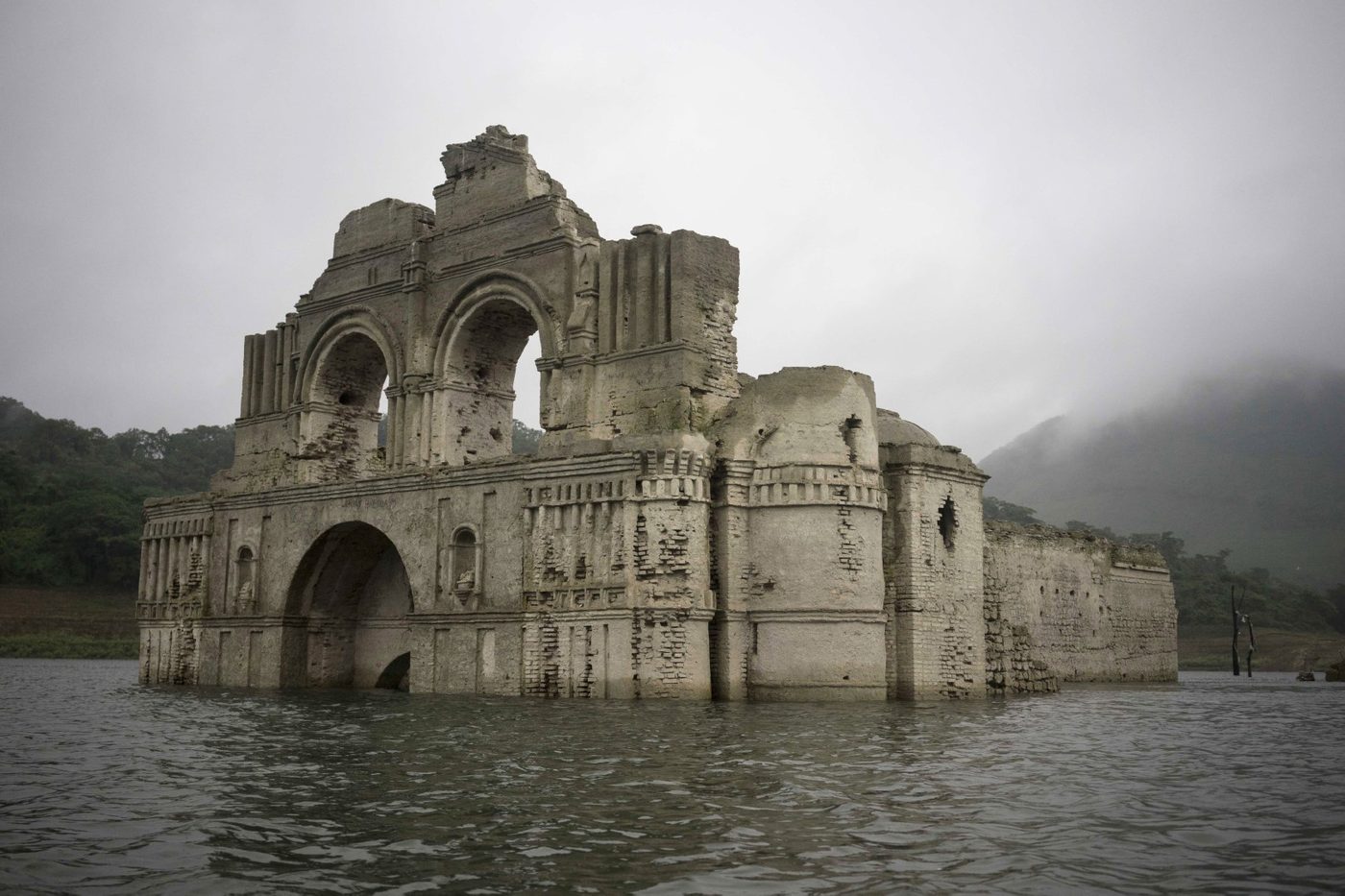
The ruins of a 16th-century church have emerged in a reservoir in Mexico after the water levels dropped. The water level of the Nezahualcóyotl reservoir in Chiapas state dropped by 25m (82ft) due to a drought. The church, known as the Temple of Santiago or the Temple of Quechula, has been submerged under 100 ft of water since the building of a dam in 1966, although it briefly appeared in 2002, again due to low water levels. The church is reportedly 183ft long and 42ft wide, with a bell tower that rises 48ft above the ground. Spanish colonisers are believed to have built it in 1564. “The people celebrated. They came to eat, to hang out, to do business. I sold them fried fish. They did processions around the church,” fisherman Leonel Mendoza told the Associated Press. Fishermen are ferrying passengers to the ruins, according to reports.
5:22 PM
Ruins of 16th-century church emerge from Mexican reservoir as water level drops
The building has been revealed in the Nezahualcóyotl reservoir in Chiapas state
Staff Reporter

1 min read



Already a subscriber? Sign in
5freearticles every month
Continue reading with a free account. No card needed.
- Five free articles every thirty days, on any device you sign in on
- The Catholic Herald newsletter, every morning
- Subscribe whenever you like for everything: every article and the magazine
Related articles
 Newsroom
Church leaders urge Drumcree dialogue: ‘Too much is at stake’
The Catholic and Church of Ireland Archbishops of Armagh have urged a renewed commitment to peace and reconciliation amid the Drumcree stand-off
Corrie Douglas-Young Newsroom
Thousands of Irish children to join global Rosary campaign
Corrie Douglas-Young Newsroom
TikTok priest urges young people to stand with persecuted Christians
Nathalie Raffray Newsroom
Baby born at 25 weeks reunites with neonatologist two years after leaving hospital
The Catholic Herald Newsroom
Joe Biden honoured by Planned Parenthood after defending abortion rights
Christine Rousselle
subscribe to the catholic herald today
Our best content is exclusively available to our subscribers. Subscribe today and gain instant access to expert analysis, in-depth articles, and thought-provoking insights—anytime, anywhere. Don’t miss out on the conversations that matter most.
Subscribe



