

March 30, 2026

Sacramental imagination and the recovery of enchantment

Jan C. Bentz
More
Related
Min read
share

The modern West often tells a story about itself: that it has outgrown enchantment. The world, once experienced as alive with meaning, has been reduced to matter in motion; what earlier ages perceived as sacramental presence is now explained in terms of mechanism. Religion is privatised, myth is relegated to fiction, and meaning becomes something we construct rather than discover. It is a powerful narrative – but increasingly, it is difficult to sustain.

The assumption underlying this narrative is what Charles Taylor famously described as a ‘subtraction story’: modernity emerges by shedding illusions, leaving us in a disenchanted but more truthful world. As James K A Smith summarises this account, we come to believe that we are alone in a silent universe, and that if there is to be meaning, it must be something we create. The result is a peculiar mixture of exhilaration and unease: we stand, as it were, before a ‘normative abyss’, free to legislate meaning, yet haunted by the suspicion that such meaning lacks any real foundation.
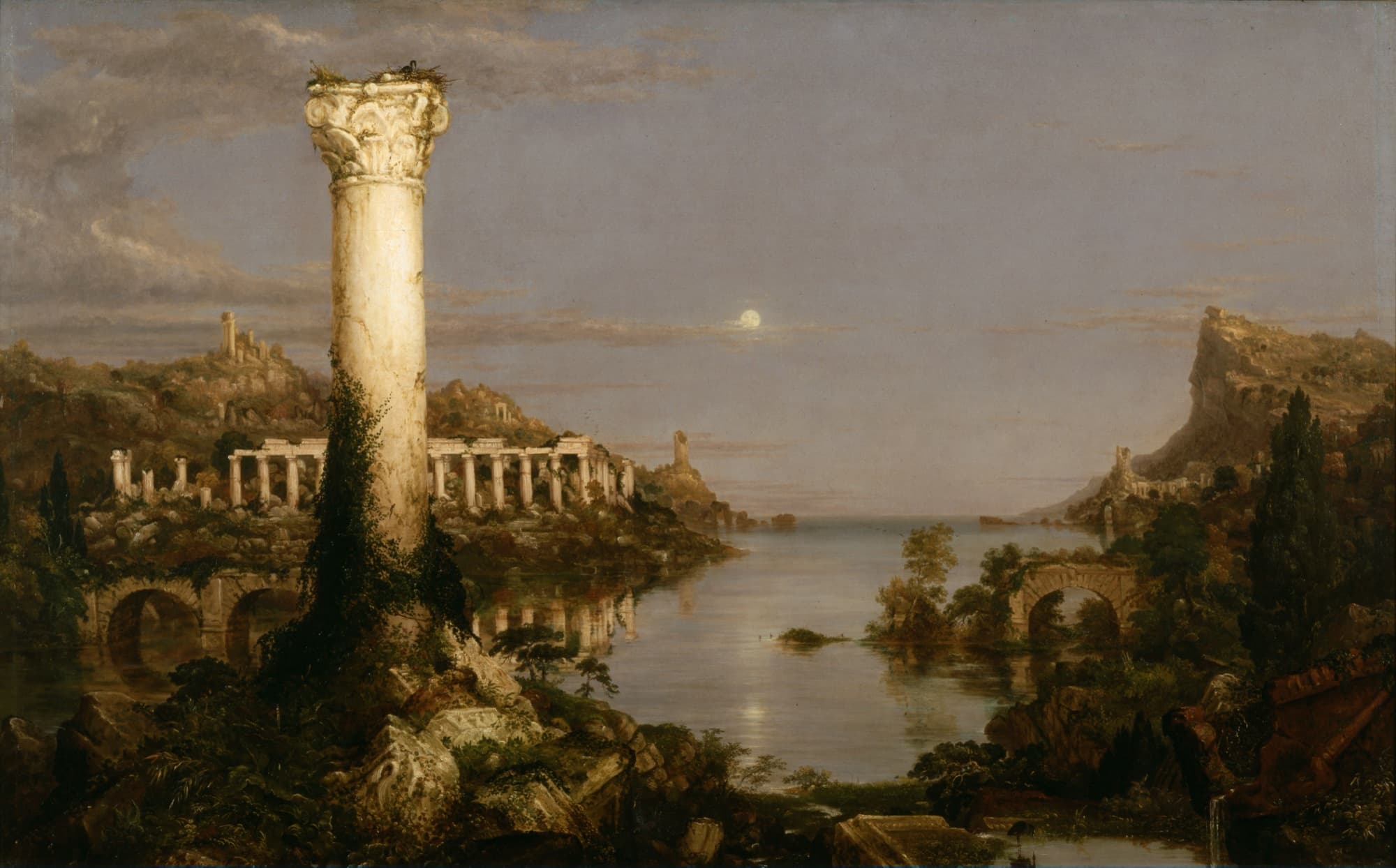
This account of disenchantment is far less secure than it appears. Jason Josephson-Storm has shown that the supposed ‘death of magic’ is largely a retrospective construction. Even in the heartlands of modernity, belief in unseen forces, spiritual realities and non-reductive forms of meaning persisted – often among the very intellectuals who helped shape modern scientific disciplines. Disenchantment, in this sense, is not a straightforward historical fact but a conceptual overlay: a way of narrating modernity that simplifies and distorts its actual texture. Disenchantment never happened.

And yet, even if disenchantment is in part a myth, its experiential force remains undeniable. Many modern people do, in fact, experience the world as flattened, neutral and devoid of intrinsic significance. Matter becomes ‘stuff’, available for manipulation. Meaning becomes subjective projection. The cosmos ceases to speak.

It is precisely at this point that Tolkien becomes the antidote.

Critics often reduce Tolkien’s work to escapist fantasy, to an elaborate secondary world designed for imaginative diversion. Tolkien himself rejects that reading outright: ‘The Lord of the Rings is of course a fundamentally religious and Catholic work; unconsciously so at first, but consciously in the revision.’ That claim demands to be taken seriously. What Tolkien gives us is not an escape from reality but a re-vision of it – a disciplined recovery of a way of seeing that modernity has obscured.

Middle-earth presents meaning as something encountered, not constructed. The world appears structured, intelligible and morally charged prior to any human – or hobbit – intervention. Language discloses rather than invents; names reveal the nature of things. History unfolds not as random succession but as a meaningful narrative in which past and present remain deeply interwoven. Nature itself resists reduction: forests, rivers and mountains participate in an order that exceeds human control.

This vision reflects what Paul Tyson identifies as the classical understanding of reality: Logos – meaning, reason, intelligibility – belongs to the fabric of the cosmos itself, not to the projections of the human mind. The ancients held that ordered material reality presupposes mind, and that a meaningless world would be unintelligible even to thought. If thought is real, reality must itself be rational and meaningful.

Tolkien builds his world on precisely this premise. His characters do not create meaning through acts of will; they discover themselves within a meaningful order they did not choose. Frodo receives the Ring as a burden whose significance precedes him. Aragorn inherits kingship as a vocation rooted in history and lineage. Gandalf discerns rather than controls, reading patterns of providence that remain only partially visible.

Modernity, by contrast, tends to treat the world as raw material. A disenchanted framework renders reality neutral and assigns meaning from without. Tolkien reverses this orientation. He presents reality as already meaningful and situates the creature as one who must perceive and respond.

Rod Dreher argues in his most recent book that modern man suffers from a diminished capacity to see what is truly real. Meaning has not disappeared; we have learned to overlook it. The more we insist that matter is nothing but manipulable substance, the less able we become to experience it as meaningful. Tolkien therefore restores not ‘magic’ but perception. He calls it ‘recovery’: the regaining of a clear view. He renders the ordinary luminous again. Bread, water, light, trees – these cease to be merely functional and become bearers of significance. Lembas nourishes beyond its material properties. The Phial of Galadriel participates in a light that resists darkness. Small acts – pity, mercy, fidelity – assume decisive weight within a larger moral and metaphysical order.

This is where Tolkien’s sacramental imagination becomes most evident. He does not divide spirit from matter. He allows the visible to mediate the invisible. He shows grace working through the material and providence unfolding through contingency. He presents creation not as a closed system but as a meaningful whole ordered towards God. We should keep in mind that biblical imagination never separates religion from reality. It cannot. The Kingdom of God names not an abstraction but a concrete order – social, cultural and material – aligned with divine truth. Tolkien renders precisely such a world. He integrates metaphysics, ethics and daily life into a single coherent vision in which transcendence quietly permeates the ordinary.

Tolkien’s moral architecture reinforces this metaphysical claim. He presents evil not as a creative force but as privation – a distortion of the good. He exposes power sought for its own sake as corrupting and diminishing. He elevates humility, sacrifice and mercy as the true agents of victory. He resolves the drama of the Ring not through strength but through a convergence of failure, mercy and providence. Frodo cannot complete the task by will alone; Gollum, spared through pity, brings it to completion.

These patterns reveal more than narrative craft. They disclose a theological logic: grace operates through weakness, and reality cannot be reduced to power. Tolkien orders his world according to a grammar that calls for recognition, not construction.

Modern disenchantment insists that meaning is absent and must be made. Tolkien answers with a counter-vision: meaning is already there, waiting to be discovered. He presents the world not as a blank canvas but as a given reality structured by Logos. He shows that to recover enchantment is not to indulge illusion but to learn, again, how to see.

The modern West often tells a story about itself: that it has outgrown enchantment. The world, once experienced as alive with meaning, has been reduced to matter in motion; what earlier ages perceived as sacramental presence is now explained in terms of mechanism. Religion is privatised, myth is relegated to fiction, and meaning becomes something we construct rather than discover. It is a powerful narrative – but increasingly, it is difficult to sustain.

The assumption underlying this narrative is what Charles Taylor famously described as a ‘subtraction story’: modernity emerges by shedding illusions, leaving us in a disenchanted but more truthful world. As James K A Smith summarises this account, we come to believe that we are alone in a silent universe, and that if there is to be meaning, it must be something we create. The result is a peculiar mixture of exhilaration and unease: we stand, as it were, before a ‘normative abyss’, free to legislate meaning, yet haunted by the suspicion that such meaning lacks any real foundation.
This account of disenchantment is far less secure than it appears. Jason Josephson-Storm has shown that the supposed ‘death of magic’ is largely a retrospective construction. Even in the heartlands of modernity, belief in unseen forces, spiritual realities and non-reductive forms of meaning persisted – often among the very intellectuals who helped shape modern scientific disciplines. Disenchantment, in this sense, is not a straightforward historical fact but a conceptual overlay: a way of narrating modernity that simplifies and distorts its actual texture. Disenchantment never happened.

And yet, even if disenchantment is in part a myth, its experiential force remains undeniable. Many modern people do, in fact, experience the world as flattened, neutral and devoid of intrinsic significance. Matter becomes ‘stuff’, available for manipulation. Meaning becomes subjective projection. The cosmos ceases to speak.

It is precisely at this point that Tolkien becomes the antidote.

Critics often reduce Tolkien’s work to escapist fantasy, to an elaborate secondary world designed for imaginative diversion. Tolkien himself rejects that reading outright: ‘The Lord of the Rings is of course a fundamentally religious and Catholic work; unconsciously so at first, but consciously in the revision.’ That claim demands to be taken seriously. What Tolkien gives us is not an escape from reality but a re-vision of it – a disciplined recovery of a way of seeing that modernity has obscured.

Middle-earth presents meaning as something encountered, not constructed. The world appears structured, intelligible and morally charged prior to any human – or hobbit – intervention. Language discloses rather than invents; names reveal the nature of things. History unfolds not as random succession but as a meaningful narrative in which past and present remain deeply interwoven. Nature itself resists reduction: forests, rivers and mountains participate in an order that exceeds human control.

This vision reflects what Paul Tyson identifies as the classical understanding of reality: Logos – meaning, reason, intelligibility – belongs to the fabric of the cosmos itself, not to the projections of the human mind. The ancients held that ordered material reality presupposes mind, and that a meaningless world would be unintelligible even to thought. If thought is real, reality must itself be rational and meaningful.

Tolkien builds his world on precisely this premise. His characters do not create meaning through acts of will; they discover themselves within a meaningful order they did not choose. Frodo receives the Ring as a burden whose significance precedes him. Aragorn inherits kingship as a vocation rooted in history and lineage. Gandalf discerns rather than controls, reading patterns of providence that remain only partially visible.

Modernity, by contrast, tends to treat the world as raw material. A disenchanted framework renders reality neutral and assigns meaning from without. Tolkien reverses this orientation. He presents reality as already meaningful and situates the creature as one who must perceive and respond.

Rod Dreher argues in his most recent book that modern man suffers from a diminished capacity to see what is truly real. Meaning has not disappeared; we have learned to overlook it. The more we insist that matter is nothing but manipulable substance, the less able we become to experience it as meaningful. Tolkien therefore restores not ‘magic’ but perception. He calls it ‘recovery’: the regaining of a clear view. He renders the ordinary luminous again. Bread, water, light, trees – these cease to be merely functional and become bearers of significance. Lembas nourishes beyond its material properties. The Phial of Galadriel participates in a light that resists darkness. Small acts – pity, mercy, fidelity – assume decisive weight within a larger moral and metaphysical order.

This is where Tolkien’s sacramental imagination becomes most evident. He does not divide spirit from matter. He allows the visible to mediate the invisible. He shows grace working through the material and providence unfolding through contingency. He presents creation not as a closed system but as a meaningful whole ordered towards God. We should keep in mind that biblical imagination never separates religion from reality. It cannot. The Kingdom of God names not an abstraction but a concrete order – social, cultural and material – aligned with divine truth. Tolkien renders precisely such a world. He integrates metaphysics, ethics and daily life into a single coherent vision in which transcendence quietly permeates the ordinary.

Tolkien’s moral architecture reinforces this metaphysical claim. He presents evil not as a creative force but as privation – a distortion of the good. He exposes power sought for its own sake as corrupting and diminishing. He elevates humility, sacrifice and mercy as the true agents of victory. He resolves the drama of the Ring not through strength but through a convergence of failure, mercy and providence. Frodo cannot complete the task by will alone; Gollum, spared through pity, brings it to completion.

These patterns reveal more than narrative craft. They disclose a theological logic: grace operates through weakness, and reality cannot be reduced to power. Tolkien orders his world according to a grammar that calls for recognition, not construction.

Modern disenchantment insists that meaning is absent and must be made. Tolkien answers with a counter-vision: meaning is already there, waiting to be discovered. He presents the world not as a blank canvas but as a given reality structured by Logos. He shows that to recover enchantment is not to indulge illusion but to learn, again, how to see.

subscribe to
the catholic herald

Continue reading your article with a subscription.
Read 5 articles with our free plan.
Subscribe

subscribe to the catholic herald today

Our best content is exclusively available to our subscribers. Subscribe today and gain instant access to expert analysis, in-depth articles, and thought-provoking insights—anytime, anywhere. Don’t miss out on the conversations that matter most.
Subscribe