




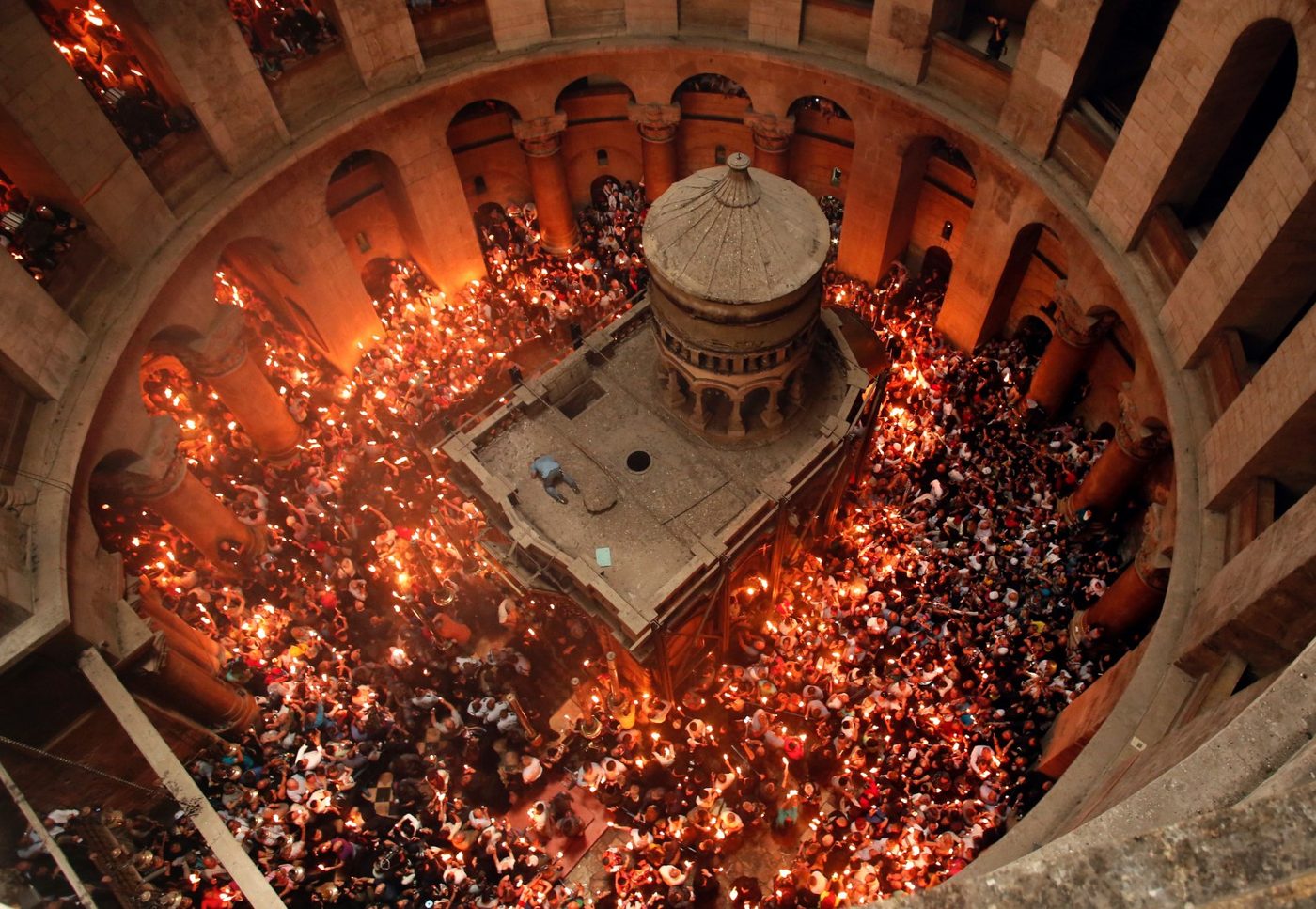
Scientific testing at the Church of the Holy Sepulchre dates material there to the fourth century AD, supporting traditional views of the site's age. Tradition says that the church was built on the site of Jesus’s tomb 300 years after his death. Although it is still unknown whether the tomb genuinely held Jesus’s body after His crucifixion, National Geographic says that tests on the limestone bed reveal it was constructed around AD 345, shortly after the reign of Emperor Constantine. St Helena, the emperor’s mother, reputedly discovered the tomb around the year 327. When her son legalised Christianity, the Romans built a church over the tomb. Now, Antonia Moropoulou, chief scientific coordinator of the restoration works on the church, said testing was consistent with historical beliefs that the Romans built a monument on the tomb. "This is a very important finding because it confirms that it was, as historically evidenced, Constantine the Great responsible for cladding bedrock of the tomb of Christ with the marble slabs in the edicule," she said. The findings are especially noteworthy as, until now, the earliest architectural evidence found in the shrine dated it to no earlier than the Crusades. In October 2016, the tomb was opened for the first time in centuries at the start of delicate restoration work. Inside, scientists found an older marble slab incised with a cross. The results will be published in the Journal of Archaeological Science: Reports.
11:33 AM
Scientific tests back traditional beliefs on age of Holy Sepulchre
Material dates back to the reign of Emperor Constantine the Great
Staff Reporter

2 min read



Already a subscriber? Sign in
5freearticles every month
Continue reading with a free account. No card needed.
- Five free articles every thirty days, on any device you sign in on
- The Catholic Herald newsletter, every morning
- Subscribe whenever you like for everything: every article and the magazine
Related articles
 Newsroom
Injured priest tells Poles: ‘Do not blame Ukraine’ for convent attack
Fr Adrian Mantykiewicz, who was injured in the attack that killed a fellow priest, has urged Catholics to pray for the assailant and not blame Ukrainians for his actions
Corrie Douglas-Young Newsroom
Church leaders urge Drumcree dialogue: ‘Too much is at stake’
Corrie Douglas-Young Newsroom
Thousands of Irish children to join global Rosary campaign
Corrie Douglas-Young Newsroom
TikTok priest urges young people to stand with persecuted Christians
Nathalie Raffray Newsroom
Baby born at 25 weeks reunites with neonatologist two years after leaving hospital
The Catholic Herald
subscribe to the catholic herald today
Our best content is exclusively available to our subscribers. Subscribe today and gain instant access to expert analysis, in-depth articles, and thought-provoking insights—anytime, anywhere. Don’t miss out on the conversations that matter most.
Subscribe



