Dialogue will continue, but only upon receipt of a sign of good faith: such was the message from Leo XIV’s Vatican this week in the latest update of the case which has dominated the minds of the Vatican press corps.
As an aside, Leo XIV’s visit to the Vatican’s own Lourdes grotto on Wednesday, greeting a handful of sick patients and praying at the original altar from Lourdes – gifted to the Vatican in the 1960s – was certainly moving. The private audience he granted on Sunday to the in-house florists and workmen caring for the Vatican City State was also a fitting action on the part of a benign Pontiff, thanking them for their constant work.
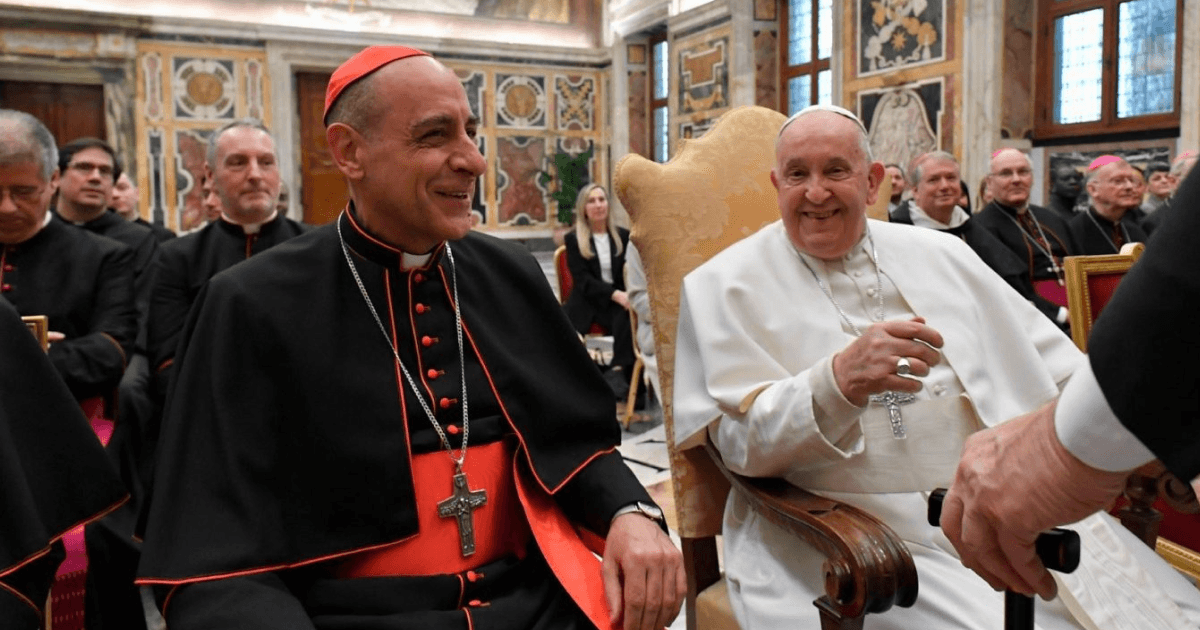
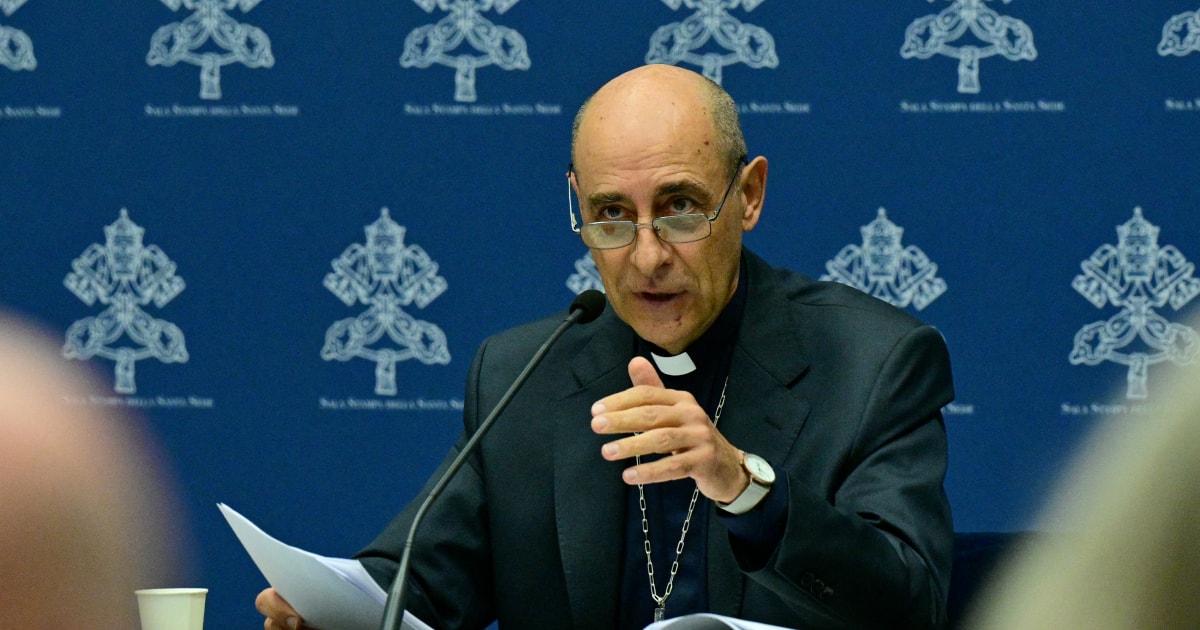
But it was Thursday’s statement from Cardinal Victor Manuel Fernández at the Congregation for the Doctrine of the Faith (CDF) which proved the high point of the Vatican’s week. Fernández, having met SSPX Superior General Fr Davide Pagliarani, expressed the Holy See’s openness to continuing to discuss issues raised by the Society – but on condition of the SSPX delaying its intended July 1 episcopal consecrations.
Should the Society proceed regardless with the consecrations “without the mandate of the Holy Father”, Fernández warned that such an action would “imply a decisive rupture of ecclesial communion (schism) with grave consequences for the Fraternity as a whole”. The speed of the statement’s release following the meeting, along with the now public warning to the Society about a schism, ought to be read as the Holy See seeking to take back some control in the debate, especially after the SSPX appeared to be strong-arming the Pope with its February 2 statement.
What was offered to the Society in return? While many commentators have rushed to describe the CDF’s statement as a lose-lose scenario for the Society, it seems the Vatican may actually be open to more of a concession than most have realised.
Fernández proposed what he described as “a path of specifically theological dialogue, with a well-defined methodology, on issues that have not yet been sufficiently clarified, such as: the difference between an act of faith and ‘religious submission of mind and will’, or the different degrees of adherence required by the various texts of the Second Vatican Council and its interpretation”.
No further details were given on this aspect, but it is precisely this issue which has previously led the SSPX to refrain from entering into an agreement with the Holy See. If, as seems plausible, Fernández is open to allowing the Society to differentiate over the “adherence” it gives to various passages of Vatican II, rather than enforcing a strict “submit to everything or be excommunicated” clause – of the kind that befell Archbishop Carlo Maria Viganò – then it could be a decisive and welcome moment for the SSPX.
As one dogmatic theologian put it: “This is the most flexible I’ve ever seen Rome regarding ‘religious submission’ to the documents of Vatican II. No small feat.”
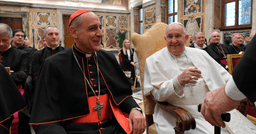
Leo and Fernández will now join the rest of the Church in watching and waiting to see what Pagliarani and his council of superiors decide.
Similar waiting could be said to characterise the Holy See’s response to the plight of Jimmy Lai, the Catholic journalist and Hong Kong businessman whose trial concluded on Monday with a 20-year jail term. Since his arrest in August 2020, during which Lai has been kept in solitary confinement for 23 hours a day, the Vatican’s silence has grown increasingly notable. Many have linked it to the controversial Sino-Vatican deal first signed in 2018 and currently in place until its next likely renewal in 2028.
Human rights activist Benedict Rogers told me in 2024 that the renewal of the deal “is likely to embolden the Chinese regime to continue and further intensify its repression and make the environment even more difficult for Catholics in China”.
Writing for the Herald this week, Rogers urged Leo to “speak out, as should Catholic clergy around the world”, calling on the Pope to use his Sunday Angelus “to pray publicly for Mr Lai and call for his release on humanitarian grounds. If ever there was a political prisoner deserving of the Vatican’s support, it is Mr Lai.”
Lai’s daughter Claire has written movingly about her father’s faith in prison, presenting an image of a truly saintly practice of resignation to Divine will: “My father said he was grateful for the suffering that got him closer to God’s presence, saying ‘God’s action confounds but always turns out to be marvellous for us.’”
One period of waiting which has come to an end is the process for the Venerable Archbishop Fulton Sheen, with the formal announcement of his beatification on February 9 from the Diocese of Peoria. Sheen’s cause had been held up since 2019 by what many viewed as political motivations rather than the stated reasons of potential abuse-related issues which might yet have emerged. They did not, and now Peoria’s Bishop Tylka has praised Sheen as “one of the greatest voices of evangelisation in the Church and the world in the 20th century”.
Whether the first US Pope in history will be present for the beatification ceremony has yet to be revealed. Presuming it takes place in the US this year, Leo will not be involved, since the Holy See has confirmed that – contrary to some swirling rumours – the US is not on Leo’s itinerary for 2026. Some chagrin was expressed at the news, given that the US will mark 250 years as a nation this year, but it is perhaps this very fact which has led Leo to delay a visit to his homeland, given the likely political implications.
What has been described as very probable is a one-day visit to the Catholic principality of Monaco, following an invitation made to the Pope in person by Prince Albert II in January. With this visit all but confirmed, Leo’s international diary is beginning to take shape.
A visit to the European Parliament on April 28 is being discussed, while a visit to Peru in late November is looking increasingly likely after Leo’s warm welcome to the Peruvian bishops on their ad limina visit. Herald readers will already be aware of the possibility of a trip to Uruguay and Argentina, perhaps as part of a larger South American tour.
Meanwhile, with Spain on the cards for June shortly before the second extraordinary consistory, the year is fast filling up for the American Pope.