Fake news spreading like wildfire over a diplomatic snub and a return to the papal apartments, whispers of upcoming foreign travel, and some challenging appointments to the Vatican’s ecumenical office: Pope Leo’s week has been eventful, even if not groundbreaking.
Let us start with the fake news, because in today’s world of social media and dopamine-driven addiction, nothing quite matches the appeal of spreading a rumour to generate online engagement. This week saw two such examples.
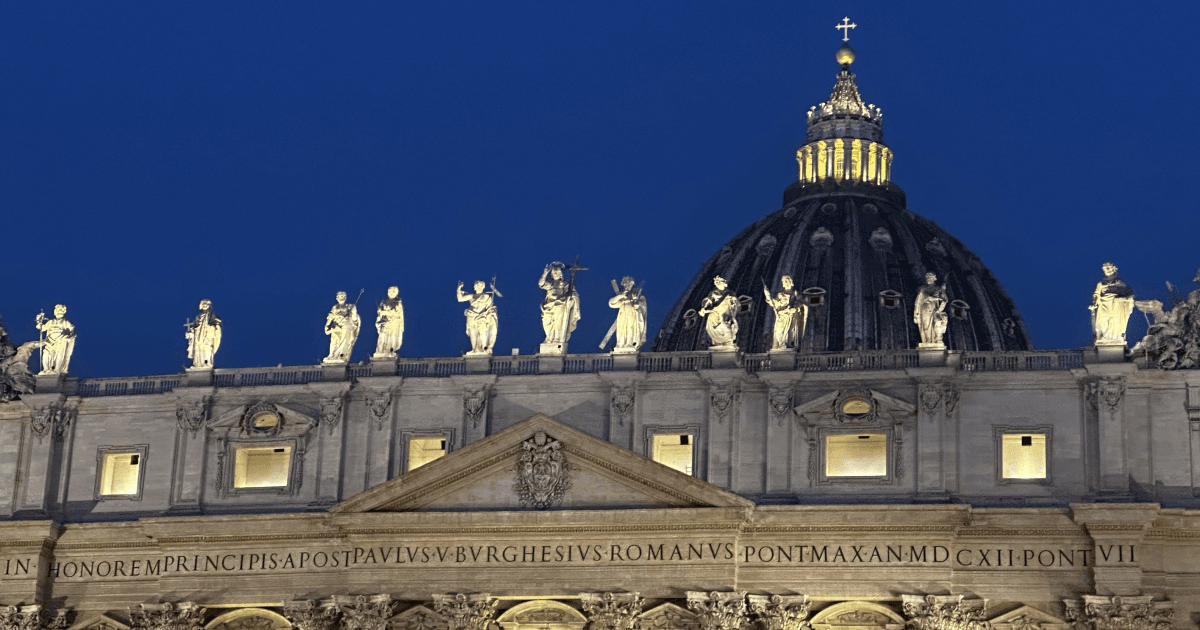
The first was a report that Pope Leo XIV had moved back into the papal apartments in the Apostolic Palace, a claim apparently fuelled by a single photograph showing the lights on inside. The second was the assertion that Leo had cancelled a meeting with French President Emmanuel Macron after a modern window in Notre Dame irritated the Pope. Cardinal Robert Sarah was dragged into the affair by some, while others suggested that a supposed feud between Paris and Rome meant Macron would soon remove the Archbishop of Paris in retaliation.
As ever, online fiction proved no match for reality on the ground.
Workmen have been resolving a variety of issues in the papal apartments for many weeks, including, among other things, the use of lighting inside the rooms. Quashing the conjecture about Leo’s return, the Holy See Press Office quietly informed journalists that no date has yet been set for any move, and that when it happens the world will be duly informed.
As for the second rumour, both the Holy See and the French foreign ministry made rare interventions to firmly reject the alleged spat between Macron and Leo XIV. The French government described the claim as “fake”, while the Holy See told Italian journalist Matteo Matuzzi that “the Pope has never denied an audience to Macron” and that the report was “completely false”.
The two stories, fantastical as they were, accumulated more than a million views within a few hours, despite being born of pure fiction.
What does not appear to be fiction, however, is the increasing chatter surrounding a papal voyage to Spain this year, possibly in June. Fairly detailed plans reported by the Spanish outlet La Iberia suggest that Leo might spend about a week there in the first half of the month, with a strong Eucharistic focus. Meetings with the King and Queen would feature, alongside large public events with young people, Spanish clergy, and political figures. A visit to the Sagrada Família basilica in Barcelona was also listed.
The Holy See has not yet commented on the report, but the level of detail in the leaked plans bears the hallmarks of similar disclosures ahead of previous papal trips. Barring any unexpected surprises, Catholic Herald readers should expect to hear Leo using his Spanish once again come June.
Another papal journey that appears increasingly likely is a visit to Angola. According to the Papal Nuncio there, Leo is also due to visit the southern African nation, though concrete details have yet to be finalised.
Less certain, though by no means mere rumour given that the Pope himself has spoken of his desire to make the trip, is a possible visit to Uruguay later in the year. Leo is also considering a journey to Argentina. Both visits, discussed by the Pope and cardinals from the respective countries, would be historic in their own right. Uruguay last saw a pope when John Paul II visited in 1988, while Argentina’s native pontiff steadfastly refused to return despite frequent invitations.
Closer to home, Leo this week restored yet more customs that Pope Francis had set aside. He reinstated the traditional welcome of lambs to the Vatican on the feast of St Agnes, prior to their blessing later in the day. Their wool will be used to make palliums, which Leo will bestow on new archbishops on 29 June.
The Pontiff also announced the return of the Lenten Spiritual Exercises for the Roman Curia to the Apostolic Palace, rather than holding them in the Paul VI Audience Hall, as Francis had done. Both changes, though small, form part of a wider series of thematic adjustments that Leo is gradually implementing, restoring a sense of order and calm to the Vatican.
It is little wonder, therefore, that Archbishop Georg Gänswein features once again in a Vatican dispatch, having praised Leo this week for ushering in “a positive change in the atmosphere, which I believe is important because the difficulties that existed have truly taken on a completely new, positive impact through the change of pontificate”.
“Normality is slowly returning,” said Benedict XVI’s former secretary. “Pope Leo has simply set some accents that are not new, but which were completely ignored in recent years.”
One element that remains familiar, however, is the appointment of a decidedly mixed group of consultors to a Roman office, this time the Dicastery for Interreligious Dialogue. Announced at the start of the Week of Prayer for Christian Unity, the appointments show Leo keen to place his own stamp on the Dicastery’s work. Yet all is not entirely settled.
One of the names is Emilce Cuda, the Argentine theologian often billed as one of the few figures able to interpret Pope Francis reliably. An executive of the Pontifical Commission for Latin America and a member of both the Pontifical Academy for Life and the Pontifical Academy of Social Sciences, Cuda attracted criticism when she appeared to play down the overturning of Roe v. Wade. “Sadly, many Catholics fall into the temptation of confusing defence of life with defence of ideological positions,” she said.
Another appointee, Catherine Cornille of Boston College, represents the pluralistic style of ecumenism that flourished under Francis. “There were a number of things I had been learning from Hinduism and Buddhism that could enrich the Christian tradition and Christian faith,” she said in 2019, explaining the origins of her focus on interreligious dialogue.
They are not the only new consultors who appear to favour an unbalanced promotion of other creeds in the name of dialogue, in contrast to the ecumenism that prevailed in earlier decades. In this area at least, it appears that Leo may be following more closely in the footsteps of his predecessor.