February 12, 2026

Singing together again

Serenhedd James
More
Related
Min read
share

It was Sunday morning, and I was wallowing in a deep bath when my hostess knocked on the door. “Mass is at ten. Will you play?” This is not an entirely unusual situation when staying with friends in the countryside, where organists are at a premium. I learned to play the organ when I was at school, and – while I don’t claim to be the next Carlo Curley – the lingering muscle-memory suffices. A few hymns, ite, missa est, then coffee and gratitude all round. 

The Seventeenth Sunday in Ordinary Time was far from ordinary; it was the day that the churches returned to indoor congregational singing. Much ink has been spilt over the reasonableness of the government’s restrictions on religious worship compared to the latitude granted to other major gatherings, and in the light of the latter, also over the Church’s response. I do not intend to reiterate the arguments; suffice it to say, the stakes were higher than usual. 

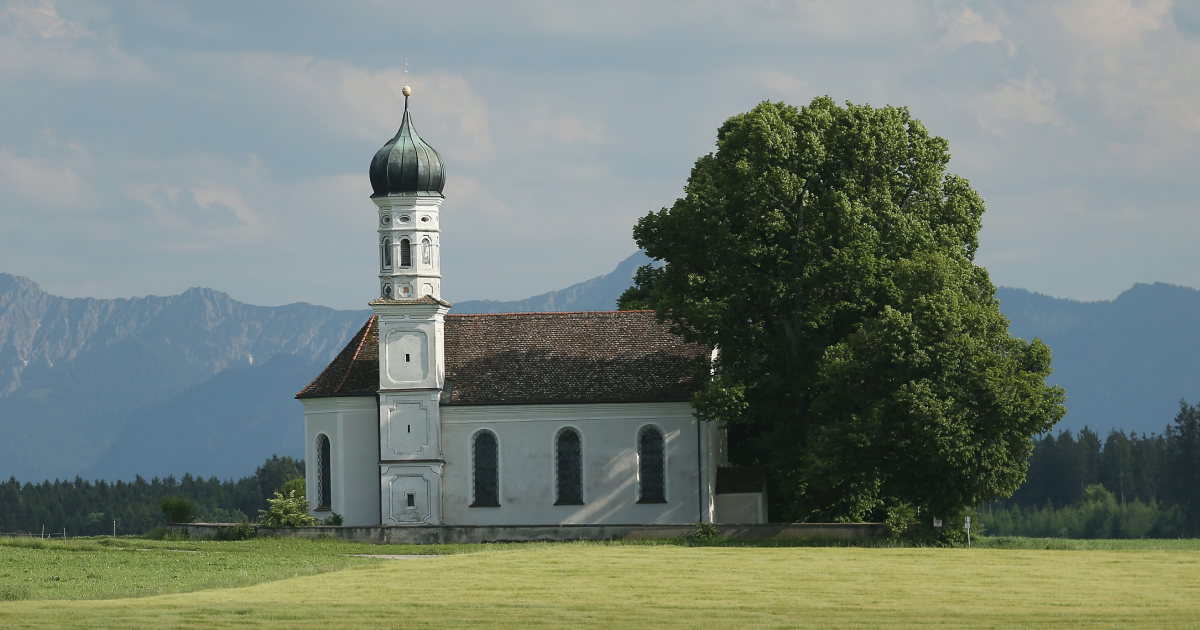
Nestling at the foot of the hills that mark the rural Gloucestershire-Worcestershire border, the little Puginesque church serves a small and disparate community. On my way through the lanes I wondered how the congregation would cope with the reintroduction of hymns after a hiatus of nearly 18 months. More pressingly, as I climbed the stairs to the west gallery – solemnly marked “Organist Only” – I wondered in what state the instrument would be after six seasons, including two heatwaves and a bitter winter.

Temperature and humidity play havoc with an organ. The wooden parts swell with the heat, and the lead-bottomed pipes soften; in the cold the issues are reversed. Unattended, this can cause total havoc, with minor and easily solved problems developing into major and permanent faults like a scowl when the wind changes. My worries were groundless, however: the parish priest had tended it faithfully and it was in pristine condition.

He had chosen the music with similar diligence, and with ecumenical variety: the Methodist Charles Wesley’s “Love Divine”, “All Loves Excelling” (to “Blaenwern”: the Welsh tune, and therefore the right one); the Anglican Edward Plumptre’s “Thy Hand, O God, Has Guided”; the tub-thumping ultramontane Catholic Frederick W Faber’s “Jesus, Gentlest Saviour”. From the first line of the first hymn, it was clear that the people were determined to sing. They had been waiting for a long time, and sing they did.

It was all wonderfully uplifting; over refreshments in the churchyard afterwards there was evident delight that the return journey towards normality had begun. I shall treasure for a while the compliment paid by an elderly retired-colonel type, which went along the lines of “the last one was a bit long, I thought, but you set off at a good pace, and we kept up. Good show.” There is one little corner of the vineyard, then, for whom the return to singing will be just fine. 

But what of those places where congregational singing was not even the norm before lockdown? Over the years I have attended too many Masses where those in the pews have sung nothing at all, leaving it to the choir or cantor, and remaining mute throughout. The American musicologist Thomas Day recognised similar experiences nearly three decades ago; he brought out Why Catholics Can’t Sing in 1992, with its naughty subheading The Culture of Catholicism and the Triumph of Bad Taste. 

Once, while a very competent amateur choir offered a short and pretty piece of polyphony while the altar was being prepared at a big Mass, an old man sitting in front of me turned to his sour-faced companion and remarked loudly and pointedly how much he detested “this kind of thing”. What is it about beauty that some people hate? I made a point of singing the hymn that followed at full throttle, and right into his hearing aid – for which, mea culpa, I shall probably do time later. 

The 2013 edition of Dr Day’s book had a more optimistic byline: “with New Grand Conclusions and Good Advice”. On the public worship front, good advice is just what we need, both in the context of the relaxing of regulations and in the turbulent wake of Pope Francis’s Traditionis Custodes. Congregations used to singing need to be encouraged to go on singing, and others need to be encouraged to start at all; such work will take time, patience, energy and investment. 

The effort will be worth it, though, because – as St Augustine of Hippo may or may not have said – whoever sings, prays twice.
It was Sunday morning, and I was wallowing in a deep bath when my hostess knocked on the door. “Mass is at ten. Will you play?” This is not an entirely unusual situation when staying with friends in the countryside, where organists are at a premium. I learned to play the organ when I was at school, and – while I don’t claim to be the next Carlo Curley – the lingering muscle-memory suffices. A few hymns, ite, missa est, then coffee and gratitude all round. 

The Seventeenth Sunday in Ordinary Time was far from ordinary; it was the day that the churches returned to indoor congregational singing. Much ink has been spilt over the reasonableness of the government’s restrictions on religious worship compared to the latitude granted to other major gatherings, and in the light of the latter, also over the Church’s response. I do not intend to reiterate the arguments; suffice it to say, the stakes were higher than usual. 

Nestling at the foot of the hills that mark the rural Gloucestershire-Worcestershire border, the little Puginesque church serves a small and disparate community. On my way through the lanes I wondered how the congregation would cope with the reintroduction of hymns after a hiatus of nearly 18 months. More pressingly, as I climbed the stairs to the west gallery – solemnly marked “Organist Only” – I wondered in what state the instrument would be after six seasons, including two heatwaves and a bitter winter.

Temperature and humidity play havoc with an organ. The wooden parts swell with the heat, and the lead-bottomed pipes soften; in the cold the issues are reversed. Unattended, this can cause total havoc, with minor and easily solved problems developing into major and permanent faults like a scowl when the wind changes. My worries were groundless, however: the parish priest had tended it faithfully and it was in pristine condition.

He had chosen the music with similar diligence, and with ecumenical variety: the Methodist Charles Wesley’s “Love Divine”, “All Loves Excelling” (to “Blaenwern”: the Welsh tune, and therefore the right one); the Anglican Edward Plumptre’s “Thy Hand, O God, Has Guided”; the tub-thumping ultramontane Catholic Frederick W Faber’s “Jesus, Gentlest Saviour”. From the first line of the first hymn, it was clear that the people were determined to sing. They had been waiting for a long time, and sing they did.

It was all wonderfully uplifting; over refreshments in the churchyard afterwards there was evident delight that the return journey towards normality had begun. I shall treasure for a while the compliment paid by an elderly retired-colonel type, which went along the lines of “the last one was a bit long, I thought, but you set off at a good pace, and we kept up. Good show.” There is one little corner of the vineyard, then, for whom the return to singing will be just fine. 

But what of those places where congregational singing was not even the norm before lockdown? Over the years I have attended too many Masses where those in the pews have sung nothing at all, leaving it to the choir or cantor, and remaining mute throughout. The American musicologist Thomas Day recognised similar experiences nearly three decades ago; he brought out Why Catholics Can’t Sing in 1992, with its naughty subheading The Culture of Catholicism and the Triumph of Bad Taste. 

Once, while a very competent amateur choir offered a short and pretty piece of polyphony while the altar was being prepared at a big Mass, an old man sitting in front of me turned to his sour-faced companion and remarked loudly and pointedly how much he detested “this kind of thing”. What is it about beauty that some people hate? I made a point of singing the hymn that followed at full throttle, and right into his hearing aid – for which, mea culpa, I shall probably do time later. 

The 2013 edition of Dr Day’s book had a more optimistic byline: “with New Grand Conclusions and Good Advice”. On the public worship front, good advice is just what we need, both in the context of the relaxing of regulations and in the turbulent wake of Pope Francis’s Traditionis Custodes. Congregations used to singing need to be encouraged to go on singing, and others need to be encouraged to start at all; such work will take time, patience, energy and investment. 

The effort will be worth it, though, because – as St Augustine of Hippo may or may not have said – whoever sings, prays twice.

subscribe to
the catholic herald

Continue reading your article with a subscription.
Read 5 articles with our free plan.
Subscribe

subscribe to the catholic herald today

Our best content is exclusively available to our subscribers. Subscribe today and gain instant access to expert analysis, in-depth articles, and thought-provoking insights—anytime, anywhere. Don’t miss out on the conversations that matter most.
Subscribe