March 19, 2026

SSPX sets out case for episcopal consecrations in new book sent to Italian bishops

The Catholic Herald
More
Related
Min read
share

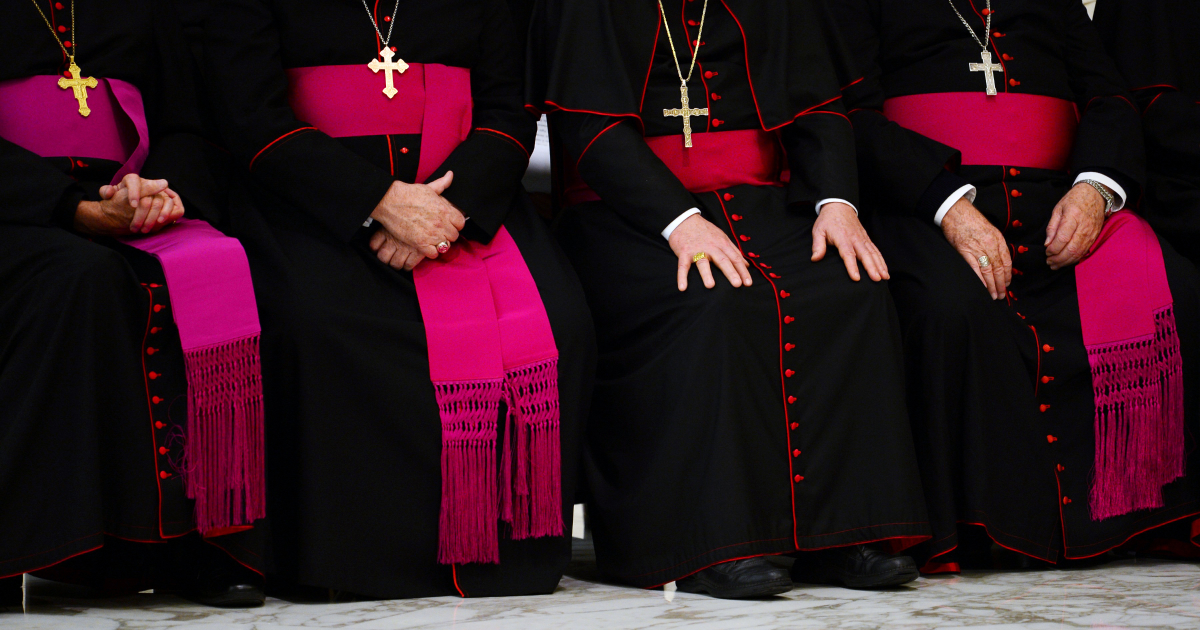
The Priestly Fraternity of Saint Pius X has written to every diocesan bishop in Italy, sending them a newly published book explaining and defending its intention to carry out episcopal consecrations.

The book, titled At the Service of the Church, sets out in detail the Society’s argument that the present condition of the Church constitutes a crisis so serious that it justifies extraordinary action.

In a covering letter, the Italian District Superior, Fr Gabriele D’Avino, presents the initiative as an “invitation to renew reflection on the crisis”, framing the gesture as one aimed at encouraging discussion rather than provoking confrontation. Yet the contents of the book itself are far more direct, asserting that elements within the Church’s leadership have, in its words, “adulterated the faith”, thereby placing souls in danger and creating a situation in which resistance to authority becomes not only permissible but necessary.

The Society’s own statement accompanying the distribution of the book makes this explicit. It says that the publication “reiterates the rationale behind the announced episcopal consecrations” and presents “the main theological and canonical arguments justifying what Archbishop Marcel Lefebvre, in 1988, called ‘operation survival’ of Tradition.” It opens with a stark citation from St Paul: “Even if we, or an angel from heaven, were to preach to you a gospel other than the one we preached to you, let him be accursed” (Gal 1:8), applying this warning not to external threats but to what it sees as errors emerging within the Church itself.

It argues that the Church is experiencing an “extraordinary” or “grave public” state of necessity. The book develops this through a series of principles, arguing that when many souls are in serious spiritual danger and “without hope of assistance from the legitimate pastors”, a duty arises for bishops to act even without authorisation. It states that “the grave need of many must be equated with the extreme need of the individual” and that such a situation imposes “a duty of assistance ‘sub gravi’” rooted in the very nature of the episcopal office.

From this, the Society draws its most controversial conclusion: that in such circumstances, the normal requirement for a papal mandate in episcopal consecrations does not bind. The text argues that “in times of necessity, the duty to help is independent of the cause of the necessity” and insists that this duty applies “even when it is the superior himself who puts souls in a state of necessity.” It goes further, stating that a command issued in such a situation “is not binding (‘inefficax’)” and that a subject who does not obey under these conditions “does not question the Authority in its legitimate exercise.”

This reasoning is reinforced by an appeal to the concept of supplied jurisdiction, with the book asserting that the Church provides the necessary authority in cases where it is lacking due to extraordinary circumstances. It claims that “the power of jurisdiction arises from the request of the faithful, and not from the consent of the hierarchical superior”, a position long contested by Rome but central to the Society’s self-understanding.

The publication also directly addresses one of the most sensitive issues: whether consecrating bishops against the will of the Pope constitutes schism. It argues that such an act is not necessarily schismatic if carried out in a genuine state of necessity and with the intention of preserving the faith, explicitly rejecting the idea that its position entails a rupture with the Church.

The book follows failed attempts to reach a resolution between Rome and the Society’s leadership. While those to be consecrated have not yet been announced and the location has not been confirmed, it appears likely that the planned consecration of new bishops for the Society, scheduled for July 1, will go ahead, marking a new chapter for the traditionalist group and likely leading to excommunication for those involved.
The Priestly Fraternity of Saint Pius X has written to every diocesan bishop in Italy, sending them a newly published book explaining and defending its intention to carry out episcopal consecrations.

The book, titled At the Service of the Church, sets out in detail the Society’s argument that the present condition of the Church constitutes a crisis so serious that it justifies extraordinary action.

In a covering letter, the Italian District Superior, Fr Gabriele D’Avino, presents the initiative as an “invitation to renew reflection on the crisis”, framing the gesture as one aimed at encouraging discussion rather than provoking confrontation. Yet the contents of the book itself are far more direct, asserting that elements within the Church’s leadership have, in its words, “adulterated the faith”, thereby placing souls in danger and creating a situation in which resistance to authority becomes not only permissible but necessary.

The Society’s own statement accompanying the distribution of the book makes this explicit. It says that the publication “reiterates the rationale behind the announced episcopal consecrations” and presents “the main theological and canonical arguments justifying what Archbishop Marcel Lefebvre, in 1988, called ‘operation survival’ of Tradition.” It opens with a stark citation from St Paul: “Even if we, or an angel from heaven, were to preach to you a gospel other than the one we preached to you, let him be accursed” (Gal 1:8), applying this warning not to external threats but to what it sees as errors emerging within the Church itself.

It argues that the Church is experiencing an “extraordinary” or “grave public” state of necessity. The book develops this through a series of principles, arguing that when many souls are in serious spiritual danger and “without hope of assistance from the legitimate pastors”, a duty arises for bishops to act even without authorisation. It states that “the grave need of many must be equated with the extreme need of the individual” and that such a situation imposes “a duty of assistance ‘sub gravi’” rooted in the very nature of the episcopal office.

From this, the Society draws its most controversial conclusion: that in such circumstances, the normal requirement for a papal mandate in episcopal consecrations does not bind. The text argues that “in times of necessity, the duty to help is independent of the cause of the necessity” and insists that this duty applies “even when it is the superior himself who puts souls in a state of necessity.” It goes further, stating that a command issued in such a situation “is not binding (‘inefficax’)” and that a subject who does not obey under these conditions “does not question the Authority in its legitimate exercise.”

This reasoning is reinforced by an appeal to the concept of supplied jurisdiction, with the book asserting that the Church provides the necessary authority in cases where it is lacking due to extraordinary circumstances. It claims that “the power of jurisdiction arises from the request of the faithful, and not from the consent of the hierarchical superior”, a position long contested by Rome but central to the Society’s self-understanding.

The publication also directly addresses one of the most sensitive issues: whether consecrating bishops against the will of the Pope constitutes schism. It argues that such an act is not necessarily schismatic if carried out in a genuine state of necessity and with the intention of preserving the faith, explicitly rejecting the idea that its position entails a rupture with the Church.

The book follows failed attempts to reach a resolution between Rome and the Society’s leadership. While those to be consecrated have not yet been announced and the location has not been confirmed, it appears likely that the planned consecration of new bishops for the Society, scheduled for July 1, will go ahead, marking a new chapter for the traditionalist group and likely leading to excommunication for those involved.
subscribe to
the catholic herald

Continue reading your article with a subscription.
Read 5 articles with our free plan.
Subscribe

subscribe to the catholic herald today

Our best content is exclusively available to our subscribers. Subscribe today and gain instant access to expert analysis, in-depth articles, and thought-provoking insights—anytime, anywhere. Don’t miss out on the conversations that matter most.
Subscribe