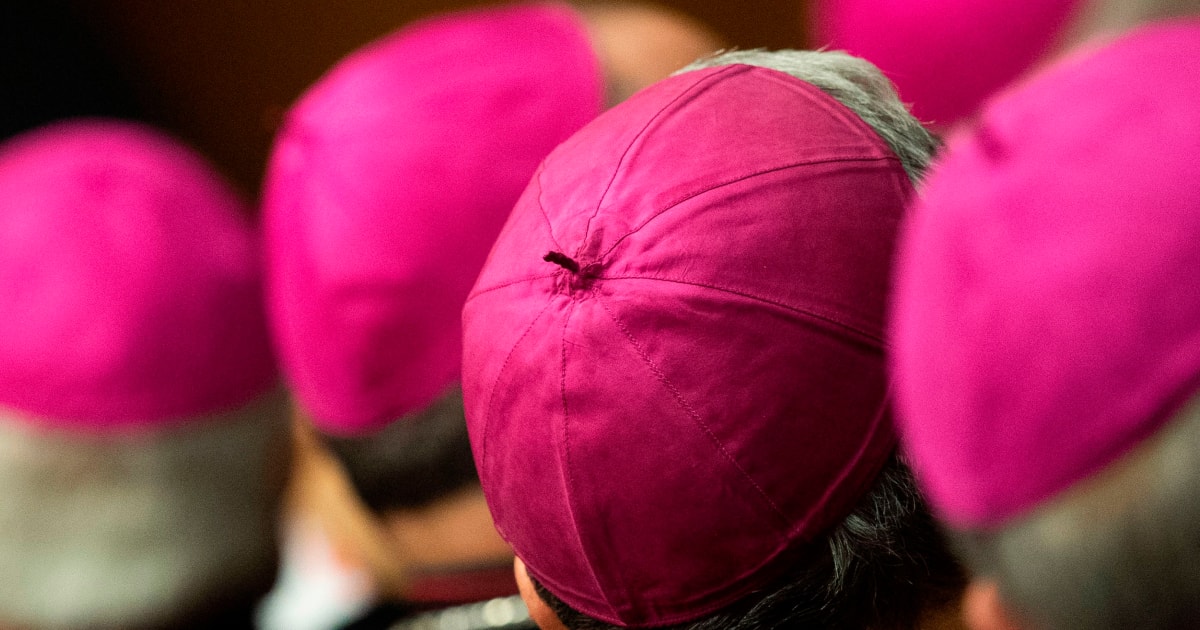
The traditionalist Catholic group the Society of Saint Pius X has confirmed that the names of new bishops to be consecrated at its seminary in Switzerland on July 1 will be announced in June, as tensions grow with senior Vatican figures over the planned ordinations.
The Society’s Superior General, Davide Pagliarani, and the United States District Superior, John Fullerton, have both approved the forthcoming announcement, according to sources close to the Society. The episcopal consecrations are scheduled to take place at the SSPX international seminary in Écône, the movement’s historic centre.
The July ceremony is expected to mark the most significant development within the Society in more than three decades, recalling the controversial episcopal consecrations carried out in 1988 by the late French archbishop Marcel Lefebvre. On that occasion, Archbishop Lefebvre consecrated four bishops without papal mandate, prompting the Holy See to declare that the act constituted a schismatic offence and to impose automatic excommunications, later lifted in 2009 by Benedict XVI as part of efforts at reconciliation.
The Society has indicated that the forthcoming consecrations are intended to secure episcopal succession for its global apostolate, to ensure new generations of priests may be ordained and provided for, which now includes hundreds of priests and chapels across Europe, the Americas, Africa and Asia. While the group remains canonically irregular within the Catholic Church, recent popes – including Francis – granted limited faculties to its clergy, particularly for the sacrament of Confession and, under certain conditions, marriage.
Opposition to the planned consecrations has emerged from prominent churchmen, notably Cardinals Gerhard Ludwig Müller and Robert Sarah, who have publicly warned against proceeding without explicit papal approval. They have argued that such an action risks deepening divisions within the Church and undermining canonical order.
In response, Fr Pagliarani defended the Society’s position in an interview with its internal media outlets, sharply criticising what he described as a legalistic approach to the crisis in the Church. He stated:
“These cardinals and bishops suffer from a deeper, typically modern unease: the inability to reconcile the demands of faith with those of canon law. Faith requires that one do everything possible to profess, preserve, and transmit it; at the same time, if one interprets the law literally, disregarding current circumstances, the consecration of bishops without the Pope’s approval seems impossible. So what is to be done?”
He continued:
“These cardinals, like others, live in a kind of permanent dichotomy that threatens to destroy their good intentions: they place these two demands side by side, in a Cartesian manner, and find themselves crushed or overwhelmed by the apparent contradiction.”
Church observers note that the announcement of the candidates’ names in June will likely intensify scrutiny from Rome and from canon lawyers, as the Church evaluates whether the consecrations proceed with, or without, papal mandate. The outcome will mark a pivotal moment in relations between the Holy See and the SSPX, nearly four decades after events in Switzerland which led to the foundation of Ecclesia Dei institutes and reshaped the traditionalist movement in modern Catholic history.