August 18, 2026

Synodalism is an anachronism

Msgr Martin Grichting
More
Related
Min read
share

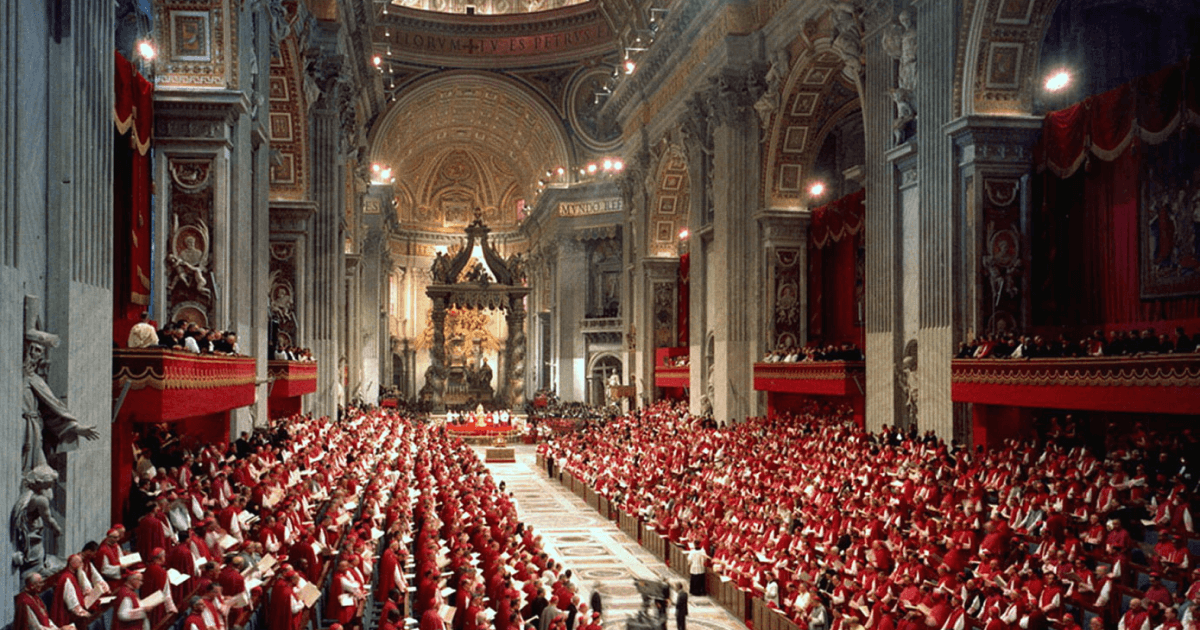
The Second Vatican Council did not create a new Church. It did, however, seek to bring about a new social form of the Church that would once again be in harmony with the demands of the times. For the Council Fathers, the decisive political innovation since the Council of Trent (1545–1563) lay in the fact that the nature of the state had changed. The absolutist state, through which the king and the nobility also dominated society, gave way to the secular constitutional state as a result of the Enlightenment and democratisation. This is characterised by the fact that it no longer claims to rule over the entirety of society. It is no longer a Societas perfecta (“perfect society”).

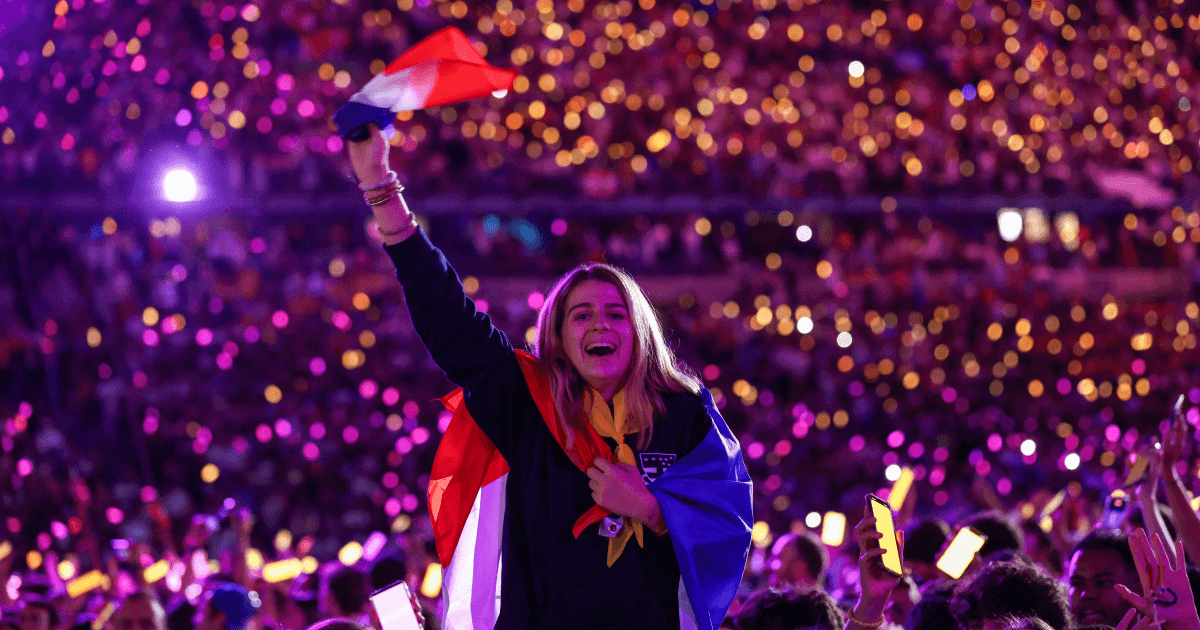
This has opened up a broad field known as civil society. The modern state has been restructured in favour of the latter. Legally, it remains the framework and the social safety net. Through the judiciary, it also acts as an arbiter between political actors and actors in civil society. By retreating to these activities, however, space is created for individuals and their associations. They are called upon to shape the sphere of civil society through their actions. It is on this playing field that the economy, the media, the cultural sector, parts of the education sector, lobby groups and interest groups, the entertainment and leisure industry and sport all operate. It is also the world of associations, clubs and foundations, which come in various forms and pursue a wide range of objectives.

Once the old state had differentiated itself in this way into formal state power and civil society, the Council Fathers came to the conclusion that the Church, as regards its relationship with the world, should do the same. This does not involve the abolition of its hierarchical and sacramental order, which is inalienable. Rather, it is a matter of finding a new social form that can once again be apostolically effective in a new era. One may or may not regard today’s world, shaped by civil society, as beneficial. But the Church must find an appropriate relationship with it. This does not mean calling the tenets of the Christian faith into question.

For the Church, coming to terms with this division in the public sphere means that, whilst the hierarchy remains the primary interlocutor with the state, even though laypeople also become political actors in the modern constitutional state through elections and referendums, they are now, above all, the Christian presence in civil society. Just as civil society is not part of the state, laypeople do not act there in an official capacity on behalf of the Church. Rather, they act in their own name, as citizens who are Christians. This conception embodies the Church’s relationship with the “world”, as renewed by the most recent Council.

The Council Fathers expressed this new attitude of the Church towards earthly realities wisely and with foresight in Lumen Gentium (LG), Chapter IV (nos 30–38). They imparted to the laity a spirituality that equips them to be witnesses to Jesus Christ in a world now distinctly shaped by civil society. Evidently, however, this theological progress has so far proved too much for both the hierarchy and the laity alike.

To understand the Second Vatican Council and to put it into practice would mean that not everything essential to Christian witness and the Church’s effectiveness in the secular sphere can any longer be achieved within the structure of the Church or through official Church channels. From now on, this must be done primarily by the laity, individually and in association with like-minded people, within the complex realities of civil society. As the modern state is a democracy, the laity are also called upon to bear witness there; this is something they cannot, of necessity, do through the Church as institution, but only as individuals. For both, however – for their political and their civil-society witness – the laity require pastoral care, Christian formation and the fearless witness of faith on the part of the hierarchy.

The promotion of synodalism is, in fact, proof of a failure to understand both the world in which we live today and the Second Vatican Council. For this format of discussion is the very antithesis of both: it calls the laity into the official structure of the Church to seek, there, together with and under the Church leadership, official answers to the numerous questions raised by a diverse secular reality. The outcomes of synodalist discussions are then to be carried over by the official Church into politics and civil society in the form of papers, resolutions and actions bearing the stamp of ecclesiastical authority.

Synodalism leads laypeople to believe that only, or primarily, the institutional Church matters when it comes to ecclesial, apostolic work within secular realities. They then wait for the synodal community as a whole to tell them what to do. In this way, they fail to recognise what their task already is today: to make Jesus Christ – Prophet, Priest and King – present in the midst of the fragmented and confusing reality of civil society. And because the current Church leadership is unable to impart to the laity a suitable spirituality for this task, one that corresponds to their very nature, they are drawn into the activities of the hierarchy. From there, they are then supposed – supposedly – to contribute to the Church’s mission.

The laity are indiscriminately mixed with the successors of the Apostles in so-called synodal bodies, as was the case with what was once the Synod of Bishops. This constitutes yet another disregard for the Second Vatican Council. For in LG 10, the Council had taught that there is an essential difference between the hierarchical and the universal priesthood. For years, the Vatican’s synod activists have been attempting to push ahead with the levelling of clergy and laity in the particular Churches as well. The most recent example is the notes for bishops and “synod teams” published by the Apostolic See at the end of July 2026. This is being done with ever greater verbosity and ever greater desperation. For it fails to take root, because it does not help the faithful to live out their Christian faith in today’s world.

Through the promotion of synodality, the message that Robert Bellarmine (1542–1621) had rightly put forward in his own time is once again being conveyed today: the Church is as visible as the Republic of Venice. When the Reformers denied the visibility of the Church as an institution, the Catholic side felt compelled to emphasise it. However, this led to Church life being viewed as something that took place primarily within ecclesiastical institutions. From the baroque period onwards, this gave rise to the pre-eminent role of the parish, with its associations, brotherhoods and other appendages. At higher levels, Catholic interest groups and even political parties were formed. These institutions, led or at least guided by Church authorities, were intended to bring about the Church’s engagement with the world. Undoubtedly, this bore fruit in the circumstances of the time. But following the separation of state power and civil society, it tended to form a separate sphere that was increasingly unable to shape these realities in a Christian manner.

Today, synodalism is a repetition of this that has become an anachronism. That is why contemporary synodalists, who often look down with contempt upon those who follow the Tridentine liturgy, are themselves – and in a problematic sense – Tridentine. They differ, however, from liturgical Tridentines in one respect: they fail to recognise that they themselves have remained (political) Tridentines. For the Church no longer stands, as in the Middle Ages, simply as a Societas perfecta in opposition to the all-dominant state Societas perfecta. Rather, whilst it still stands in opposition to state authority, it now lives, for the most part – particularly through the laity – at the very heart of civil society. It can no longer simply confront the latter from the outside through ecclesiastical or para-ecclesiastical institutions. Instead, the secular world must be imbued with the Christian spirit “from within” (LG 31) by the laity.

The Fathers of the Second Vatican Council understood the fundamental transformation of secular realities that has taken place since the modern era. They understood more about modernity than today’s synodalists, who believe themselves to be modern. For the latter remain mentally stuck in the categories of yesterday. By applying anachronistic solutions, the synodalists obscure the hierarchical and sacramental nature of the Church and introduce conflicts of authority between clergy and laity into it. It would be naive to mistake the clamour caused by the synodalists for the resonance of the Gospel in the realities of politics and civil society.

Continue reading with a free account

Create a free account to read up to five articles each month
Create free account

You have # free articles remaining this month.

Subscribe to get unlimited access.
Sign up

subscribe to the catholic herald today

Our best content is exclusively available to our subscribers. Subscribe today and gain instant access to expert analysis, in-depth articles, and thought-provoking insights—anytime, anywhere. Don’t miss out on the conversations that matter most.
Subscribe