




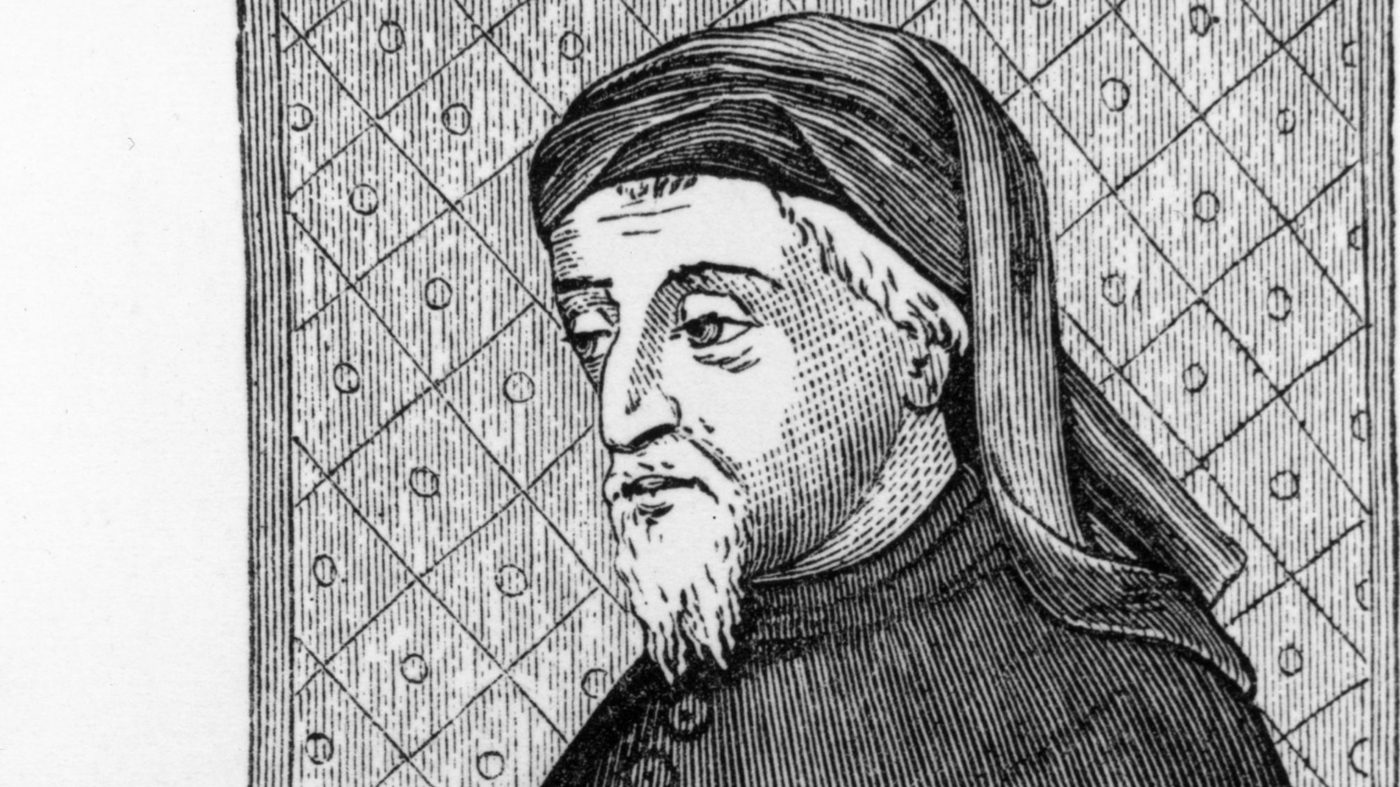
I hadn’t realised until I began re-reading the Canterbury Tales that Chaucer’s 14th-century ‘‘road trip’’ poem – 29 pilgrims heading off from the Tabard Inn in Southwark for a story-telling spring jaunt to Canterbury – would never have been written were it not for the Florence plague of 1348. It was this disaster that inspired Boccaccio to compose his Decameron – a social comedy based on the idea of a small group of young Florentines exchanging witty, human and risqué stories to pass their time of exile from the ravaged city. Chaucer read Boccaccio closely and may even have met him: working as a diplomat for the English court, Chaucer travelled to Italy in the 1370s. He was a part-time poet. Having hardly left our ancient hamlet of Upton Cressett, in Shropshire, for several weeks, I am reminded how today’s forced isolation has enabled those of us lucky enough to be holed up in remote country boltholes – not unlike being snowed in for weeks – to experience the joys of an almost medieval cycle of life, in which people rarely travelled beyond their immediate landscapes and feudal villages. As a result, our forebears were more connected to each other, to the identity of their landscape, and, I think, to God. Living like a medieval Freeman has re-focused both mind and spirit. When you aren’t rushing to catch a train, watching a Google calendar fill up months in advance with engagements, attending endless social events, and dealing with an avalanche of daily emails, you start to view the ‘‘Wheel of Life’’ – or Rota Fortuna – in a different way. I have found reading Chaucer in my very rusty Middle English, connecting back to the clearly structured medieval view of the world, has been refreshing for the soul. A world in which God came first and everything else had its natural rank and position.
3:34 PM
Tales of isolation with Chaucer
William Cash

5 min read



Already a subscriber? Sign in
5freearticles every month
Continue reading with a free account. No card needed.
- Five free articles every thirty days, on any device you sign in on
- The Catholic Herald newsletter, every morning
- Subscribe whenever you like for everything: every article and the magazine
Related articles
 Newsroom
Church leaders urge Drumcree dialogue: ‘Too much is at stake’
The Catholic and Church of Ireland Archbishops of Armagh have urged a renewed commitment to peace and reconciliation amid the Drumcree stand-off
Corrie Douglas-Young Newsroom
Thousands of Irish children to join global Rosary campaign
Corrie Douglas-Young Newsroom
TikTok priest urges young people to stand with persecuted Christians
Nathalie Raffray Newsroom
Baby born at 25 weeks reunites with neonatologist two years after leaving hospital
The Catholic Herald Newsroom
Joe Biden honoured by Planned Parenthood after defending abortion rights
Christine Rousselle
subscribe to the catholic herald today
Our best content is exclusively available to our subscribers. Subscribe today and gain instant access to expert analysis, in-depth articles, and thought-provoking insights—anytime, anywhere. Don’t miss out on the conversations that matter most.
Subscribe



