January 10, 2026
January 10, 2026

Ten women championing the pro-life message

Min read
share

One of the gravest moral failures of the twenty first century has been the inability to recognise the value of life in the womb. Despite technological advances that have dramatically increased our understanding of unborn children, moral concern for them has lagged far behind. As a consequence, many countries have introduced chilling and dystopian laws that permit abortion up until birth, with some jurisdictions even failing to grant legal protection to children born alive following an attempted abortion.

The arguments used to justify such abrogations of human rights have relied heavily on euphemisms such as “choice” and “autonomy”. Appeals to the inherent dignity of the unborn have been dismissed by those in positions of power, as treating human life as expendable has often proved politically advantageous in appeasing a culture of death.

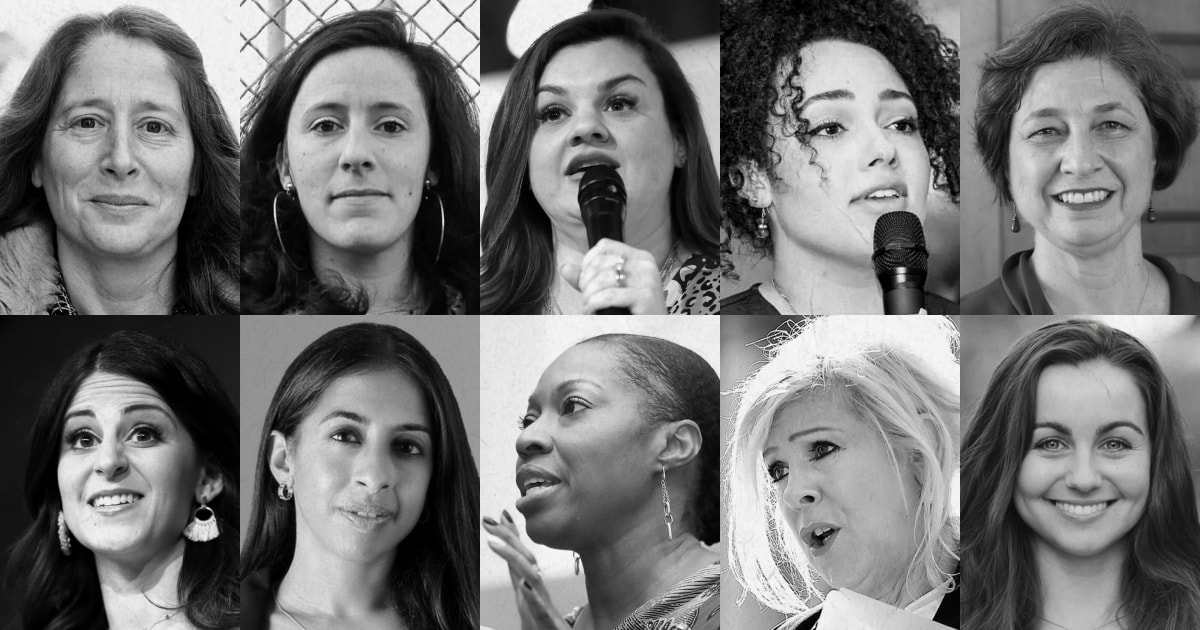
Yet while there has been gross negligence on the part of political leaders and lawmakers, there has also been growing resistance across the world. Pro-life movements have continued to argue for respect for human life from conception to natural death. Despite repeated accusations that the pro-life movement is anti women, it is in fact led by women from a wide range of backgrounds, united in their conviction that every human life has value. What follows is a snapshot of women across the globe working to defend human dignity for all.

Lila Rose (United States)

Image by Gage Skidmore under Creative CommonsAttribution-Share Alike 2.0 Generic license

Lila Rose is emblematic of the modern pro-life movement. She is widely regarded as one of the world’s leading figures in the fight to save the unborn, having advocated relentlessly on their behalf for more than two decades.

At just 15, she founded Live Action, an organisation which today reaches more than 50 million people each month with pro-life content. In its early years, Live Action focused on undercover investigations into Planned Parenthood, the United States’ largest abortion provider. Work conducted under Rose’s leadership exposed the organisation as turning a blind eye to child sexual abuse, facilitating sex-selective abortion, and engaging in the sale of body parts from aborted babies. Among the most harrowing investigations were those in which Live Action filmed Planned Parenthood staff giving advice on abortion services to actors posing as sex traffickers of 14-year-old girls, and accepting donations earmarked specifically for “black babies”, describing the desire to abort a black baby as “understandable”.

Today, Rose hosts the hugely popular Lila Rose Podcast and continues to lead Live Action in its defence of the unborn. She has been described as the “messenger in chief” of the pro-life movement by VICE, the face of the millennial anti-abortion movement by The Atlantic, and the fiercest opponent of abortion by the BBC. Rose has advocated for the unborn before the European Parliament and at the United Nations’ Commission on the Status of Women. Her record places her firmly among the most significant pro-life advocates of all time.

Eden McCourt (United Kingdom)

Eden McCourt is a British pro-life activist, speaker, writer, and content creator from London, known for her leadership in youth-focused anti-abortion advocacy. She has been involved in the pro-life movement for more than a decade, beginning her activism as a teenager after learning that medical professionals had pressured her parents to abort her disabled sister, an experience that profoundly shaped her convictions.

McCourt is the co-founder of Abortion Resistance, a notably young UK-based organisation dedicated to empowering young people to speak publicly against abortion and to work towards a culture that values all human life. The group is particularly active on social media, leads a youth section at the UK March for Life, and organises its own rallies and campaigns.

McCourt’s work forms part of a wider trend among younger Britons who are increasingly rejecting the idea of abortion as a “progressive” good. A recent Ipsos poll found that women aged 16 to 34 were significantly more likely to hold pro-life views than older age groups, with 26 per cent saying abortion should be illegal in all or most cases, compared with 13 per cent of women aged 55 to 75. Among men, the contrast was sharper still, with only 46 per cent of those aged 16 to 35 supporting abortion, compared with 82 per cent of men aged 55 to 75.

Joanna Howe (Australia)

Joanna Howe, a mother of five, is one of the leading pro-life voices in Australia. A law academic at the University of Adelaide, she did not always hold pro-life views and initially described herself as pro-choice at the beginning of her legal studies. It was only after a friend challenged her assumptions about life in the womb that she changed her position.

For several years, Howe avoided public activism, conscious that opposing abortion in Australia could amount to professional suicide given the close alignment between the abortion lobby and much of the media. Her call to action came in 2021, when her home state of South Australia legislated abortion up until birth and on demand. Howe had given birth to her second child at 37 weeks, and the knowledge that a healthy baby with a healthy mother could be killed at the same gestation under similar laws in Victoria was something she could not ignore.

Since then, she has become a powerful advocate for the unborn in a country with some of the most extreme abortion laws in the world. Across Australia, abortion is legal in every state and territory, with terminations permitted up until birth.

Despite sustained efforts by powerful groups to discredit her work, Howe has found a receptive audience across the country. Drawing on her academic background, she has worked to expose the realities of abortion in Australia through careful use of data and research. Her stated aim is “to make abortion unthinkable, because we know that it kills a human being and it harms her mother”.

Obianuju Ekeocha (Nigeria)

Obianuju Ekeocha is widely regarded as the leading face of the pro-life movement in Africa. She came to international prominence in 2012 after writing an open letter to Melinda Gates in response to the Gates Foundation’s pledge to spend billions of dollars expanding access to contraception in developing countries.

In the letter, Ekeocha wrote that “having grown up in a remote village in Africa, I have always known that a new life is welcomed with great joy and happiness”. She criticised what she saw as an attempt to erode “the sexual morality that has been woven into the DNA of our society by our faith”, and instead called for programmes that promote chastity, education, and authentic development.

Ekeocha is the founder and president of Culture of Life Africa, an organisation dedicated to defending the sanctity and dignity of human life across the continent. She has spoken at the White House, the US State Department, and the European Parliament.

Isabel Vaughan-Spruce (United Kingdom)

Isabel Vaughan-Spruce is one of the most recognisable figures in the contemporary pro-life movement. Arrested twice and becoming the first person to face criminal charges under the UK’s buffer zone legislation, she has paid a high personal price for her concern for the unborn. Her first arrest came in November 2022 after she told police that she “might” be praying silently in her head while standing on a public street near an abortion clinic.

Raised in a deeply pro-life household, Vaughan-Spruce recalls her father opening their family home to those who had fallen on hard times. These early experiences shaped her belief that human dignity does not depend on achievement, but on being made in the image of God.

As a teenager, she began travelling to Birmingham to pray outside the Calthorpe Clinic, often invoking the intercession of Our Lady of Guadalupe. On the feast of Our Lady of Guadalupe in December 2019, the clinic manager announced that it would close at the end of the year. Since 2020, Vaughan-Spruce has prayed regularly outside a BPAS abortion centre in Birmingham. Alongside her prayerful witness, she serves as Director of March for Life UK.

Katie Ascough (Ireland)

Katie Ascough was raised with strong pro-life convictions, reinforced by the experience of holding her brother Peter, who was miscarried when she was 15. She began volunteering with pro-life organisations in Ireland and continued her activism at university, where she was elected president of the students’ union.

Despite winning the election, a coalition of pro-abortion students sought to impeach her on the basis of her views, and she was removed from office just months into her term. The episode propelled Ascough into national prominence, and in 2018 she received the Westminster Award for Human Life, Human Rights, and Human Dignity.

That same year, she became the full-time spokesperson for the Pro Life Campaign in the run-up to Ireland’s abortion referendum. More recently, she served as the keynote speaker at Belgium’s March for Life. Ascough remains one of the most recognisable figures in Irish pro-life activism, particularly associated with efforts to keep the country abortion free.

Bernadette Smyth (Northern Ireland)

Bernadette Smyth is, for many, the face of the pro-life movement in Northern Ireland. She founded the region’s largest pro-life organisation, Precious Life, in 1998, when abortion was still illegal. Since then, she has worked tirelessly to protect women and unborn children from abortion.

Smyth has cited Martin Luther King Jr and Pope John Paul II as major influences, and has described her Catholic faith as “guiding my conscience and sustaining my commitment to defending the most vulnerable”. In 2025, she addressed the All-Ireland Rally for Life, telling supporters that “we will never be silent until abortion becomes illegal and unthinkable in Ireland once again”.

Abby Johnson (United States)

Image by Gage Skidmore under the Creative Commons Attribution-Share Alike 2.0 Generic license.

Abby Johnson did not begin her career in the pro-life movement. Until her late twenties, she worked as a clinic director for Planned Parenthood in Texas. On 5 October 2009, she entered a nearby pro-life centre and explained that she could no longer continue her work in the abortion industry.

Since then, Johnson has become a prominent advocate for the pro-life cause. She founded And Then There Were None, a ministry dedicated to helping abortion clinic workers leave the industry. Since 2012, the organisation has assisted more than 740 workers in doing so. Johnson is the author of several books, including Unplanned and The Walls Are Talking, and has been involved in the production of two films, one recounting her own story and the other exposing practices within the abortion industry.

Lenise Garcia (Brazil)

Lenise Garcia is the current president of the Movimento Nacional da Cidadania pela Vida – Brasil sem Aborto, Brazil’s principal national pro-life organisation. She has been a leading public voice opposing efforts to introduce abortion in the country, including appearances before the Federal Senate in defence of life from conception.

An academic by training, Garcia is a biologist with a doctorate in microbiology and formerly served as a professor at the Institute of Biology at the University of Brasília. She consistently frames her advocacy through a scientific and bioethical lens, arguing that abortion harms the unborn child, women, and society as a whole. Her long-standing involvement in education, public debate, and institutional advocacy has made her one of the most prominent defenders of Brazil’s pro-life laws during periods of sustained political and judicial pressure.

Adélaïde Pouchol (France)

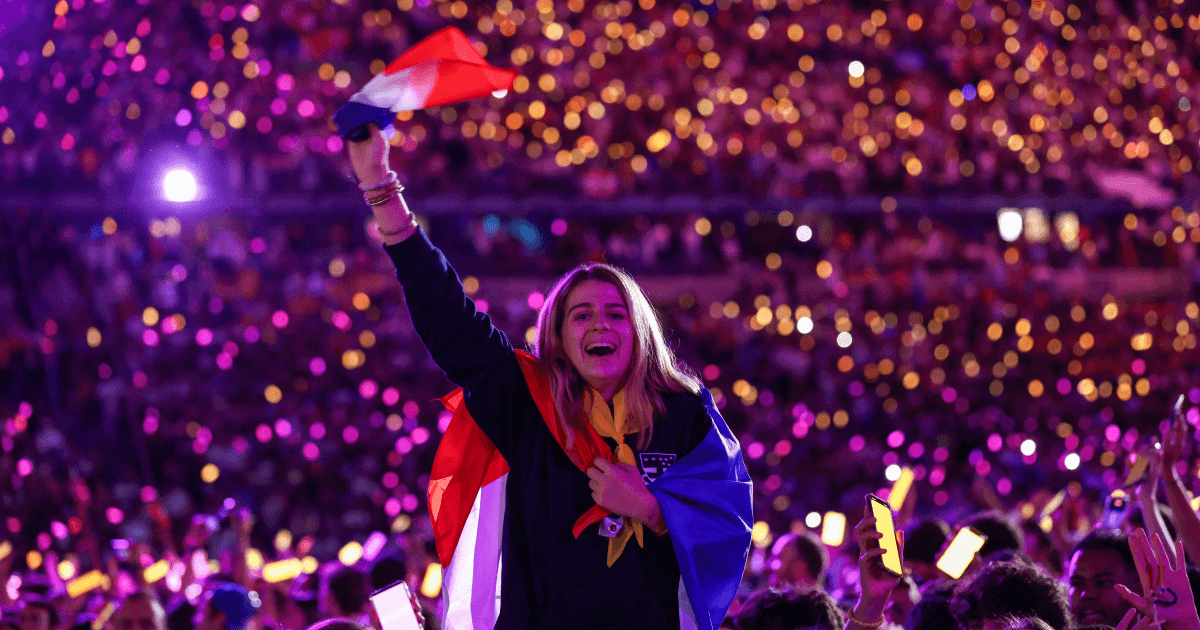
Spokesperson for La Marche pour la Vie, France’s March for Life, Adélaïde Pouchol is a well-known figure in France’s pro-life movement.

A journalist by profession, the former deputy editor of L’Homme Nouveau has brought a media-savvy edge to the cause. During her involvement, La Marche pour la Vie has reported sustained growth in attendance over its two decades of operation. In 2019, Pouchol addressed the crowd at the Paris march, declaring: “Today, and for as long as it takes, we will be the voice of children who will never be able to speak.”

With assisted suicide currently under debate in the French parliament, this year’s march has taken on particular significance. On 18 January, Pouchol and thousands of others are expected to take to the streets of Paris, calling on the government to respect life from the moment of conception to natural death.

One of the gravest moral failures of the twenty first century has been the inability to recognise the value of life in the womb. Despite technological advances that have dramatically increased our understanding of unborn children, moral concern for them has lagged far behind. As a consequence, many countries have introduced chilling and dystopian laws that permit abortion up until birth, with some jurisdictions even failing to grant legal protection to children born alive following an attempted abortion.

The arguments used to justify such abrogations of human rights have relied heavily on euphemisms such as “choice” and “autonomy”. Appeals to the inherent dignity of the unborn have been dismissed by those in positions of power, as treating human life as expendable has often proved politically advantageous in appeasing a culture of death.

Yet while there has been gross negligence on the part of political leaders and lawmakers, there has also been growing resistance across the world. Pro-life movements have continued to argue for respect for human life from conception to natural death. Despite repeated accusations that the pro-life movement is anti women, it is in fact led by women from a wide range of backgrounds, united in their conviction that every human life has value. What follows is a snapshot of women across the globe working to defend human dignity for all.

Lila Rose (United States)

Image by Gage Skidmore under Creative CommonsAttribution-Share Alike 2.0 Generic license

Lila Rose is emblematic of the modern pro-life movement. She is widely regarded as one of the world’s leading figures in the fight to save the unborn, having advocated relentlessly on their behalf for more than two decades.

At just 15, she founded Live Action, an organisation which today reaches more than 50 million people each month with pro-life content. In its early years, Live Action focused on undercover investigations into Planned Parenthood, the United States’ largest abortion provider. Work conducted under Rose’s leadership exposed the organisation as turning a blind eye to child sexual abuse, facilitating sex-selective abortion, and engaging in the sale of body parts from aborted babies. Among the most harrowing investigations were those in which Live Action filmed Planned Parenthood staff giving advice on abortion services to actors posing as sex traffickers of 14-year-old girls, and accepting donations earmarked specifically for “black babies”, describing the desire to abort a black baby as “understandable”.

Today, Rose hosts the hugely popular Lila Rose Podcast and continues to lead Live Action in its defence of the unborn. She has been described as the “messenger in chief” of the pro-life movement by VICE, the face of the millennial anti-abortion movement by The Atlantic, and the fiercest opponent of abortion by the BBC. Rose has advocated for the unborn before the European Parliament and at the United Nations’ Commission on the Status of Women. Her record places her firmly among the most significant pro-life advocates of all time.

Eden McCourt (United Kingdom)

Eden McCourt is a British pro-life activist, speaker, writer, and content creator from London, known for her leadership in youth-focused anti-abortion advocacy. She has been involved in the pro-life movement for more than a decade, beginning her activism as a teenager after learning that medical professionals had pressured her parents to abort her disabled sister, an experience that profoundly shaped her convictions.

McCourt is the co-founder of Abortion Resistance, a notably young UK-based organisation dedicated to empowering young people to speak publicly against abortion and to work towards a culture that values all human life. The group is particularly active on social media, leads a youth section at the UK March for Life, and organises its own rallies and campaigns.

McCourt’s work forms part of a wider trend among younger Britons who are increasingly rejecting the idea of abortion as a “progressive” good. A recent Ipsos poll found that women aged 16 to 34 were significantly more likely to hold pro-life views than older age groups, with 26 per cent saying abortion should be illegal in all or most cases, compared with 13 per cent of women aged 55 to 75. Among men, the contrast was sharper still, with only 46 per cent of those aged 16 to 35 supporting abortion, compared with 82 per cent of men aged 55 to 75.

Joanna Howe (Australia)

Joanna Howe, a mother of five, is one of the leading pro-life voices in Australia. A law academic at the University of Adelaide, she did not always hold pro-life views and initially described herself as pro-choice at the beginning of her legal studies. It was only after a friend challenged her assumptions about life in the womb that she changed her position.

For several years, Howe avoided public activism, conscious that opposing abortion in Australia could amount to professional suicide given the close alignment between the abortion lobby and much of the media. Her call to action came in 2021, when her home state of South Australia legislated abortion up until birth and on demand. Howe had given birth to her second child at 37 weeks, and the knowledge that a healthy baby with a healthy mother could be killed at the same gestation under similar laws in Victoria was something she could not ignore.

Since then, she has become a powerful advocate for the unborn in a country with some of the most extreme abortion laws in the world. Across Australia, abortion is legal in every state and territory, with terminations permitted up until birth.

Despite sustained efforts by powerful groups to discredit her work, Howe has found a receptive audience across the country. Drawing on her academic background, she has worked to expose the realities of abortion in Australia through careful use of data and research. Her stated aim is “to make abortion unthinkable, because we know that it kills a human being and it harms her mother”.

Obianuju Ekeocha (Nigeria)

Obianuju Ekeocha is widely regarded as the leading face of the pro-life movement in Africa. She came to international prominence in 2012 after writing an open letter to Melinda Gates in response to the Gates Foundation’s pledge to spend billions of dollars expanding access to contraception in developing countries.

In the letter, Ekeocha wrote that “having grown up in a remote village in Africa, I have always known that a new life is welcomed with great joy and happiness”. She criticised what she saw as an attempt to erode “the sexual morality that has been woven into the DNA of our society by our faith”, and instead called for programmes that promote chastity, education, and authentic development.

Ekeocha is the founder and president of Culture of Life Africa, an organisation dedicated to defending the sanctity and dignity of human life across the continent. She has spoken at the White House, the US State Department, and the European Parliament.

Isabel Vaughan-Spruce (United Kingdom)

Isabel Vaughan-Spruce is one of the most recognisable figures in the contemporary pro-life movement. Arrested twice and becoming the first person to face criminal charges under the UK’s buffer zone legislation, she has paid a high personal price for her concern for the unborn. Her first arrest came in November 2022 after she told police that she “might” be praying silently in her head while standing on a public street near an abortion clinic.

Raised in a deeply pro-life household, Vaughan-Spruce recalls her father opening their family home to those who had fallen on hard times. These early experiences shaped her belief that human dignity does not depend on achievement, but on being made in the image of God.

As a teenager, she began travelling to Birmingham to pray outside the Calthorpe Clinic, often invoking the intercession of Our Lady of Guadalupe. On the feast of Our Lady of Guadalupe in December 2019, the clinic manager announced that it would close at the end of the year. Since 2020, Vaughan-Spruce has prayed regularly outside a BPAS abortion centre in Birmingham. Alongside her prayerful witness, she serves as Director of March for Life UK.

Katie Ascough (Ireland)

Katie Ascough was raised with strong pro-life convictions, reinforced by the experience of holding her brother Peter, who was miscarried when she was 15. She began volunteering with pro-life organisations in Ireland and continued her activism at university, where she was elected president of the students’ union.

Despite winning the election, a coalition of pro-abortion students sought to impeach her on the basis of her views, and she was removed from office just months into her term. The episode propelled Ascough into national prominence, and in 2018 she received the Westminster Award for Human Life, Human Rights, and Human Dignity.

That same year, she became the full-time spokesperson for the Pro Life Campaign in the run-up to Ireland’s abortion referendum. More recently, she served as the keynote speaker at Belgium’s March for Life. Ascough remains one of the most recognisable figures in Irish pro-life activism, particularly associated with efforts to keep the country abortion free.

Bernadette Smyth (Northern Ireland)

Bernadette Smyth is, for many, the face of the pro-life movement in Northern Ireland. She founded the region’s largest pro-life organisation, Precious Life, in 1998, when abortion was still illegal. Since then, she has worked tirelessly to protect women and unborn children from abortion.

Smyth has cited Martin Luther King Jr and Pope John Paul II as major influences, and has described her Catholic faith as “guiding my conscience and sustaining my commitment to defending the most vulnerable”. In 2025, she addressed the All-Ireland Rally for Life, telling supporters that “we will never be silent until abortion becomes illegal and unthinkable in Ireland once again”.

Abby Johnson (United States)

Image by Gage Skidmore under the Creative Commons Attribution-Share Alike 2.0 Generic license.

Abby Johnson did not begin her career in the pro-life movement. Until her late twenties, she worked as a clinic director for Planned Parenthood in Texas. On 5 October 2009, she entered a nearby pro-life centre and explained that she could no longer continue her work in the abortion industry.

Since then, Johnson has become a prominent advocate for the pro-life cause. She founded And Then There Were None, a ministry dedicated to helping abortion clinic workers leave the industry. Since 2012, the organisation has assisted more than 740 workers in doing so. Johnson is the author of several books, including Unplanned and The Walls Are Talking, and has been involved in the production of two films, one recounting her own story and the other exposing practices within the abortion industry.

Lenise Garcia (Brazil)

Lenise Garcia is the current president of the Movimento Nacional da Cidadania pela Vida – Brasil sem Aborto, Brazil’s principal national pro-life organisation. She has been a leading public voice opposing efforts to introduce abortion in the country, including appearances before the Federal Senate in defence of life from conception.

An academic by training, Garcia is a biologist with a doctorate in microbiology and formerly served as a professor at the Institute of Biology at the University of Brasília. She consistently frames her advocacy through a scientific and bioethical lens, arguing that abortion harms the unborn child, women, and society as a whole. Her long-standing involvement in education, public debate, and institutional advocacy has made her one of the most prominent defenders of Brazil’s pro-life laws during periods of sustained political and judicial pressure.

Adélaïde Pouchol (France)

Spokesperson for La Marche pour la Vie, France’s March for Life, Adélaïde Pouchol is a well-known figure in France’s pro-life movement.

A journalist by profession, the former deputy editor of L’Homme Nouveau has brought a media-savvy edge to the cause. During her involvement, La Marche pour la Vie has reported sustained growth in attendance over its two decades of operation. In 2019, Pouchol addressed the crowd at the Paris march, declaring: “Today, and for as long as it takes, we will be the voice of children who will never be able to speak.”

With assisted suicide currently under debate in the French parliament, this year’s march has taken on particular significance. On 18 January, Pouchol and thousands of others are expected to take to the streets of Paris, calling on the government to respect life from the moment of conception to natural death.

share

subscribe to the catholic herald today

Our best content is exclusively available to our subscribers. Subscribe today and gain instant access to expert analysis, in-depth articles, and thought-provoking insights—anytime, anywhere. Don’t miss out on the conversations that matter most.
Subscribe