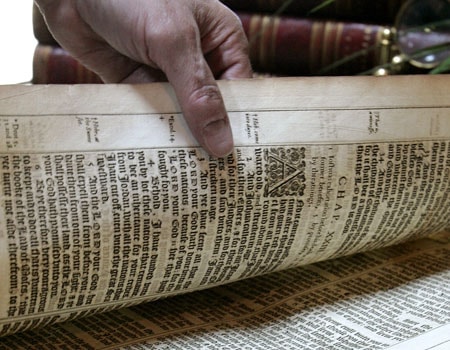



The 400th anniversary of the King James, or “Authorised”, version of the Bible is currently being voluminously celebrated by the BBC (apart from the buildings, the delight of hearing it occasionally read in Church is the only thing about the Church of England that I miss).
Yesterday, throughout the day, lengthy (and glorious) passages from both Old Testament and New were read out; and James Naughtie did several programmes last week about how it came into existence. I don’t remember anything being said about the possible influence of the original version of the Douai-Rheims New Testament (which appeared some 20 years before it) on the King James translation. Despite the fact that the Douai-Rheims was explicitly forbidden as a version to be consulted, there are scholars who maintain that its influence can be detected. The later Challenor version of the Douai-Rheims is the one we know today: and the King James Bible was undoubtedly, in its turn, a major influence on that: one scholar even calls it Challenor’s “base text”. Consider this wonderfully taut and sonorous translation of Matthew 3: 13-17, in the Authorised version: