



✣ Highlights from the week online
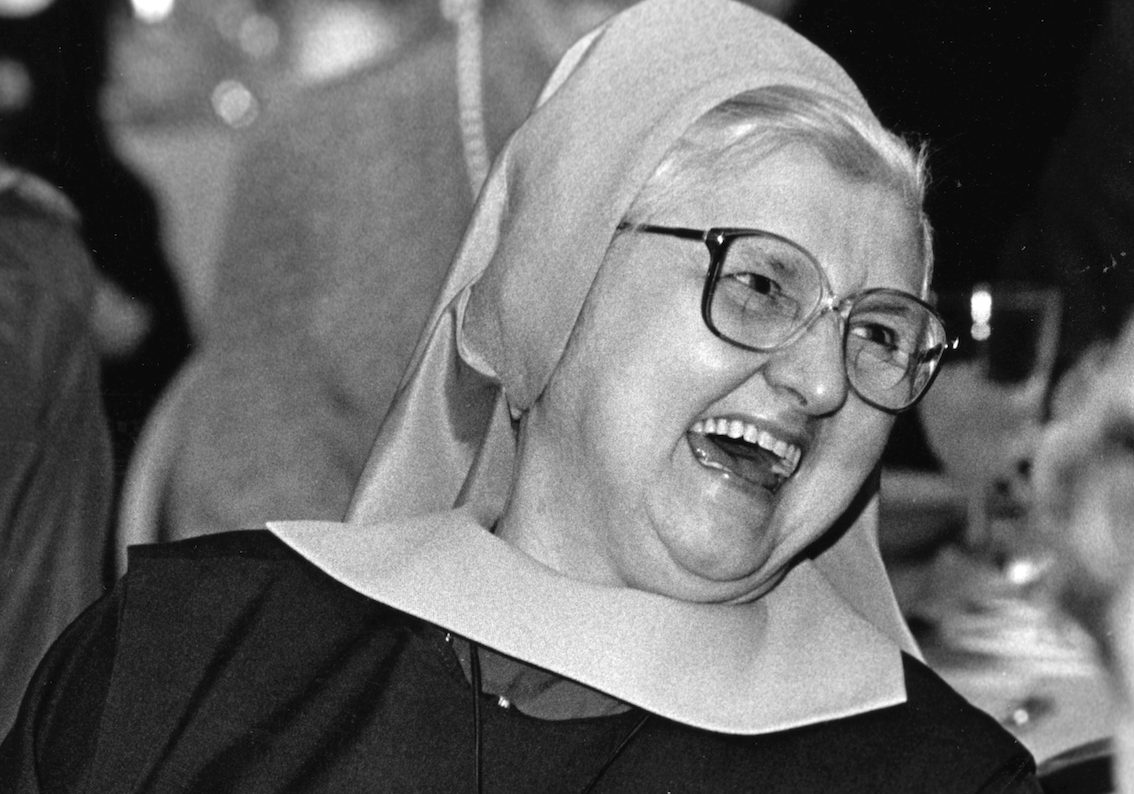
Be careful how you pray At the Washington Post Raymond Arroyo of EWTN described how “you could always hear Mother Mary Angelica coming”. Her thick rosary, he explained, would graze her aluminium crutches, adding a “jingling accompaniment” to her walk. The EWTN founder, who died on Easter Sunday aged 92, was born in poverty and in constant pain from a spinal defect, but called her pain “a gift”, according to Arroyo. “ ‘The Lord allowed pain before anything he asked me to do,’ she once told me. ‘It kept me dependent on him to do whatever he asked of me.’ “Before desperate back surgery in 1956, she made an impassioned pact with God: if he allowed her to walk again, she would build him a monastery in the South to pray for racial healing,” Arroyo wrote. “Mother Mary Angelica would indeed walk again. But only with the aid of crutches and a pair of back and leg braces, leading her to comment years later: ‘When you make a deal with God, be very specific.’ ” Why Jesus was Italian At Aleteia.org Esteban Pittaro recalled a meeting between Jim Caviezel, who played Jesus in Mel Gibson’s film The Passion of the Christ, and St John Paul II, who asked him how he prepared for the role. “Caviezel nervously answered that he had been hanging out with Italians ... and he said: ‘I think Jesus was Italian.’ “In response to the Pope’s surprise, the actor continued: ‘He didn’t leave home until he was 30. He always hung out with the same 12 guys, and his mother believed he was God, so he had to be – you know, he had to be Italian.’ With a straight face, John Paul II answered: ‘That was witty. He was Polish.’ ” No duelling please Shaun McAffee wrote at the National Catholic Register about a surprising encyclical from Pope Leo XIII about duelling. Pope Leo put forward a clear denunciation of duelling in the document, entitled Pastoralis officii. In McAfee’s words: “The bottom line is that if one engages in a duel, they are either guilty of homicide by unnecessarily slaying their opponent, or they are guilty of self-murder, suicide, for there is no justifiable reason for risking one’s own life.” Pope Leo continued: “The generally held argument that this sort of struggle washes away, as it were, the stains that calumny or insult has brought upon the honour of citizens, surely can deceive no one but a madman. “Even if the challenger of a duel is the victor, all reasonable persons will admit that the outcome simply proves he is the better man in strength or in handling a weapon, not the better man in honour. But if he falls in the combat, does he not prove by the same token how absurd is this way of protecting his honour?”