

How the Bible Became Holy by michael l satlow, yale, £12.99 We now know a great deal about how, when and why specific biblical texts were composed. There is still much to learn about the mechanisms by which these texts acquired authority among the faithful, both Jewish and Christian. We sometimes assume that the various texts must have secured influence shortly after their composition. We are told, for instance, that by the Hellenistic period in the Near East (4th to 1st century BC), Jews were well acquainted with many of the books of what we now call the Old Testament and relied on them for moral guidance. Michael Satlow finds this story of rapid “ironclad authority” to be “intellectually unsatisfying”. He believes that the process took much longer and the central thesis of his book is that “Jews and Christians gave to the texts that constitute our Bible only very limited and specific kinds of authority until well into the 3rd century CE and beyond.” Satlow distinguishes between three kinds of “authority”. The first is “normative”, which refers to a text’s power to dictate behaviour. The second is “literary authority”, which denotes the role of a text in influencing subsequent writing. Finally, there is “oracular authority”: this is when a text is regarded as holy and the conduit of a message with unquestioned divine origins. When charting the Bible’s potency in all three arenas Satlow offers a number of surprises. His first (very important) point is that between the 9th and the 4th centuries BC the texts were inevitably limited in their influence. They were produced by a small coterie of scribes and were usually only accessible to an elite. Within the broader Jewish community, religious life was centred on temple life and custom, and the written text played a subsidiary role. More lasting change occurred during the Hellenistic period. In a place like Alexandria, textual authority gathered steam, not least because of the Greek translation of the Hebrew Bible around 250 BC. Again, however, this had a major impact only on the intelligentsia. All of this clearly has implications for our understanding of how the earliest Christians encountered religious texts. On Satlow’s account, the text had certainly gained greater authority by the time of Jesus, but other fonts of devotion and morality remained dominant. He suggests that a Near East Jew in the 1st century AD would still only have had an ad hoc understanding of Scripture. This did not prevent Christianity from becoming a text-driven faith. We have Paul to thank for this. In any event, the first Christians were not slow to put the 1st-century equivalent of pen to paper and, in no time at all, the early Church was “awash with texts”. The urgent task was to determine which writings were to be regarded as authentic and authoritative. Bitter debate ensued and it took a brave man to produce a list of texts that every Christian ought to regard as holy. That is precisely what Athanasius, Bishop of Alexandria, did in 367 AD, but this hardly put an end to disagreements about the Christian canon. It also takes a brave man to challenge the received wisdom about how the Bible gained authority among the faithful. Satlow offers wonderful accounts of how specific texts emerged, treating the Bible as a crucial but troublesome historical source. At one point he refers to the Bible as an “anthology of diverse writings that have been patched, stitched, and strung together over the course of about a millennium, from 800 BCE to 150 CE”. This may sound dismissive. It is not intended as such, and if you require proof that Satlow takes the Bible seriously, you should read his thought-provoking book. Jonathan Wright
2:18 PM
The birth of the ‘patched up’ Bible
Catholic Herald View

4 min read



Already a subscriber? Sign in
5freearticles every month
Continue reading with a free account. No card needed.
- Five free articles every thirty days, on any device you sign in on
- The Catholic Herald newsletter, every morning
- Subscribe whenever you like for everything: every article and the magazine
Related articles
 Newsroom
Church leaders urge Drumcree dialogue: ‘Too much is at stake’
The Catholic and Church of Ireland Archbishops of Armagh have urged a renewed commitment to peace and reconciliation amid the Drumcree stand-off
Corrie Douglas-Young Newsroom
Thousands of Irish children to join global Rosary campaign
Corrie Douglas-Young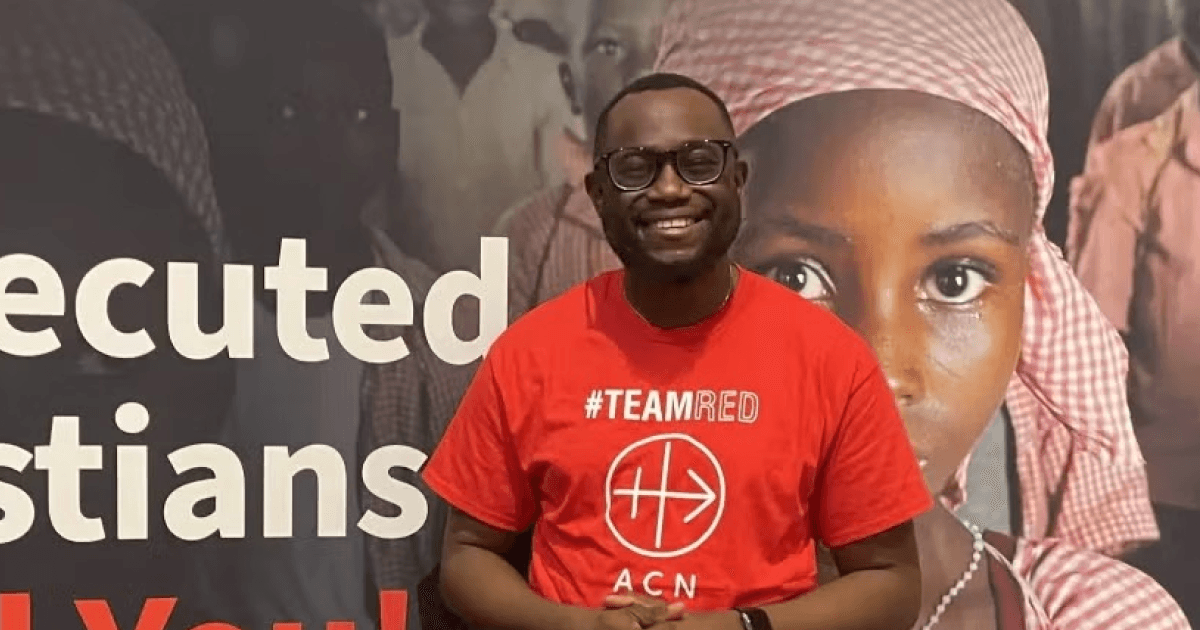 Newsroom
TikTok priest urges young people to stand with persecuted Christians
Nathalie Raffray Newsroom
Baby born at 25 weeks reunites with neonatologist two years after leaving hospital
The Catholic Herald Newsroom
Joe Biden honoured by Planned Parenthood after defending abortion rights
Christine Rousselle
subscribe to the catholic herald today
Our best content is exclusively available to our subscribers. Subscribe today and gain instant access to expert analysis, in-depth articles, and thought-provoking insights—anytime, anywhere. Don’t miss out on the conversations that matter most.
Subscribe



