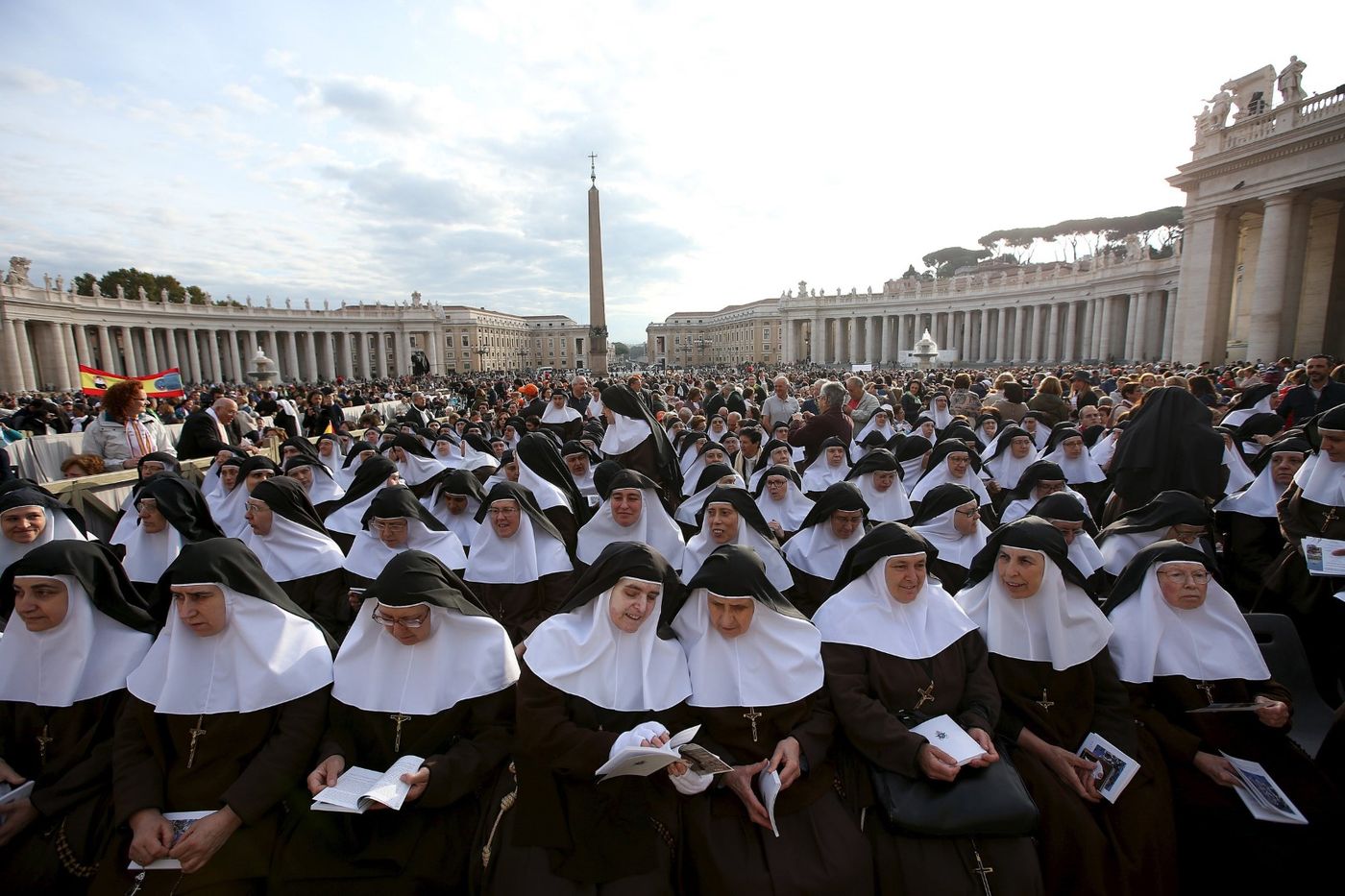



Women have never been less visible in the Catholic Church than they are today. In the years before the Second Vatican Council, women who dressed in white linen and black serge determined the course of countless lives. They taught children, tended the sick, and filled the pews. They took vows of obedience, but they wielded real power – over hospitals, schools, and religious houses. Expanding budgets and growing classes of postulants reinforced their divine confidence.
It was a time when a young Mary McCarthy could dream of “being a Carmelite nun, cloistered and penitential.” My mother was born in rural Nebraska; when her Methodist parents couldn’t agree on a name, the Sisters of St. Francis of Penance and Charity, the nuns who ran the hospital, gave her the name of a Catholic saint. But in a few years, all of this would change. The Second Vatican Council inspired a great exodus from the convents. What had been a population of 180,000 religious sisters in America in 1965 was reduced to 50,000 in 2015. Many of those who remained shed the habit, and so Catholic women became invisible for a generation.