


June 22, 2026

The dark side of convenience culture

Delphine Chui
More
Related
Min read
share

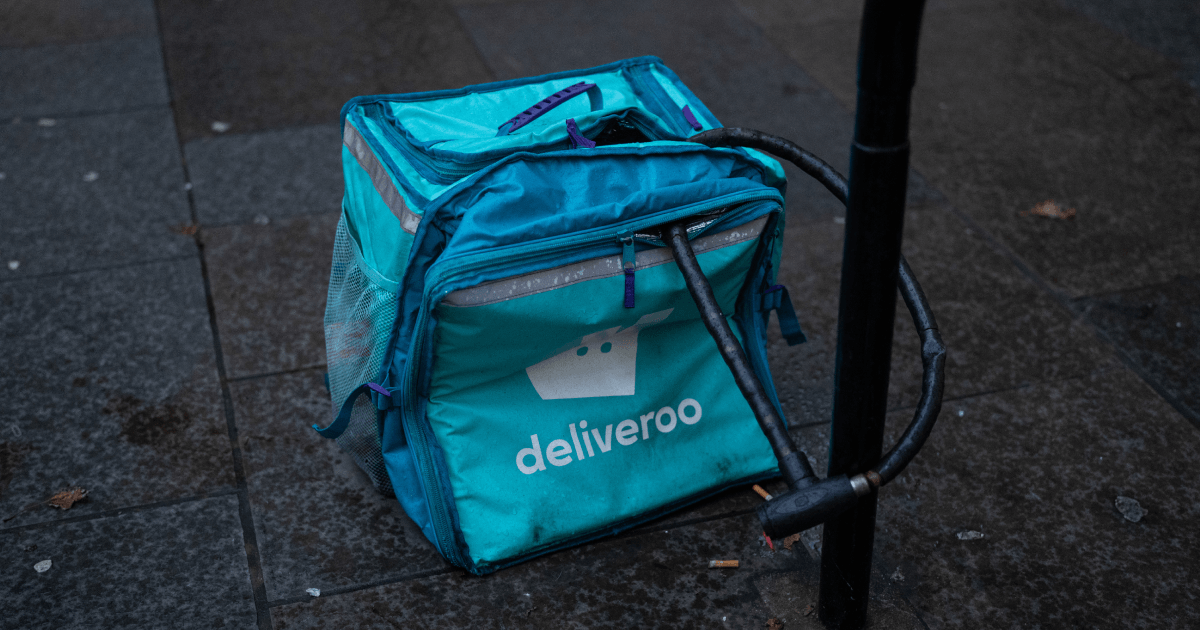
I recently walked past an advertisement boasting an extensive “on-the-go” food range: coffee to go, porridge to go, bacon rolls to go. Breakfast itself, apparently, has become something to be consumed while moving between commitments.

Then only a few days later, I witnessed something incredibly shocking and unsettling. A man sitting alone in his van at nine o’clock in the morning viewing pornography, fitting this in before a job, I assume, in a public residential street with many young families walking by.
The two incidents may seem entirely unrelated, one a breakfast advertisement and the other a private moral failing. Yet together they struck me as symptoms of the same deeper cultural phenomenon: our growing obsession with convenience.

Increasingly, we are being trained to expect everything immediately, efficiently and with as little effort as possible. Breakfast, entertainment, shopping, dating, exercise, friendship, education and even intimacy have all been redesigned around the promise of instant access. If something takes too long, demands too much effort or requires patience, there is usually an app, subscription or service promising to remove any obstacle.

Convenience, of course, is not inherently bad. Few of us would wish to return to washing clothes by hand or spending hours travelling distances that can now be covered in minutes. Technological progress has improved countless aspects of our lives, but the problem begins when convenience stops being a tool and becomes a philosophy.

Human flourishing has never been built on obtaining everything instantly. The things that matter most usually require time, sacrifice and effort. Friendship requires investment; marriage requires commitment; parenthood requires self-gift; prayer requires attention; and virtue requires discipline. Yet much of modern culture subtly conditions us to expect all of these things without the accompanying cost.

The result is that we increasingly seek substitutes instead of substance. Why cultivate deep friendships when endless digital interactions provide a simulation of connection from the comfort of our own homes? Why develop patience for watching a single episode a week when you can binge an entire series in one sitting? Why learn to cook when every meal can be ordered and delivered? Why endure the vulnerability and sacrifice of authentic intimacy when pornography offers instant gratification without relationship? The logic is remarkably consistent: wherever possible, we replace participation and formation with consumption and exposure.

This is perhaps why Pope St John Paul II’s reflections on pornography remain so insightful. He taught that pornography does not show the truth about the human person and human sexuality, because it reduces the person to something partial (often to the body and its immediate gratification) rather than presenting the full, personal meaning of sex within love. In other words, pornography presents the body while concealing the person. It offers the appearance of intimacy while removing everything that makes intimacy meaningful: commitment, vulnerability, sacrifice, mutual self-gift and love. In this sense, pornography is perhaps one of convenience culture’s purest expressions, as it promises the rewards of intimacy without requiring the responsibilities of relationship.

Yet the same dynamic appears far beyond sexuality. We increasingly seek the appearance of health without discipline, knowledge without the patience of study (relying on technology to give us the cliff notes), productivity hacks without genuine mastery and community without the demands of belonging.

Social media has accelerated this tendency since we can now consume endless content about fitness without exercising, relationships without loving, business without building, theology without praying and public life without serving our neighbours.

Even our language reflects the shift. We no longer eat breakfast; we “grab” it. We do not sit and read; we consume content. We do not cultivate friendships; we network. Everything is increasingly framed in terms of efficiency.

Yet efficiency is not the highest human good. A marriage can be efficient and loveless; a city can be efficient and ugly; and a life can be efficient and yet feel profoundly empty. The Catholic tradition has always understood something modern culture frequently forgets: human beings are not machines; we are not designed merely to maximise output, we are creatures made for communion. This is why Christianity repeatedly invites us into practices that seem profoundly inefficient, because we are constantly asked to place presence above productivity.

The problem is not that convenience exists. The problem is that we have begun expecting the deepest goods in life to operate according to its logic. But love cannot be downloaded, wisdom cannot be delivered, character cannot be outsourced and holiness cannot be automated. The most valuable things in life still demand what they always have: patience, effort, sacrifice and time.

Walking past that breakfast advertisement, I was struck by how much of our modern life is designed around speed; and seeing that man alone in his van reminded me where that logic can ultimately lead when left unchecked. A culture obsessed with convenience eventually struggles to distinguish between substitutes and the real thing. Our response as Catholics should not be to reject technology, modernity or progress, but to remember that convenience is a wonderful servant, but a terrible master.

Because the things that make life meaningful are often precisely those things that cannot be hurried, optimised or made effortless. And perhaps the challenge facing Christians today is not merely to consume less, but to recover the courage to participate more fully in the slow, demanding and deeply beautiful realities that make us human.

Continue reading with a free account

Create a free account to read up to five articles each month
Create free account

You have # free articles remaining this month.

Subscribe to get unlimited access.
Sign up

subscribe to the catholic herald today

Our best content is exclusively available to our subscribers. Subscribe today and gain instant access to expert analysis, in-depth articles, and thought-provoking insights—anytime, anywhere. Don’t miss out on the conversations that matter most.
Subscribe