

April 2, 2026

The English Lady’s return from exile

Declan J. Ganley
More
Related
Min read
share

I have tried to put myself there, wondering what it was like in early Tudor Ipswich, that English port town, around 1530. As the overland pilgrim route took one through Colchester and on to where seagulls would start to cry in the air as Ipswich grew closer, every few days news filtered up from London: the King had put aside his wife, the saintly Katherine of Aragon.

It felt like only a few harvests before that first the Queen and then, sometime later, King Henry himself had made pilgrimages to the town. There had been so much excitement ahead of the royal visits, and many prayers offered at the Shrine of Our Lady of Grace, a place of the greatest importance in the region. The shrine was the destination for countless thousands of pilgrims, being the second most important Marian shrine in the kingdom. Old England was proud of her title of ‘Our Lady’s Dowry’, and Ipswich of its deeply special Lady Shrine, in Henry’s time already a proud feature of the town and its greatest attraction for well over 300 years.
The King’s great chancellor, Sir Thomas More, had also made a pilgrimage and was so impressed by what happened there that he personally wrote the account testifying to one of the many miracles wrought by the intercession of Our Lady of Grace at the shrine.

Now the townspeople were worried by what they were hearing: the King was rejecting his wife, the Queen, and had taken up with a young lady of the court recently returned from France, with new fashions and ways. Then came the gravely disturbing news that the King had declared himself head of the Church in England, denying the Holy Father’s right, that of Christ’s Vicar on earth, to confirm that the royal marriage to Queen Katherine was valid and that the King could not scandalously divorce, or declare null, his own marriage vows.

Then came the news that Sir Thomas, the Lord Chancellor, had been arrested and taken to the Tower of London. Later it was Thomas Cromwell who became the King’s chief minister. Cromwell too was familiar with the shrine in the town, as his former master, the late Cardinal Wolsey, had been born in Ipswich and had also been on pilgrimage to visit the shrine of Our Lady of Grace and pray at the site of her beautiful statue. Cromwell was very likely with the Cardinal’s entourage at that time.

The chapel and church bells of Ipswich still sounded the daily prayer times: the Angelus, Mass bells, Vespers. Latin chant continued, and the older and younger priests and sisters still went about their duties of caring for the sick, comforting the dying, providing alms for the poor and educating the young who could avail themselves of that education. Yet fear was in the air; people held their tongues and silenced their thoughts. If the King’s best friend, Sir Thomas, could be arrested, anyone could.

Then came the news that struck Ipswich like a sudden storm at sea ambushing a fleet under sail. Sir Thomas had been beheaded by the King, as had the saintly, loyal and brave Bishop John Fisher. The monasteries were to be seized by the King. But worse still, Ipswich’s Lady Shrine, her hugely important pilgrimage site of centuries, was to be destroyed. The statue of Our Lady of Grace, Our Lady of Ipswich, carved hundreds of years earlier from English oak, was to be seized and taken to London for Cromwell to burn. She would be cast into the pyre together with the other beloved and treasured English Marian shrine statues of Our Lady of Walsingham and Our Lady of Willesden. The site of Cromwell’s planned bonfire of English history, tradition and devotion was to be right in front of the Chelsea manor house that he had taken from Sir Thomas More when the King had sent him to the Tower. Iconoclasm had finally reached the parishes of Old England, where only a century before the country had been shaken by stories of the foreign iconoclasm that was such a painful element of the fall of Constantinople.

Ipswich, like the rest of the kingdom, was riven with fear. Still, quietly, plans were afoot to thwart Cromwell’s plan to burn the town’s statue. She had been taken by soldiers following the Lord Chancellor’s orders, but something happened to save Our Lady of Ipswich from the flames. No one was quite sure exactly what – it had to be kept secret. Either someone had managed to spirit away the statue while it was in transit to Chelsea, or Cromwell, always hungry for riches and what was not his, accepted a bribe and ‘sold’ the statue he had stolen from Ipswich. Now she was on the Thames, safely aboard an Italian-crewed ship and bound for the safety of the Mediterranean, away from King Henry’s avaricious men.

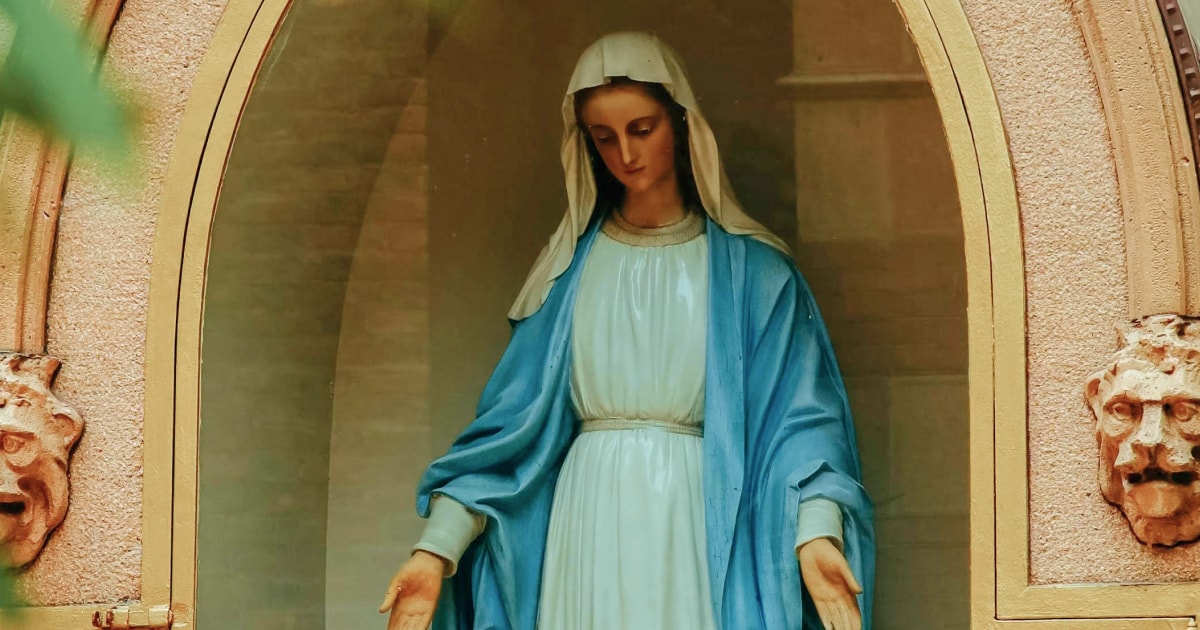
This Italian ark for the Lady of Ipswich bore her away from the shores of her dowry; the English oak from which she was carved still bears, to this very day, the scientific signature of time exposed to salt water. In 1550, the ship that carried her was wrecked in a storm off the coast of Nettuno in Lazio, Italy. There she was recovered from the waves, intact, and taken to a nearby church. It was there she found refuge and a new home, 1,000 miles by sea from her native England. For almost 500 years the good citizens of Nettuno have given Our Lady of Ipswich, whom they call to this day ‘the English Lady’ (La Madonna Inglese), due honour. The statue is processed annually from her place of refuge in the Basilica of Our Lady of Graces and Saint Maria Goretti to the Church of San Giovanni. The people of Nettuno built a bier for the statue in the form of a ship, a reminder of her voyage far from Old England, her escape from the flames of Henry VIII’s stripping of the altars and the desecration of so much of England’s cultural deposits of religious art and iconography.

Discreetly, the back of the statue bears words carved into the English oak centuries ago, long before her voyage. The words, in medieval English, say: ‘Thou art gracious’.

Although not yet formally announced, I am aware that much work has been done, with the kind support of many Catholic organisations, including the well-organised Catholic Military Association, which consists of serving members of His Majesty’s Armed Forces, so that England’s most important surviving Marian statue may soon make a visit back to England’s shores. There will, it is hoped, be a progress back up the Thames, much changed since the figure of Our Lady of Grace last sailed down the river and out to the open sea and her almost 500-year exile. The plans currently being worked on would see the statue taken under a protective honour guard to several key sites in England, including, perhaps, the home of the Mother of Parliaments itself. Then, in due course, on to her old place of honour and centuries of pilgrimage: Ipswich.

Plans are being drafted for a visit of approximately a month, an opportunity for England to turn out for her Lady, to honour and venerate this symbol of Our Lady of Grace, and to pray for her intercession for the country from whose oak her representation was hewn. It would also be a moment to remember those who for so many centuries honoured her in her native place. This is an interesting time for England and for this symbol of her deepest roots. To borrow a phrase, ‘She’s coming home’. It would be only for a visit, and it will happen only with the cooperation of those who care for her so nobly in Nettuno, and of course subject to the Italian government granting permission for the visit, but what an opportunity it would be to see such history and heritage come back to visit Our Lady’s Dowry, in England’s green and pleasant land.

Keep your eyes peeled on the Catholic Herald for further updates, but this Summer is the current window and, if you can spare a moment, ask for the intercession of Our Lady of Grace and the English Martyrs that this visit may be the event for re-evangelisation that it has the potential to be.

I have tried to put myself there, wondering what it was like in early Tudor Ipswich, that English port town, around 1530. As the overland pilgrim route took one through Colchester and on to where seagulls would start to cry in the air as Ipswich grew closer, every few days news filtered up from London: the King had put aside his wife, the saintly Katherine of Aragon.

It felt like only a few harvests before that first the Queen and then, sometime later, King Henry himself had made pilgrimages to the town. There had been so much excitement ahead of the royal visits, and many prayers offered at the Shrine of Our Lady of Grace, a place of the greatest importance in the region. The shrine was the destination for countless thousands of pilgrims, being the second most important Marian shrine in the kingdom. Old England was proud of her title of ‘Our Lady’s Dowry’, and Ipswich of its deeply special Lady Shrine, in Henry’s time already a proud feature of the town and its greatest attraction for well over 300 years.

The King’s great chancellor, Sir Thomas More, had also made a pilgrimage and was so impressed by what happened there that he personally wrote the account testifying to one of the many miracles wrought by the intercession of Our Lady of Grace at the shrine.

Now the townspeople were worried by what they were hearing: the King was rejecting his wife, the Queen, and had taken up with a young lady of the court recently returned from France, with new fashions and ways. Then came the gravely disturbing news that the King had declared himself head of the Church in England, denying the Holy Father’s right, that of Christ’s Vicar on earth, to confirm that the royal marriage to Queen Katherine was valid and that the King could not scandalously divorce, or declare null, his own marriage vows.

Then came the news that Sir Thomas, the Lord Chancellor, had been arrested and taken to the Tower of London. Later it was Thomas Cromwell who became the King’s chief minister. Cromwell too was familiar with the shrine in the town, as his former master, the late Cardinal Wolsey, had been born in Ipswich and had also been on pilgrimage to visit the shrine of Our Lady of Grace and pray at the site of her beautiful statue. Cromwell was very likely with the Cardinal’s entourage at that time.

The chapel and church bells of Ipswich still sounded the daily prayer times: the Angelus, Mass bells, Vespers. Latin chant continued, and the older and younger priests and sisters still went about their duties of caring for the sick, comforting the dying, providing alms for the poor and educating the young who could avail themselves of that education. Yet fear was in the air; people held their tongues and silenced their thoughts. If the King’s best friend, Sir Thomas, could be arrested, anyone could.

Then came the news that struck Ipswich like a sudden storm at sea ambushing a fleet under sail. Sir Thomas had been beheaded by the King, as had the saintly, loyal and brave Bishop John Fisher. The monasteries were to be seized by the King. But worse still, Ipswich’s Lady Shrine, her hugely important pilgrimage site of centuries, was to be destroyed. The statue of Our Lady of Grace, Our Lady of Ipswich, carved hundreds of years earlier from English oak, was to be seized and taken to London for Cromwell to burn. She would be cast into the pyre together with the other beloved and treasured English Marian shrine statues of Our Lady of Walsingham and Our Lady of Willesden. The site of Cromwell’s planned bonfire of English history, tradition and devotion was to be right in front of the Chelsea manor house that he had taken from Sir Thomas More when the King had sent him to the Tower. Iconoclasm had finally reached the parishes of Old England, where only a century before the country had been shaken by stories of the foreign iconoclasm that was such a painful element of the fall of Constantinople.

Ipswich, like the rest of the kingdom, was riven with fear. Still, quietly, plans were afoot to thwart Cromwell’s plan to burn the town’s statue. She had been taken by soldiers following the Lord Chancellor’s orders, but something happened to save Our Lady of Ipswich from the flames. No one was quite sure exactly what – it had to be kept secret. Either someone had managed to spirit away the statue while it was in transit to Chelsea, or Cromwell, always hungry for riches and what was not his, accepted a bribe and ‘sold’ the statue he had stolen from Ipswich. Now she was on the Thames, safely aboard an Italian-crewed ship and bound for the safety of the Mediterranean, away from King Henry’s avaricious men.

This Italian ark for the Lady of Ipswich bore her away from the shores of her dowry; the English oak from which she was carved still bears, to this very day, the scientific signature of time exposed to salt water. In 1550, the ship that carried her was wrecked in a storm off the coast of Nettuno in Lazio, Italy. There she was recovered from the waves, intact, and taken to a nearby church. It was there she found refuge and a new home, 1,000 miles by sea from her native England. For almost 500 years the good citizens of Nettuno have given Our Lady of Ipswich, whom they call to this day ‘the English Lady’ (La Madonna Inglese), due honour. The statue is processed annually from her place of refuge in the Basilica of Our Lady of Graces and Saint Maria Goretti to the Church of San Giovanni. The people of Nettuno built a bier for the statue in the form of a ship, a reminder of her voyage far from Old England, her escape from the flames of Henry VIII’s stripping of the altars and the desecration of so much of England’s cultural deposits of religious art and iconography.

Discreetly, the back of the statue bears words carved into the English oak centuries ago, long before her voyage. The words, in medieval English, say: ‘Thou art gracious’.

Although not yet formally announced, I am aware that much work has been done, with the kind support of many Catholic organisations, including the well-organised Catholic Military Association, which consists of serving members of His Majesty’s Armed Forces, so that England’s most important surviving Marian statue may soon make a visit back to England’s shores. There will, it is hoped, be a progress back up the Thames, much changed since the figure of Our Lady of Grace last sailed down the river and out to the open sea and her almost 500-year exile. The plans currently being worked on would see the statue taken under a protective honour guard to several key sites in England, including, perhaps, the home of the Mother of Parliaments itself. Then, in due course, on to her old place of honour and centuries of pilgrimage: Ipswich.

Plans are being drafted for a visit of approximately a month, an opportunity for England to turn out for her Lady, to honour and venerate this symbol of Our Lady of Grace, and to pray for her intercession for the country from whose oak her representation was hewn. It would also be a moment to remember those who for so many centuries honoured her in her native place. This is an interesting time for England and for this symbol of her deepest roots. To borrow a phrase, ‘She’s coming home’. It would be only for a visit, and it will happen only with the cooperation of those who care for her so nobly in Nettuno, and of course subject to the Italian government granting permission for the visit, but what an opportunity it would be to see such history and heritage come back to visit Our Lady’s Dowry, in England’s green and pleasant land.

Keep your eyes peeled on the Catholic Herald for further updates, but this Summer is the current window and, if you can spare a moment, ask for the intercession of Our Lady of Grace and the English Martyrs that this visit may be the event for re-evangelisation that it has the potential to be.

subscribe to
the catholic herald

Continue reading your article with a subscription.
Read 5 articles with our free plan.
Subscribe

subscribe to the catholic herald today

Our best content is exclusively available to our subscribers. Subscribe today and gain instant access to expert analysis, in-depth articles, and thought-provoking insights—anytime, anywhere. Don’t miss out on the conversations that matter most.
Subscribe