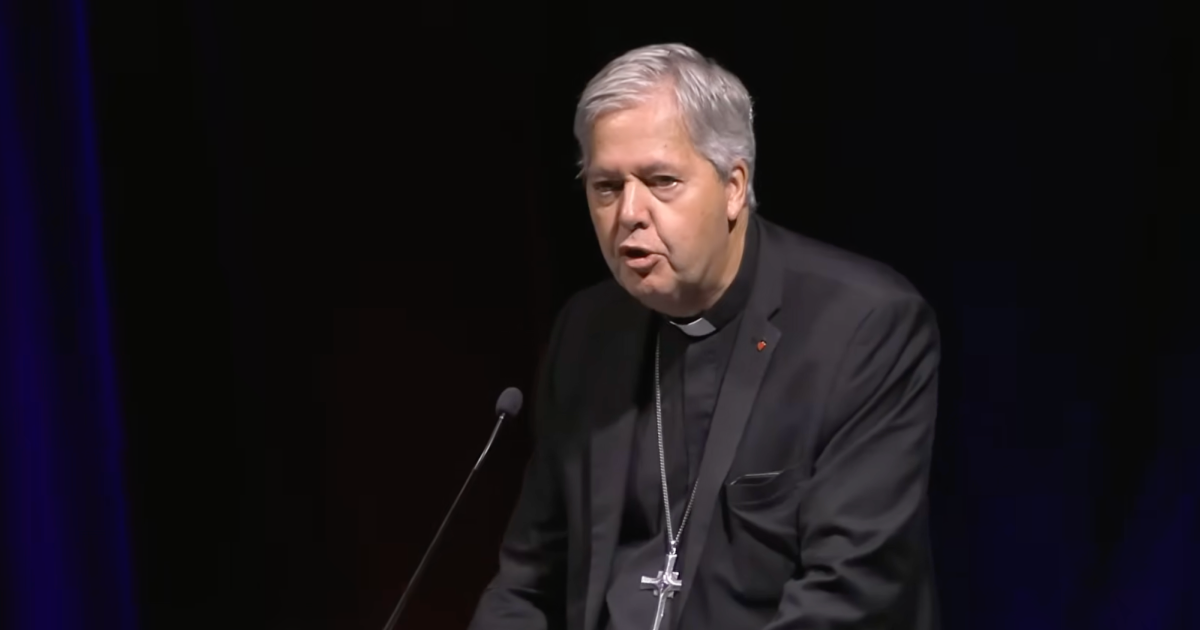


“And on a cruise ship there are no immortal souls?” the seasoned parish priest of Dobrepolje, Franc Škulj, bravely defended me before a church prelate who looked with a great deal of disapproval and skepticism at the small mission which, during the Christmas holidays of 2022, I carried out for the first time on one of the larger cruise ships that sail the vast oceans of the world.
It should be stated plainly that the prelate’s concern—since he did not know the background of my expedition—was, to some extent, justified. It is not exactly customary for a Catholic priest to spend the Christmas holidays—when the Slovenian clergy are especially buried in work for souls—under the scorching sun on the deck of a luxury cruise ship, surrounded by tourists who had, each in their own way, avoided Christmas at home. With no less clarity I will also write this: we cannot expect apostolic success if we remain seated in our rectories, cemented into the shackles of safe structures, closed off to souls and to a world that—without Christ in human hearts—will keep turning on indifferently. Just as clearly, however, it must be said that this does not mean a priest must, precisely at Christmas, go precisely on a cruise ship. At that time I was free of my usual pastoral obligations.
About ten days before departure for this unexpected mission—when it had already been agreed with the above-mentioned parish priest that I would spend Christmas this time at the original location, in Bethlehem, and airline tickets to Tel Aviv had already been purchased—I received a call from my friend John, a parish priest in London. Acquaintances from the international seafarers’ apostolate Stella Maris, which cares for the spiritual life of sailors and all those who work at sea, had asked him for help: they were short one priest for a particular cruise ship. That priest would, during the festive days, provide spiritual care for a multitude of passengers and for a large crew—people who do not see their loved ones for months and who therefore find themselves in a particularly sensitive situation at Christmas. Because I had recently told John about my unexpectedly empty Christmas schedule, he thought of me. Without much hesitation I seized the opportunity. I knew there were immortal souls on a cruise ship. That they were already longing for God was an insight that struck me after only a few kilometers of walking the ship’s long corridors.
My first shipboard mission then ended with my attendance at the funeral of Benedict XVI, but two more followed: the second during Holy Week of 2023, and the third at Christmas 2024. Each on a new ship, with new people, and a new route.
The apostolate Stella Maris tries, for major cruise ships during the great feasts, to provide a priest; its wish is therefore above all that Catholic members of the crew might receive spiritual care at least for the greatest celebrations of the Church year. Ship workers usually come from India, the Philippines, or one of the African countries, and for long months far from home they work hard to provide their families with a better life. On the other side is the cruise company, which receives the priest as a staff member who will offer passengers, in the holiday season, yet another of the many activities that fill the busy schedule of a floating hotel.
Between the expectations of the seafarers’ apostolate and those of the cruise company, I thus found myself as a priest who is responsible also to Christ, who expects us to proclaim the Gospel to all creation. If Stella Maris provided all the necessary organization and pastoral support with various advice and materials—holy cards and leaflets for seafarers—and if the cruise company covered the travel and the entire stay on board, then Christ was the one who granted the grace that the missions were fruitful and that I never experienced them as tourist expeditions, but as work for a Kingdom that is not of this world.
On the more demanding days and in less attractive ports, this meant that I did not leave the ship at all, so this text cannot be a classic travelogue. In fact, the vastness of the sea and the beauty of the places visited interested me—certainly—but just as much, or even more, and in any case more than the comfort and gourmet offerings of enormous cruise ships, were the encounters with people who, amid the waves, recognized in me God’s messenger, or at least a fellow human being with whom they wished to share their inner world. That, too, was what marked me most and remains with me most.
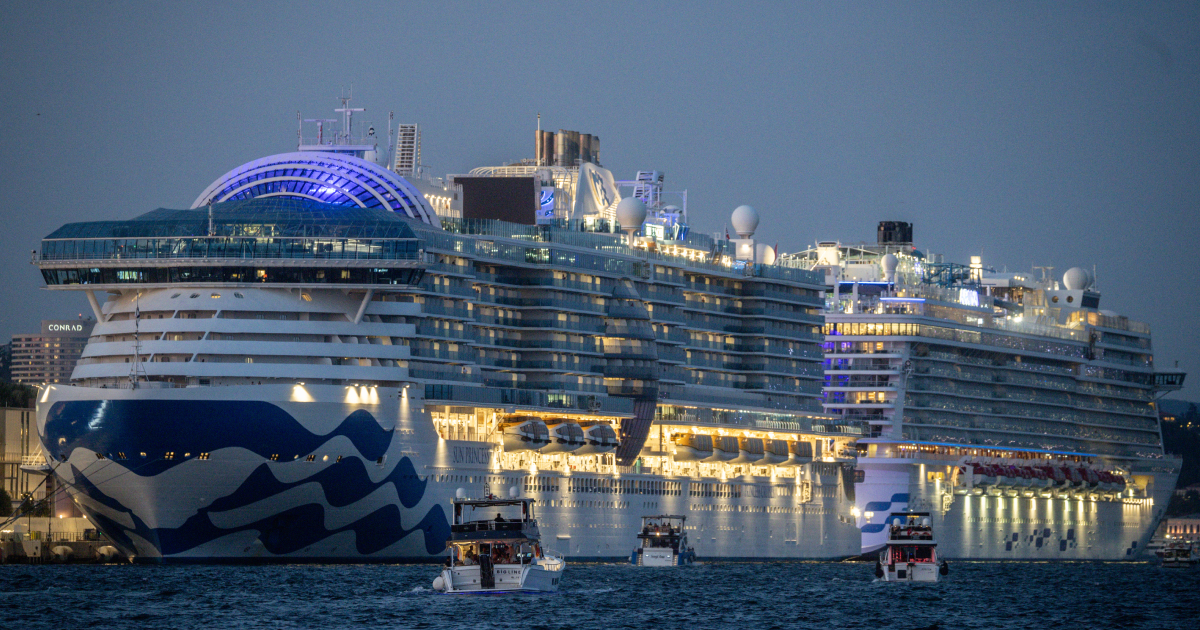
My first voyage began on one of the Canary Islands, where I boarded the Azura, a 290-meter-long cruise ship that can accommodate around 3,600 guests, cared for by 1,226 crew members. On a ship with eleven restaurants, twelve bars, four pools, a theater, a gym, and a huge open-air cinema, I quickly came to know the full glamour of modern cruising. In truth, although at home I am used to less pre-planned travel and even less to mass tourism, I soon understood why such a way of resting appeals to people: the interplay of many activities on board, gala evenings, days when the ship anchors and visits to numerous sights are possible, getting to know new people, and the luxury comfort of the ship, makes it possible for a person to spend days full of interesting experiences and yet still rest.
There are also those who cannot escape their difficult story. I learned that already on the first day of my expedition, when a middle-aged gentleman approached me whose wife had died months earlier. Every Christmas they had spent on this very cruise ship, and now he was here to scatter her ashes. He was grateful that I was here and said he would seek my help if everything became too heavy for him.
Circling among the Canary Islands and visiting the somewhat more northerly Madeira, the island of eternal spring, was of course accompanied by untypically Christmas-like weather. I searched for the Bethlehem cave among palm trees in almost summer heat. It was interesting to observe how Christmas in these places is recognizable in the streets not only by the multitude of lights and blooming poinsettias, but also by the many Nativity scenes set up in squares, in government offices, and even in the shop windows of shoe stores—where the Holy Family, dressed in brocade and gold among leather shoes, does not even look so unnatural.
The holidays do not weaken the tourist offer at all: every door stands wide open to guests from northern lands.
Every day I sit in the confessional. Christmas Eve happens somewhere in the middle of the Atlantic Ocean, where during Midnight Mass I can feel the slight trembling of the ship. The liturgy is not accompanied by our beautiful Slovenian Christmas carols, but by Indian religious songs performed by a small improvised ensemble made up of crew members. I begin the Gregorian Missa de Angelis alone, and among the three hundred gathered I am surprised by quite a few voices that join in the familiar chants.
In the following days I discover that the crowd was an exception; on the next days, a group of about twelve passengers comes to Mass at eight in the morning, and at the evening Mass—at half past midnight—a similar number of workers arrive. Their faith and devotion move me, for after long hours of work they tear themselves away from sleep to come to Mass, following it with a piety I am not used to. Each time I step, in the small meeting room assigned to me for the daily celebration, to the table where I lay down my vestments, a line forms behind me: the men want me to bless each of them personally and ask me for prayer.
On days when we anchor and I do not remain on the ship only because I would be too exhausted from the work—each day, after all, I celebrate Mass twice; I am available at least two hours for confession or conversation; and amid the many “Hello, Father!” I stop for a word or two, sometimes for a longer conversation—I gladly step off the ship for at least an hour. I soon tire of all the comfort on board and appreciate the brief hours on land. If Madeira is an Atlantic reflection of Portuguese culture, the Canary Islands are a reflection of Spain. They do not approach Madeira in natural grandeur, but I find places that delight me: Santa Cruz de Tenerife enchants me with its lively promenades and an ease one can almost breathe in.
There I also meet a priest, Miguel Ángel, who, upon the death of Benedict XVI, lends me a violet chasuble so that I can celebrate memorial Masses for him on board. I wish to attend the funeral, and Tom, one of the ship’s senior officers, ensures that I fly to Rome at the cruise company’s expense, where I take part in the ceremony. I leave the ship somewhat exhausted and full of inner consolation, knowing that I gave much, but received even more.
What remains most in my memory are the people: among them the captain’s family, with whom I sat down for a multi-hour dinner, as his three sons asked me about the faith so eagerly that I could barely find moments to enjoy the masterpieces of the ship’s kitchen. The captain, though not himself Catholic—and I rarely witness acts of such devoted fatherhood—asked me to take time in the following days to speak with his son, who had just enrolled at university. Ben and I sat the next day for two hours in one of the ship’s cafés and spoke about Catholic teaching.
Nor will I forget one of the waiters, who told me that for him there would be no Christmas if there were no priest on board, and who confided how, through interior prayer and guarding his eyes and thoughts, even after many months spent at sea, he keeps his heart faithful to Christ and to his wife.
My second small mission came less than half a year later. Deacon Nick, one of Stella Maris’s permanent chaplains, asked me to spend Holy Week and Easter on a cruise ship. The generous parish priest from Dobrepolje released me from obligations for that time, and the apostolate offered me the chance to choose the ship. I thought that the festive liturgies in Slovenia would probably be irreplaceable, but I told myself that the experience of hot Caribbean weather would soften the homesickness. Only two days before departure did I realize that I had marked the wrong ship: the Britannia was sailing from the Azores on a long transatlantic voyage, stopping on Good Friday in Southampton—where the tragic voyage of the Titanic began—and arriving for Easter in Rotterdam, which promised colder weather than I would have had at the destination I had intended.
I flew to the Azores, where we spent a little more than twenty-four hours. On Holy Tuesday I was able to concelebrate at the Chrism Mass which the local bishop celebrates in the first days of Holy Week—each day on a different island. The town is beautiful, the churches breathtaking in Portuguese baroque, the atmosphere relaxed, and the fresh fish caught in the Atlantic a culinary triumph. I myself am somewhat less relaxed, for I know the Triduum is only two days away. I buy stickers with which I will decorate the Paschal candle during the Vigil.
Immediately after boarding I begin to look for collaborators and step into the office of an employee whose primary responsibility is hiring. He immediately finds me Valerian, a funny and surprisingly direct Indian man with huge shining eyes and a mischievous smile, who heads an important department, and we soon begin our work. A schedule for confessions and a schedule for Masses and the Easter liturgies are set. I try to turn a salon full of glass chandeliers into a chapel, so I do not pack away the altar—but after a few days they instruct me to put the items away each time. I work with what I have: a high table, a lectern, and a whole suitcase of liturgical vessels and vestments that I bring with me.
The following days pass in hearing confessions and finding assistants for the rites. Again and again I am surprised by the deep faith I find on board, this time especially among those who come from the so-called third world. This time the attendance at the daily Masses by crew members is somewhat smaller than it had been on the Azura, where there were prayer groups that gathered every evening; but there are more passengers who come to the morning Masses and participate well.
Each day I sit at least two hours in an improvised confessional: in one of the window niches of the salon I set up two chairs and wait for souls. Looking out at the endless ocean and waiting, I can write, read, and pray. I am shaken by several people who come to speak with me because days earlier they had witnessed a scene in which sailors pulled from the water several bodies of unfortunate people who had drowned in the wreck of a small ferry. The sharks that were already circling the corpses added to the passengers’ trauma. I speak with them, but recommend they also talk with the psychologist whom the cruise company provided in response to the tragic event.
I hold the Easter rites late in the evenings in the large theater, and they unfold in surprising recollection. Despite exhaustion after an entire day of hard work, every evening at half past midnight around seventy crew members and a few passengers gather. I remember a stocky Asian man who helped me with the washing of feet on Holy Thursday and, overwhelmed by the beauty of the rite, sobbed the entire time; and the procession to the prayer room deep below deck, where we stored the Blessed Sacrament in a safe for the Good Friday rites.
The Easter Vigil, with all the readings and five psalms, passes in the glow of an Easter “fire” that this time burns on a large plastic candle with an artificial electric flame—open flames are forbidden on ships. A technician behind the theater stage, which is in fact one huge screen, turns on a constellation of tiny lights to make the atmosphere even more beautiful. The next day Valerian—whom we call Vali—tells me that some colleagues praised the rites as the most beautiful they had ever experienced. Even I am surprised by how recollected I managed to remain—except for the moment when, during the singing of the Gloria, I saw Vali’s broad smile, at which I simply could not hold back a grin.
I spend my free time walking the deck, which offers a wonderful view of the sea and a fitting setting for prayer, and in the gym, where I try to burn off at least part of the excess calories I gain in the mess hall and other restaurants, where the food is free, unlimited, and outrageously good. Because I rise early and go to sleep well past midnight, I try to catch up during the day, which, with the rocking of the ship and an interior cabin without a window, is quite pleasant.
On the Britannia I find less religious life among the crew than I did on the Azura. Therefore I am all the more grateful when I say farewell to the ship with the awareness that I have founded among them a prayer group that meets every Sunday to read the Word of God.
The third mission takes place at Christmas 2024. I board the Ambience somewhere in the Thames estuary, and I am the first Catholic priest to serve on her and indeed to cooperate at all with the new cruise company Ambassador. This time, then, my responsibility is not only cura animarum: the experience of my presence on the ship will shape the future cooperation between the apostolate and the company.
From departure to Rotterdam, and from there to Vigo—a special grace that on the day of the first Christmas Eve I am in Santiago—then the Canary Islands, Madeira, and Porto on the way back: because I am already used to the work, this time I experience these points of rest more deeply. The comfort of the ship no longer moves me, and on late evenings I more than once climb to the upper deck so that I can be at least a little alone and look into the dark waves of the ocean.
At Masses I am surprised by the small attendance of crew members; evidently they truly are not accustomed to a priest’s presence on board. But the great responsiveness of the passengers also surprises me: every day quite a few attend Mass.
I bring an Irishman to confession after forty years, and Paula and Collin tell me—precisely in the days when I am writing this text—that they have entered the Catholic Church: she had been Anglican, and he not baptized at all. They cite our meetings and conversations in the salon, where I wait for penitents for hours each day, as decisive for their step. I am shaken as I watch how God, through simple encounters with a priest, writes great stories.
Although I wear my cassock most of the time, I soon realize that people recognize me even in civilian clothes, since I am among the youngest on board. That is also the reason I stop at least a few times a day in the office of Ceirios, who runs the cruise program, where I can chat with her or with colleagues who are roughly my age.
So that I do not remain alone with my thoughts, I write them down, and thus a text more than seventy pages long comes into being, in which I describe events and record the inner experience of the expedition. But even without writing—of one kind or another—all three missions on cruise ships remain experiences that enrich me as a priest and as a human being. And experiences through which it is clear to me that on cruise ships there are immortal souls—perhaps even more than on land—longing for the safe harbor of faith.