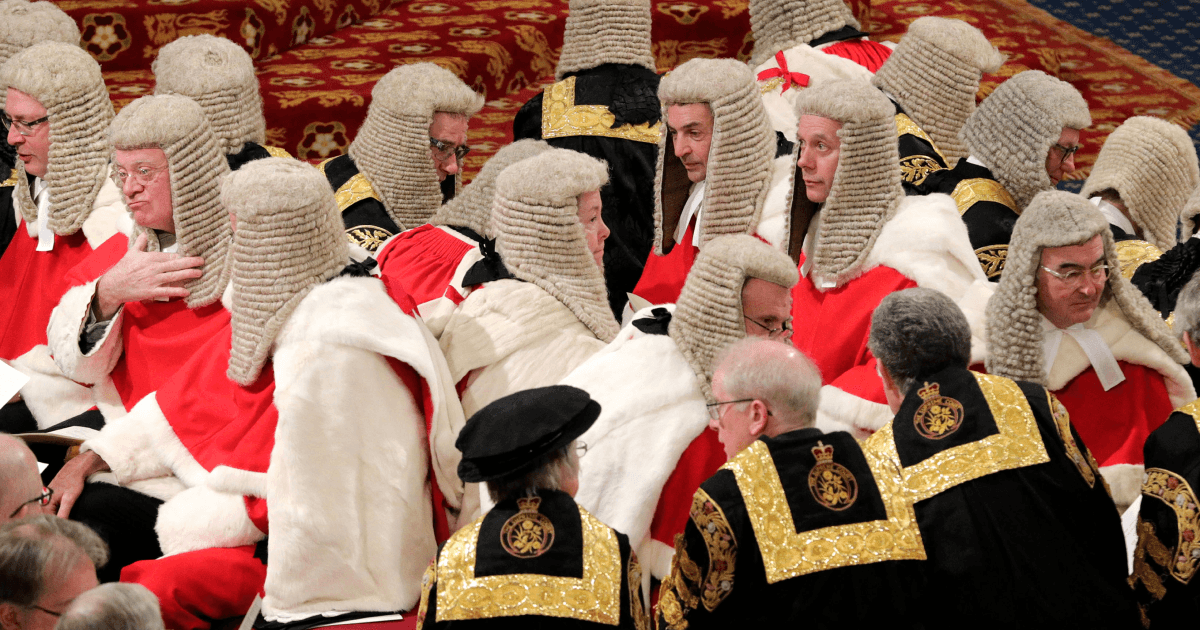

The election of the next Lord Speaker is set to unfold during one of the most fractious periods the House of Lords has faced in years.
Peers are preparing for a January contest for the illustrious title of Lord Speaker between two strikingly different candidates: Baroness Deborah Bull, the former Royal Ballet principal turned crossbench administrator, and Lord Michael Forsyth of Drumlean, a Conservative grandee who has been in Westminster for four decades.
Electronic voting will take place from 6 to 8 January, with the result due the following Monday.
The role of the Lord Speaker is a comparatively recent addition to the architecture of Parliament. Until 2006, the functions now carried out by the office were performed by the Lord Chancellor, who uniquely straddled the executive, legislative and judicial spheres.
The Constitutional Reform Act 2005 stripped the Lord Chancellor of his role as presiding officer of the House of Lords, transferring those ceremonial and representative duties to a newly created Lord Speaker.
The Lord Speaker occupies the Woolsack and presides over proceedings; the position does not carry the authority enjoyed by the Speaker of the House of Commons. The Lord Speaker cannot call members to order, select amendments, or determine who speaks next. These functions remain with the House collectively, guided by convention and facilitated by a large panel of Deputy Speakers.
Baroness Bull, introduced to the House of Lords in 2018 as a crossbench peer, has built her candidature around themes of unity, inclusion and internal reform. “Our shared aim must be an effective upper House whose purpose is widely understood,” her election address states.
She calls on peers to articulate the value of their expertise while adapting to what she describes as “generation-defining decisions: on size and composition, the estate and on ways of working, including the impact of new technologies”. She adds that “improved service delivery, anchored in clear accountability and lessons learnt from the past” would be her priority.
Lord Forsyth, by contrast, offers himself as a champion of scrutiny, institutional firmness and the chamber’s independence. A former Secretary of State for Scotland and MP for Stirling, he arrived in the Lords in 1999 and has since chaired both the Economic Affairs Committee and the Financial Services Regulation Committee.
In his election address he promises “leadership for a more effective, respected and influential House” and highlights his commitment to “constructive and well-informed scrutiny”. He also warns that more than half a billion pounds has already been spent on the Restoration and Renewal programme “with no settled plan”, concluding that this requires “firm, decisive leadership”.
Forsyth’s priorities include strengthening accountability, improving support for members who live outside London, protecting security while respecting heritage, inspiring the next generation and defending the principle of a self-regulating upper chamber.
The two candidates have offered two futures for the House of Lords: either a calm and progressive, consensual administrative body under Bull, or a more assertive and scrutinising presence under Forsyth.
However, beyond the immediate contest this reveals much about the condition of our political culture: an ancient office once held by saints, bishops and statesmen has narrowed into a choice between a former ballerina and a Thatcher-era career politician.
Although, as The Telegraph pointed out wryly, this shows how far public life has drifted from the moral, intellectual and spiritual traditions that once shaped governance in this country. The media attention surrounding the Lord Speakership election gives us a small window through which one may glimpse the larger rupture between Britain’s Christian constitutional inheritance and the technocratic politics that have replaced it.
For centuries, the presiding figure of the House of Lords was the Lord Chancellor, a post steeped in the life of the Church. Saint Thomas More himself occupied it, as did Cardinals Wolsey and Morton, along with no fewer than seventy-one bishops and archbishops who served not merely as political functionaries but as guardians of a moral order.
Their authority rested not on administrative skill or partisan longevity but on the belief that public office was inseparable from virtue, truth and the common good. That such figures could sit at the heart of government showed a civilisation confident in the union of faith and governance.
The modern arrangement bears little resemblance. Tony Blair’s reforms, which fractured the old constitutional settlement, severed the Lord Chancellor from his historic role and created a Lord Speaker stripped of meaningful power.
What remains is a largely ceremonial office, important yet hollowed out, an emblem of a political culture uneasy with the past it inherited and uncertain of the future it seeks.
It is in this diminished space that peers must now choose between Deborah Bull, whose career in the arts has been folded into the managerial language of “service delivery” and “consensus”, and Lord Forsyth, a veteran of the Conservative establishment promising “firm, decisive leadership”.
Both are competent, but neither stands in continuity with the spiritual and intellectual lineage that once defined the post.
Once, sound Catholic ecclesial minds shaped the law of the land, but now the field is limited to technocrats, career politicians and public administrators. This is not a criticism of the candidates themselves but of the political landscape that is framing this election as a Conservative versus Progressive Lord Speakership election.
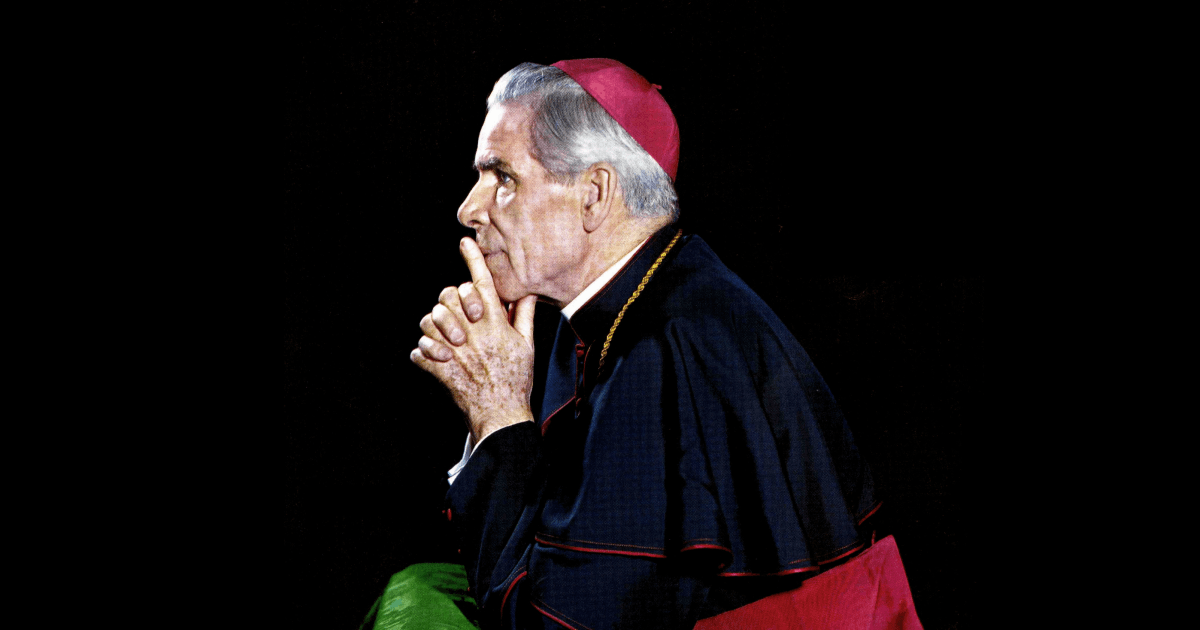
There is a suggestion heard among some that Catholic bishops should again sit on the red benches. This is not a literal demand, for canon law clearly prevents it, but an instinctive recognition that something vital has slipped away.
When the field of candidates for such an office rooted in faith now ranges from a former ballerina to a seasoned political operator, one cannot help but ask why the shepherds of the Church, formed in doctrine and duty, should be wholly excluded from the public square.


.jpg)