December 29, 2025
December 29, 2025

The ladies of Trianon

Min read
share

Like all good ghost stories, the one set in the gardens of the Petit Trianon has passed down through the generations. I first heard about the two Oxford women who visited Versailles in 1901 and saw the ghost of Marie Antoi­nette from my mother. She in turn had heard it from her mother. Not long ago, I mentioned it to a friend who said she had heard it from her mother. A lot of people vaguely knew the story but no one could remember the details.

Two respectable female academics who got lost in the gardens of the Petit Trianon, encounters with people in powdered wigs, a queen, a caped figure, a "running man", apparently bearing bad news. The story of Charlotte Moberly and Eleanor Jourdain and their claim to have been transported two centuries to the 18th-century French court had a long echo. The two women were products of the mid-19th century in which science and faith collided, often awkwardly, and where old certainties had been unbalanced by specula­tion into the strange and inexplicable. They were born into the time of Robert Browning's "Mr Sludge, 'the Medium'", and died in the era of Aleister Crowley, the occultist. Their account, An Adventure, reflects the intellec­tual preoccupations, hopes, fears, longings and anxieties of its time and beyond.

They visited Versailles on an overcast Au­gust day, trudging through the palace before deciding there was just time to visit the Pet­it Trianon, Marie Antoinette's manor house, before they returned to Paris. The women walked into the gardens and got lost, at which point Eleanor later remembered that she be­gan to feel "as if something were wrong"; she also noticed an oddly shaped plough leaning against the wall. Charlotte saw a woman shak­ing a cloth out of a window in an outbuilding.

Their wanderings took them down a lane where they saw two men wearing small tri­corn hats and "long, greyish-green coats" and a woman and a girl wearing unusual kerchiefs. They came upon a "garden kiosk", something like a gazebo, and a scarred man in a cape. Charlotte recalled: "Everything suddenly looked unnatural, therefore unpleasant; even the trees behind the building seemed to have become flat and lifeless, like a wood worked in tapestry. There were no effects of light and shade, and no wind stirred the trees. It was all intensely still."

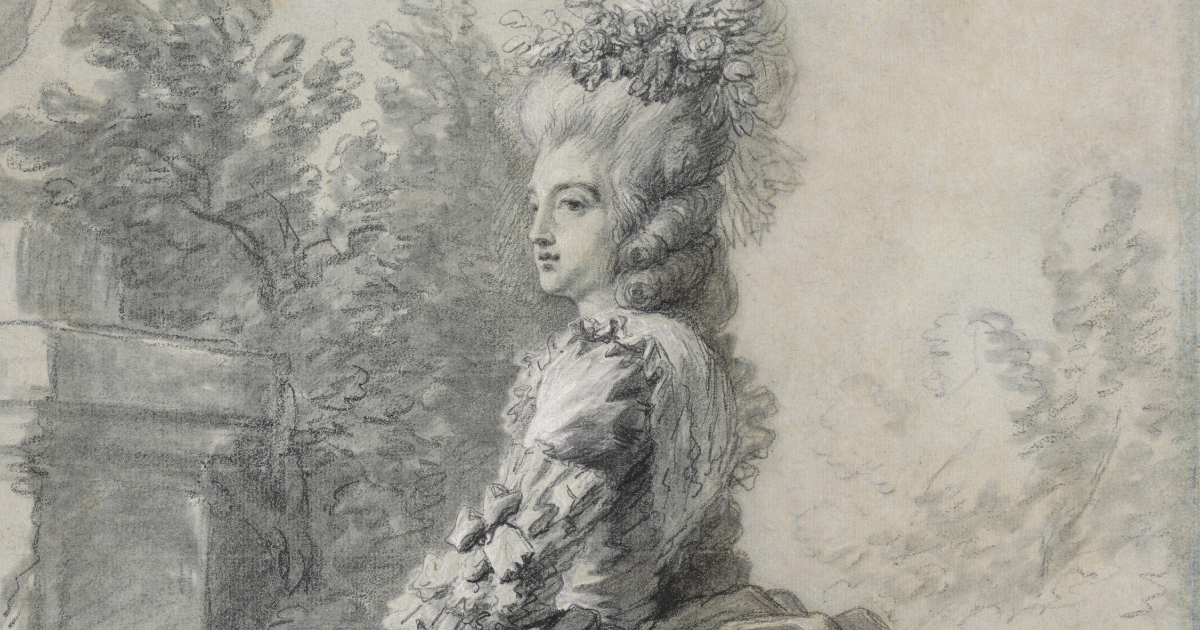
They followed a man in buckled shoes over a bridge to the Petit Trianon and in front of the house was a youngish woman with fluffy hair under a straw hat, wearing an unfashionable dress, "arranged on her shoulders in handker­chief fashion" and tied with a triangular shawl known as a fichu. Suddenly, a young footman burst out of the house onto the terrace. He hur­ried towards the two women with a "peculiar smile" and directed them to a front door where they found themselves among a party of tourists, back in 1901. Whatever they thought they had experienced, they said not a word of it to each other and took the train back to Paris in time for supper.

Three months later, Charlotte and Eleanor wrote separate accounts of this experience and these formed the story to which they de­voted the rest of their lives. They concluded that they had experienced an "act of memory" — that they had actually entered the 1789 mind of Marie Antoinette and had experienced the sadness of the queen herself.

Both women had much to lose by making things up. Unmarried women with no inde­pendent means and reputations to protect would be unlikely to risk perpetrating a fraud. Charlotte, daughter of a bishop, had been prin­cipal of St Hugh's, Oxford for more than 15 years, an austerely eccentric figure dressed in episcopal black. Eleanor, 17 years younger, was equally conservative though she favoured symbolic jewellery. Like narrators in an M. R. James ghost story, they were models of intel­lectual and social probity. "We are the daugh­ters of English clergymen and heartily hold and teach the faith of our fathers." 

Nonetheless, they were both keen believers in the ex­istence of the supernatural and claimed to be psychic. Charlotte's high-Anglican family had regularly reported seeing visions. Eleanor was an advocate of the philosophy of Henri Berg­son, which argued that intuition was more sig­nificant than science for understanding real­ity. "The half-seen and the half-heard became unusually important in her view of life," noted one of her students. She also claimed to have seen a procession of medieval monks in Ox­ford High Street and the ghost of the Emper­or Nero in the Louvre. 

Charlotte and Eleanor sent their accounts to the Society for Psychical Research (founded in 1882 by physicist Hen­ry Sidgwick) but were bitterly disappointed when the SPR refused to investigate. For the next nine years they dedicated themselves obsessively to proving that everything they had seen at Versailles had vanished from the gardens over a century before. They were making a case for time travel.

Moberly and Jourdain’s researches were remarkably thorough yet somehow conveni­ently vague. Every vacation from 1902 to 1910 was spent in Paris, poring over papers, memoirs, fragments. They researched powdered hair (more popular than wigs in 1789), buckled shoes (ditto) and servants' livery; the glimmer of gold Charlotte thought she had glimpsed on the edge of the queen's dress matched an entry in the wardrobe inventories of 1784. Yet a surprising number of scholarly figures were inclined (perhaps determined) to take seriously the story of the Trianon ghosts. An impressively bulky box of letters from their distinguished and celebrated sup­porters is held in the Bodleian. An Adventure (which sold 13,000 copies in the first week of its publication) is still very readable: the au­thors give two separate accounts of their ex­perience followed by a brisk run-through of their proofs of its supernatural bona fides. The Times' reviewer didn't buy it: "They use mystical phrases which are almost meaning­less to the rest of us." The Morning Post sug­gested they had in fact stepped into scenes from a Pathé production of “the well-known film Marie Antoinette at Versailles". But the book went into five editions, each one coun­tering criticism of the one before.

In 1903, a map of the Trianon gardens made by Marie Antoinette’s architect was discovered, hidden up a chimney, and this revelation alone sent the 1924 edition of An Adventure back into the bestseller lists, readers in the grieving 1920s perhaps consoled by its essays by the maverick J. W. Dunne, the “time-haunted” believer in precognitive dreams, whose An Experiment in Time (1927) was a favourite of H. G. Wells. Eleanor died in 1924, Charlotte in 1937, a Victorian who lived into the atomic age. But their story lived on. In 1956, psychic investigator Guy Lambert examined it through the lens of 20th-century psychoanalysis. “In the case of waking dreams which appear to be generated by a particular place, it seems worthwhile to examine the material for signs of emotional crises experienced in its past.”

Every decade brought its own preoccupations to the Versailles ghosts. The first French edition of An Adventure appeared in 1959, introduced by Jean Cocteau. By the 1980s, American gender studies doyenne Terry Castle concluded that Charlotte and Eleanor were channelling lesbian fantasies. A 1981 BBC drama, Miss Morrison’s Ghosts, turned the story into a feminist power struggle.

An Adventure has been out of print since 1972 but there’s something about the story that speaks to longings that do not go away. I took a wander in the paths of Versailles last year and encountered a middle-aged woman, somewhat like myself, clutching a copy of An Adventure and hoping perhaps to get lost in some green lanes.
Like all good ghost stories, the one set in the gardens of the Petit Trianon has passed down through the generations. I first heard about the two Oxford women who visited Versailles in 1901 and saw the ghost of Marie Antoi­nette from my mother. She in turn had heard it from her mother. Not long ago, I mentioned it to a friend who said she had heard it from her mother. A lot of people vaguely knew the story but no one could remember the details.

Two respectable female academics who got lost in the gardens of the Petit Trianon, encounters with people in powdered wigs, a queen, a caped figure, a "running man", apparently bearing bad news. The story of Charlotte Moberly and Eleanor Jourdain and their claim to have been transported two centuries to the 18th-century French court had a long echo. The two women were products of the mid-19th century in which science and faith collided, often awkwardly, and where old certainties had been unbalanced by specula­tion into the strange and inexplicable. They were born into the time of Robert Browning's "Mr Sludge, 'the Medium'", and died in the era of Aleister Crowley, the occultist. Their account, An Adventure, reflects the intellec­tual preoccupations, hopes, fears, longings and anxieties of its time and beyond.

They visited Versailles on an overcast Au­gust day, trudging through the palace before deciding there was just time to visit the Pet­it Trianon, Marie Antoinette's manor house, before they returned to Paris. The women walked into the gardens and got lost, at which point Eleanor later remembered that she be­gan to feel "as if something were wrong"; she also noticed an oddly shaped plough leaning against the wall. Charlotte saw a woman shak­ing a cloth out of a window in an outbuilding.

Their wanderings took them down a lane where they saw two men wearing small tri­corn hats and "long, greyish-green coats" and a woman and a girl wearing unusual kerchiefs. They came upon a "garden kiosk", something like a gazebo, and a scarred man in a cape. Charlotte recalled: "Everything suddenly looked unnatural, therefore unpleasant; even the trees behind the building seemed to have become flat and lifeless, like a wood worked in tapestry. There were no effects of light and shade, and no wind stirred the trees. It was all intensely still."

They followed a man in buckled shoes over a bridge to the Petit Trianon and in front of the house was a youngish woman with fluffy hair under a straw hat, wearing an unfashionable dress, "arranged on her shoulders in handker­chief fashion" and tied with a triangular shawl known as a fichu. Suddenly, a young footman burst out of the house onto the terrace. He hur­ried towards the two women with a "peculiar smile" and directed them to a front door where they found themselves among a party of tourists, back in 1901. Whatever they thought they had experienced, they said not a word of it to each other and took the train back to Paris in time for supper.

Three months later, Charlotte and Eleanor wrote separate accounts of this experience and these formed the story to which they de­voted the rest of their lives. They concluded that they had experienced an "act of memory" — that they had actually entered the 1789 mind of Marie Antoinette and had experienced the sadness of the queen herself.

Both women had much to lose by making things up. Unmarried women with no inde­pendent means and reputations to protect would be unlikely to risk perpetrating a fraud. Charlotte, daughter of a bishop, had been prin­cipal of St Hugh's, Oxford for more than 15 years, an austerely eccentric figure dressed in episcopal black. Eleanor, 17 years younger, was equally conservative though she favoured symbolic jewellery. Like narrators in an M. R. James ghost story, they were models of intel­lectual and social probity. "We are the daugh­ters of English clergymen and heartily hold and teach the faith of our fathers." 

Nonetheless, they were both keen believers in the ex­istence of the supernatural and claimed to be psychic. Charlotte's high-Anglican family had regularly reported seeing visions. Eleanor was an advocate of the philosophy of Henri Berg­son, which argued that intuition was more sig­nificant than science for understanding real­ity. "The half-seen and the half-heard became unusually important in her view of life," noted one of her students. She also claimed to have seen a procession of medieval monks in Ox­ford High Street and the ghost of the Emper­or Nero in the Louvre. 

Charlotte and Eleanor sent their accounts to the Society for Psychical Research (founded in 1882 by physicist Hen­ry Sidgwick) but were bitterly disappointed when the SPR refused to investigate. For the next nine years they dedicated themselves obsessively to proving that everything they had seen at Versailles had vanished from the gardens over a century before. They were making a case for time travel.

Moberly and Jourdain’s researches were remarkably thorough yet somehow conveni­ently vague. Every vacation from 1902 to 1910 was spent in Paris, poring over papers, memoirs, fragments. They researched powdered hair (more popular than wigs in 1789), buckled shoes (ditto) and servants' livery; the glimmer of gold Charlotte thought she had glimpsed on the edge of the queen's dress matched an entry in the wardrobe inventories of 1784. Yet a surprising number of scholarly figures were inclined (perhaps determined) to take seriously the story of the Trianon ghosts. An impressively bulky box of letters from their distinguished and celebrated sup­porters is held in the Bodleian. An Adventure (which sold 13,000 copies in the first week of its publication) is still very readable: the au­thors give two separate accounts of their ex­perience followed by a brisk run-through of their proofs of its supernatural bona fides. The Times' reviewer didn't buy it: "They use mystical phrases which are almost meaning­less to the rest of us." The Morning Post sug­gested they had in fact stepped into scenes from a Pathé production of “the well-known film Marie Antoinette at Versailles". But the book went into five editions, each one coun­tering criticism of the one before.

In 1903, a map of the Trianon gardens made by Marie Antoinette’s architect was discovered, hidden up a chimney, and this revelation alone sent the 1924 edition of An Adventure back into the bestseller lists, readers in the grieving 1920s perhaps consoled by its essays by the maverick J. W. Dunne, the “time-haunted” believer in precognitive dreams, whose An Experiment in Time (1927) was a favourite of H. G. Wells. Eleanor died in 1924, Charlotte in 1937, a Victorian who lived into the atomic age. But their story lived on. In 1956, psychic investigator Guy Lambert examined it through the lens of 20th-century psychoanalysis. “In the case of waking dreams which appear to be generated by a particular place, it seems worthwhile to examine the material for signs of emotional crises experienced in its past.”

Every decade brought its own preoccupations to the Versailles ghosts. The first French edition of An Adventure appeared in 1959, introduced by Jean Cocteau. By the 1980s, American gender studies doyenne Terry Castle concluded that Charlotte and Eleanor were channelling lesbian fantasies. A 1981 BBC drama, Miss Morrison’s Ghosts, turned the story into a feminist power struggle.

An Adventure has been out of print since 1972 but there’s something about the story that speaks to longings that do not go away. I took a wander in the paths of Versailles last year and encountered a middle-aged woman, somewhat like myself, clutching a copy of An Adventure and hoping perhaps to get lost in some green lanes.

share

subscribe to the catholic herald today

Our best content is exclusively available to our subscribers. Subscribe today and gain instant access to expert analysis, in-depth articles, and thought-provoking insights—anytime, anywhere. Don’t miss out on the conversations that matter most.
Subscribe