



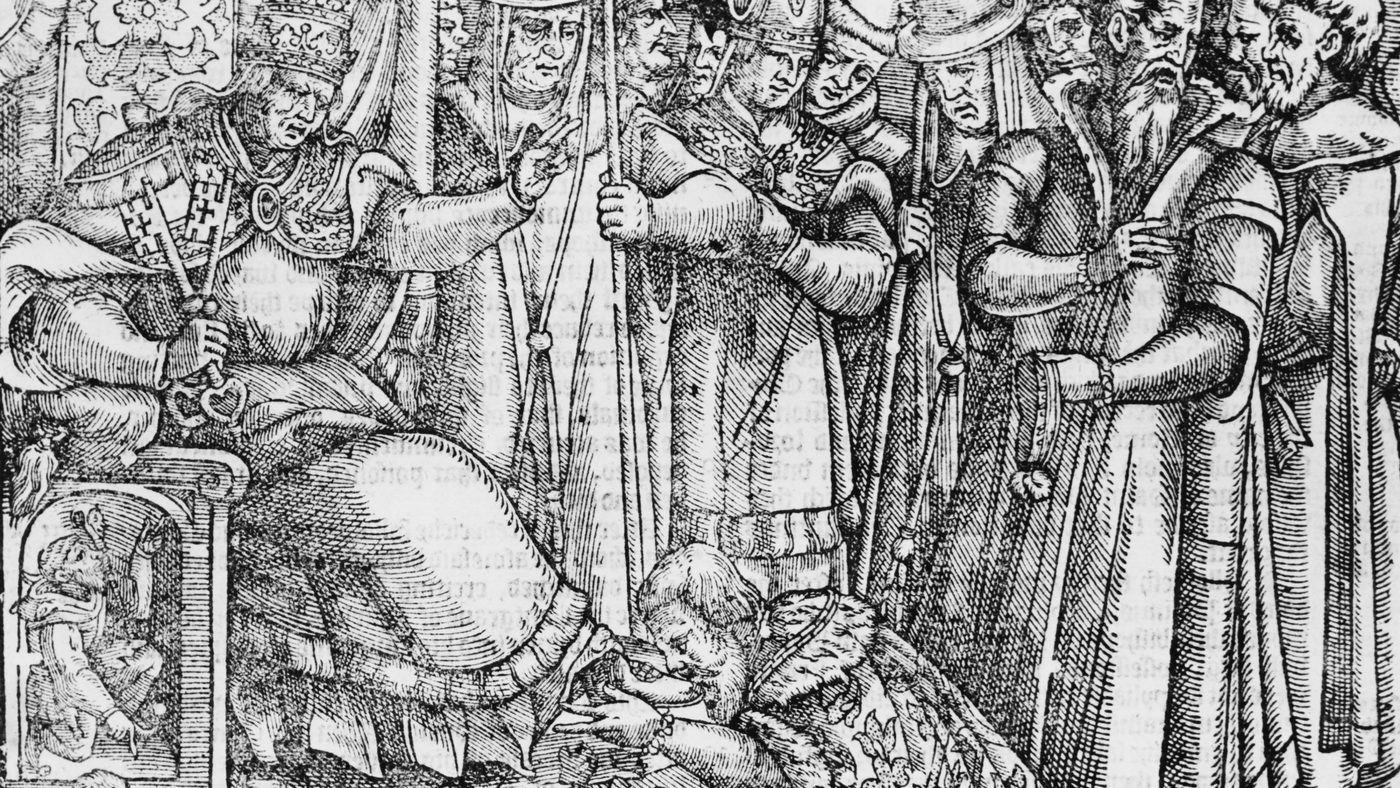
Easter 2020 will be the first Easter in the history of the Church when Catholics in most parts of the world will not be able to attend Mass. The situation is unprecedented. It is not, however, entirely unprecedented in England. Even during the dark days of Elizabethan persecution, there was always somewhere the faithful could gather to hear Mass; to find a precedent for the current situation, where the Church itself has suspended the public celebration of Mass, we need to go back over 800 years to the reign of King John. On 23 March 1208 (coincidentally, the same day in 2020 that the government imposed a “lockdown” on the UK), under instructions from Pope Innocent III, the English bishops suspended the celebration of Mass throughout the kingdom, as well as the other sacraments. That year there would be no Easter liturgy, and the suspension went on for six long years. The suspension of 1208-1214 had nothing to do with a pandemic or with public health; it was, instead, the product of ecclesiastical politics, and was imposed on England by the Pope to punish King John. Following the death of Archbishop Hubert Walter in 1205, King John tried to force the chapter of Canterbury Cathedral to elect a successor favorable to the King, but Pope Innocent III summoned the chapter to Rome where they elected Stephen Langton in 1207. The King refused to accept Archbishop Langton, prompting the Pope to instruct the English bishops to impose an interdict. The Mass was suspended (although a handful of indulgenced altars were exempted), along with the other sacraments. Funerals could not take place, nor could anyone be buried in consecrated ground. Churchyards were closed, and even bishops who died during this period were buried by the roadside. Churches were forbidden to ring their bells – and given that church bells at this time served to mark the time as well as sounding warnings to the community, the loss of bells was a major disruption to medieval life. There were only two general exceptions to the interdict. Priests were still permitted to baptize children, hear the confessions of the dying and absolve them. In this respect the interdict differed from the present prohibitions, which extend to the sacraments of baptism, reconciliation and anointing of the sick. The rationale of the medieval Church in allowing these two sacraments to continue was that the English people should still be allowed access to salvation, even if they were excluded from the grace of the other sacraments. However, in contrast to the period of the interdict, under the present restrictions funerals can still continue under certain strict limitations. Medieval people lived in fear of the penalty of excommunication, which was widely regarded as a kind of living death. The chronicler Ralph of Coggeshall, who later excised any description of the English interdict from his chronicle, described with horror an earlier interdict imposed on France in 1200:
3:34 PM
The last lockdown: 13th-century England's six years without Mass
Francis Young

5 min read



Already a subscriber? Sign in
5freearticles every month
Continue reading with a free account. No card needed.
- Five free articles every thirty days, on any device you sign in on
- The Catholic Herald newsletter, every morning
- Subscribe whenever you like for everything: every article and the magazine
Related articles
 Newsroom
Church leaders urge Drumcree dialogue: ‘Too much is at stake’
The Catholic and Church of Ireland Archbishops of Armagh have urged a renewed commitment to peace and reconciliation amid the Drumcree stand-off
Corrie Douglas-Young Newsroom
Thousands of Irish children to join global Rosary campaign
Corrie Douglas-Young Newsroom
TikTok priest urges young people to stand with persecuted Christians
Nathalie Raffray Newsroom
Baby born at 25 weeks reunites with neonatologist two years after leaving hospital
The Catholic Herald Newsroom
Joe Biden honoured by Planned Parenthood after defending abortion rights
Christine Rousselle
subscribe to the catholic herald today
Our best content is exclusively available to our subscribers. Subscribe today and gain instant access to expert analysis, in-depth articles, and thought-provoking insights—anytime, anywhere. Don’t miss out on the conversations that matter most.
Subscribe



