February 12, 2026

The most extraordinary politician of modern times

Jack Carrigan
More
Related
Min read
share

Margaret Thatcher: a Life and Legacy
by David Cannadine, OUP, £10.99

For those who haven’t the time to read Charles Moore’s official biography of Margaret Thatcher (two volumes published and a third in the pipeline), this book has much to recommend it. It is short, judicious and lucid, neither leaning too heavily on the side of Thatcher’s admirers nor her critics, yet still conveying a sympathetic personal view.

David Cannadine, general editor of the Oxford Dictionary of National Biography and professor of history at Princeton University, wrote the original Oxford DNB entry on Thatcher and then, given the entry’s length and the importance of his subject, prepared it as a book.
The epigraph he has chosen, a portentous quote from Thatcher herself – “The full accounting of how my political work affected the lives of others is something we will only know on Judgment Day” – seems gently ironic. Historians working in this world need to make certain assessments in the meantime.

Something else worth drawing attention to is the author’s dedication to “Mrs Thurman”, his primary school headmistress. He describes her with obvious affection and respect, as “Margaret Thatcher’s avatar and anticipation”, for her immaculate coiffure, her energy, her brilliance, her high standards and her determination. Having met Thatcher’s “type” already, Cannadine is not unfamiliar with her stance or behaviour.

The author shows how particular aspects of his subject’s early years in Grantham formed her character early on: “Thrift, hard work, self-help, self-reliance and self-improvement” were fundamental features of her nature, though not the whole of it. Her marriage to a wealthy man who gave her unfailing loyalty and support, and who was content to subordinate his life to hers, should also not be underestimated.

Behind Cannadine’s summaries of the well known disasters and triumphs of Thatcher’s parliamentary career – her fight with the unions, the Falklands War, her high-handed treatment of her Cabinet, her increasing suspicion of “the unelected and unaccountable Brussels bureaucracy”, her relationships with Reagan and with Gorbachev and so on – is the author’s recognition that Thatcher was “a force of nature”. She “burst on the British political scene” in the 1970s, launching and sustaining “the most extraordinary political career of modern times”.

Where I suspect his judgment may not be wholly accurate is in his description of Thatcher’s relationship with the Queen: though “scrupulously correct, they were never warm or cordial”.
I am not so sure. Although they differed over the importance of the Commonwealth and although the Queen must have been startled (or amused) by Thatcher’s grand adoption of the royal “we”, they had much in common below the surface: the influence of fathers whom they deeply loved; a shared unostentatious Christian faith; an instinct for thrift; and having lived through the war.

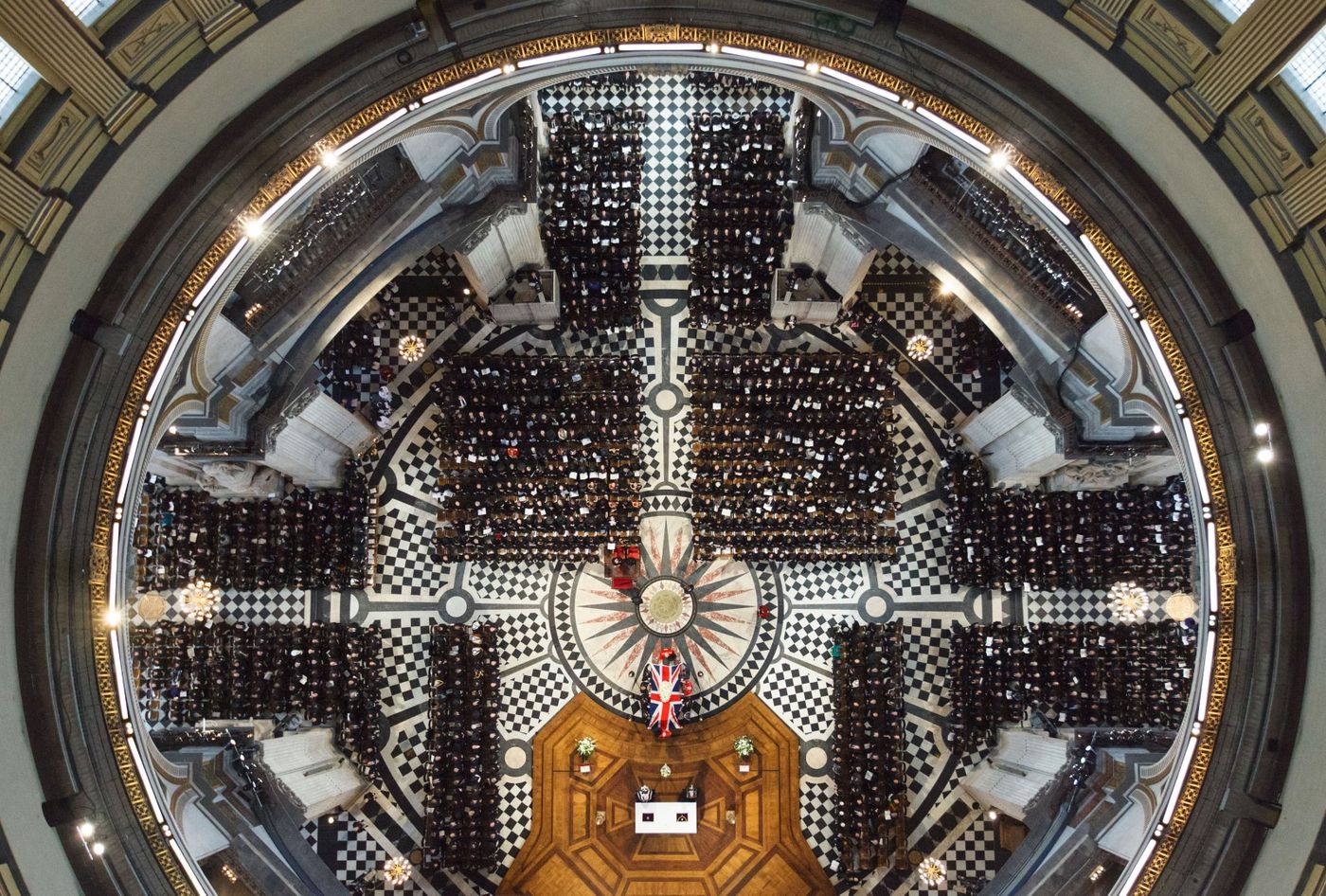
The Queen came to Thatcher’s funeral – the only time she has attended the funeral of a commoner since the death of Churchill. This symbolic gesture says a great deal.

On the matter of the venue, St Paul’s Cathedral, Cannadine points out that although Nelson, Wellington and Churchill had all fought bigger battles (literally), nonetheless “in making her life’s journey from the Grantham grocer’s shop to St Paul’s Cathedral, Thatcher travelled further than and had a much higher mountain to climb”.

Why was she so divisive a figure? Apart from her seeming lack of compassion for the predicament of the working classes in the North and the mining communities, the author implies this might have been due to her lonely position as a woman in a man’s world, “seemingly suppressing the tender, nurturing qualities of women” in favour of being combative and competitive, emphasising willpower, determination, tirelessness and belligerence.

Cannadine’s admirable book includes suggestions for further reading, a list of the principal figures, a glossary and chronology – all in a mere 154 pages.

Margaret Thatcher: a Life and Legacy
by David Cannadine, OUP, £10.99

For those who haven’t the time to read Charles Moore’s official biography of Margaret Thatcher (two volumes published and a third in the pipeline), this book has much to recommend it. It is short, judicious and lucid, neither leaning too heavily on the side of Thatcher’s admirers nor her critics, yet still conveying a sympathetic personal view.

David Cannadine, general editor of the Oxford Dictionary of National Biography and professor of history at Princeton University, wrote the original Oxford DNB entry on Thatcher and then, given the entry’s length and the importance of his subject, prepared it as a book.
The epigraph he has chosen, a portentous quote from Thatcher herself – “The full accounting of how my political work affected the lives of others is something we will only know on Judgment Day” – seems gently ironic. Historians working in this world need to make certain assessments in the meantime.

Something else worth drawing attention to is the author’s dedication to “Mrs Thurman”, his primary school headmistress. He describes her with obvious affection and respect, as “Margaret Thatcher’s avatar and anticipation”, for her immaculate coiffure, her energy, her brilliance, her high standards and her determination. Having met Thatcher’s “type” already, Cannadine is not unfamiliar with her stance or behaviour.

The author shows how particular aspects of his subject’s early years in Grantham formed her character early on: “Thrift, hard work, self-help, self-reliance and self-improvement” were fundamental features of her nature, though not the whole of it. Her marriage to a wealthy man who gave her unfailing loyalty and support, and who was content to subordinate his life to hers, should also not be underestimated.

Behind Cannadine’s summaries of the well known disasters and triumphs of Thatcher’s parliamentary career – her fight with the unions, the Falklands War, her high-handed treatment of her Cabinet, her increasing suspicion of “the unelected and unaccountable Brussels bureaucracy”, her relationships with Reagan and with Gorbachev and so on – is the author’s recognition that Thatcher was “a force of nature”. She “burst on the British political scene” in the 1970s, launching and sustaining “the most extraordinary political career of modern times”.

Where I suspect his judgment may not be wholly accurate is in his description of Thatcher’s relationship with the Queen: though “scrupulously correct, they were never warm or cordial”.
I am not so sure. Although they differed over the importance of the Commonwealth and although the Queen must have been startled (or amused) by Thatcher’s grand adoption of the royal “we”, they had much in common below the surface: the influence of fathers whom they deeply loved; a shared unostentatious Christian faith; an instinct for thrift; and having lived through the war.

The Queen came to Thatcher’s funeral – the only time she has attended the funeral of a commoner since the death of Churchill. This symbolic gesture says a great deal.

On the matter of the venue, St Paul’s Cathedral, Cannadine points out that although Nelson, Wellington and Churchill had all fought bigger battles (literally), nonetheless “in making her life’s journey from the Grantham grocer’s shop to St Paul’s Cathedral, Thatcher travelled further than and had a much higher mountain to climb”.

Why was she so divisive a figure? Apart from her seeming lack of compassion for the predicament of the working classes in the North and the mining communities, the author implies this might have been due to her lonely position as a woman in a man’s world, “seemingly suppressing the tender, nurturing qualities of women” in favour of being combative and competitive, emphasising willpower, determination, tirelessness and belligerence.

Cannadine’s admirable book includes suggestions for further reading, a list of the principal figures, a glossary and chronology – all in a mere 154 pages.

subscribe to
the catholic herald

Continue reading your article with a subscription.
Read 5 articles with our free plan.
Subscribe

subscribe to the catholic herald today

Our best content is exclusively available to our subscribers. Subscribe today and gain instant access to expert analysis, in-depth articles, and thought-provoking insights—anytime, anywhere. Don’t miss out on the conversations that matter most.
Subscribe