

When a body of men come into a neighbourhood to them unknown, as we are doing, my brethren, strangers to strangers, and there set themselves down, and raise an altar, and open a school, and invite, or even exhort all men to attend them, it is natural that they who see them, and are drawn to think about them, should ask the question: what brings them hither? Who bids them come? What do they want? What do they preach? What is their warrant? What do they promise? You have a right, my brethren, to ask the question.
Many, however, will not stop to ask it, as thinking they can answer it without difficulty for themselves. Many there are who would promptly and confidently answer it, according to their own habitual view of things, on their own principles, the principles of the world.
The views, the principles, the aims of the world are very definite, are everywhere acknowledged and are incessantly acted on. They supply an explanation of the conduct of individuals, whoever they be, ready at hand, and so sure to be true in the common run of cases as to be probable and plausible in any case in particular. When we would account for effects which we see, we of course refer them to causes which we know of. To fancy causes of which we know nothing is not to account for them at all.
The world then naturally and necessarily judges of others by itself. Those who live the life of the world, and act from motives of the world, and live and act with those who do the like, as a matter of course ascribe the actions of others, however different they may be from their own, to one or other of the motives which weigh with themselves; for some motive or other they must assign, and they can imagine none but those of which they have experience.
We know how the world goes on, especially in this country; it is a laborious, energetic, indefatigable world. And so pleasant is the excitement which those temporal objects create that it is often its own reward; insomuch that, forgetting the end for which they toil, men find a satisfaction in the toil itself, and are sufficiently repaid for their trouble by their trouble – by the struggle for success, and the rivalry of party, and the trial of their skill, and the demand upon their resources, by the vicissitudes and hazards, and ever new emergencies, and varying requisitions of the contest which they carry on, though that contest never comes to an end.
Such is the way of the world; and therefore, I say, it is not unnatural that, when it sees any persons whatever anywhere begin to work with energy, and attempt to get others about them, and act in outward appearance like itself, though in a different direction and with a religious profession, it should unhesitatingly impute to them the motives which influence, or would influence, its own children.
Often by way of blame, but sometimes not as blaming, but as merely stating a plain fact, which it thinks undeniable, it takes for granted that they are ambitious, or restless, or eager for distinction, or fond of power. It knows no better; and it is vexed and annoyed if, as time goes on, one thing or another is seen in the conduct of those whom it criticises which is inconsistent with the assumption on which, in the first instance, it so summarily settled their position and anticipated their course.
It took a general view of them, looked them through, as it thought, and from some one action of theirs which came to its knowledge, assigned to them unhesitatingly some particular motive as their habitual actuating principle; but presently it finds it is obliged to shift its ground, to take up some new hypothesis and explain to itself their character and their conduct over again.
O, my dear brethren, the world cannot help doing so, because it knows us not; it ever will be impatient with us for not being of the world, because it is the world; it is necessarily blind to the one strong motive which has influence with us, and, tired out at length with hunting through its catalogues and notebooks for a description of us, it sits down in disgust, after its many conjectures, and flings us aside as inexplicable, or hates us as if mysterious and designing.
My brethren, we have secret views – secret, that is, from men of this world; secret from politicians, secret from the slaves of mammon, secret from all ambitious, covetous, selfish and voluptuous men. For religion itself, like its Divine Author and Teacher, is, as I have said, a hidden thing from them; and not knowing it, they cannot use it as a key to interpret the conduct of those who are influenced by it.
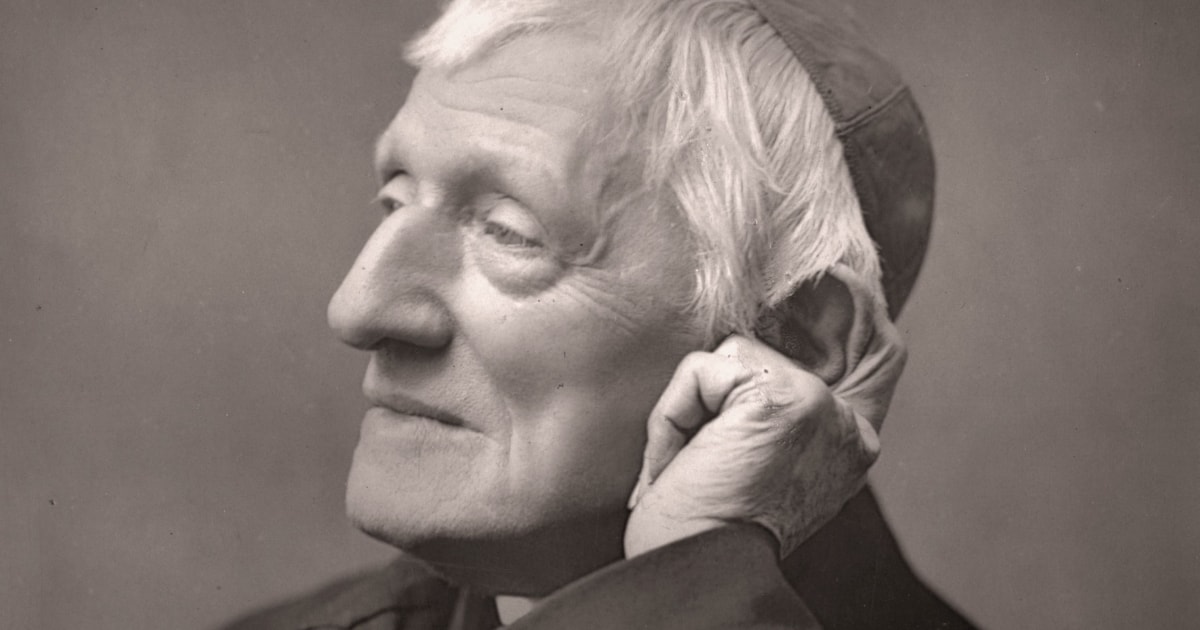
Excerpt from Discourse I, “The Salvation of the Hearer the Motive of the Preacher”, by St John Henry Newman.


.jpg)