

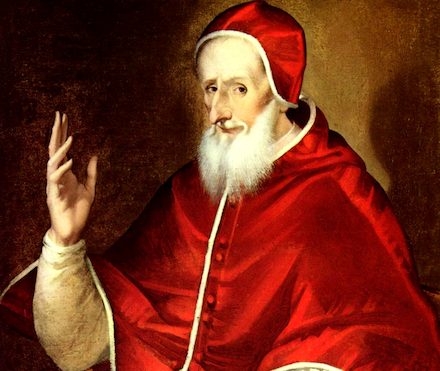
Pope St Pius V was born Antonio Ghislieri in January 1504. When he was 14 years old he entered the Dominican order and took the name Michele. He was ordained a priest at Genoa in 1528. He was later elected to the commissariat of the Holy Office in Rome. Along with being appointed a cardinal he was given the honour of “supreme inquisitorship”. He was later dismissed by Pope Pius IV as he was opposed to his pontificate. Following the Pope’s death, Michele was elected to the papal throne on January 8 1566 and enthroned on his 62nd birthday. He chose the name Pius. Pius V focused on restoring morality to Rome. He reduced the cost of the papal court, compelled residence among the clergy, expelled prostitutes and cultivated a greater respect for the liturgy. In accordance with the Council of Trent, he standardised the Mass and published the 1570 edition of the Roman Missal. According to Katherine Rinne in Waters of Rome, Pius V ordered the construction of public works to improve the water supply and sewer system of Rome. He took a firm stand against Protestantism and opposed the Hugenots in France, He supported Mary Queen of Scots and issued Regnans in Excelsis in 1570 which declared Elizabeth I a heretic and released her subjects from allegiance to her. Pius V arranged the forming of the Holy League against the Islamic Turks, resulting in the winning of the Battle of Lepanto in October 1571 by the combined fleet under Don John of Austria. It was attested to at his canonisation that he miraculously knew when the battle was over, despite being in Rome at the time Pope Pius died in 1572 of gravel (kidney stones) and was buried in the chapel of St Andrea, close to the tomb of Pope Pius III, in the Vatican. Pope Sixtus V later built a monument in the chapel of Santissimo Sacramento in the Liberian basilica. His remains were transferred there on January 9 1588. Pope Pius was beatified by Pope Clement X in the year 1672 and was later canonised by Pope Clement XI in May 1712.
4:03 PM
The saint who declared Elizabeth I a heretic
Pope St Pius V (April 30) focused on restoring morality to Rome
Staff Reporter

3 min read



Already a subscriber? Sign in
5freearticles every month
Continue reading with a free account. No card needed.
- Five free articles every thirty days, on any device you sign in on
- The Catholic Herald newsletter, every morning
- Subscribe whenever you like for everything: every article and the magazine
Related articles
 Newsroom
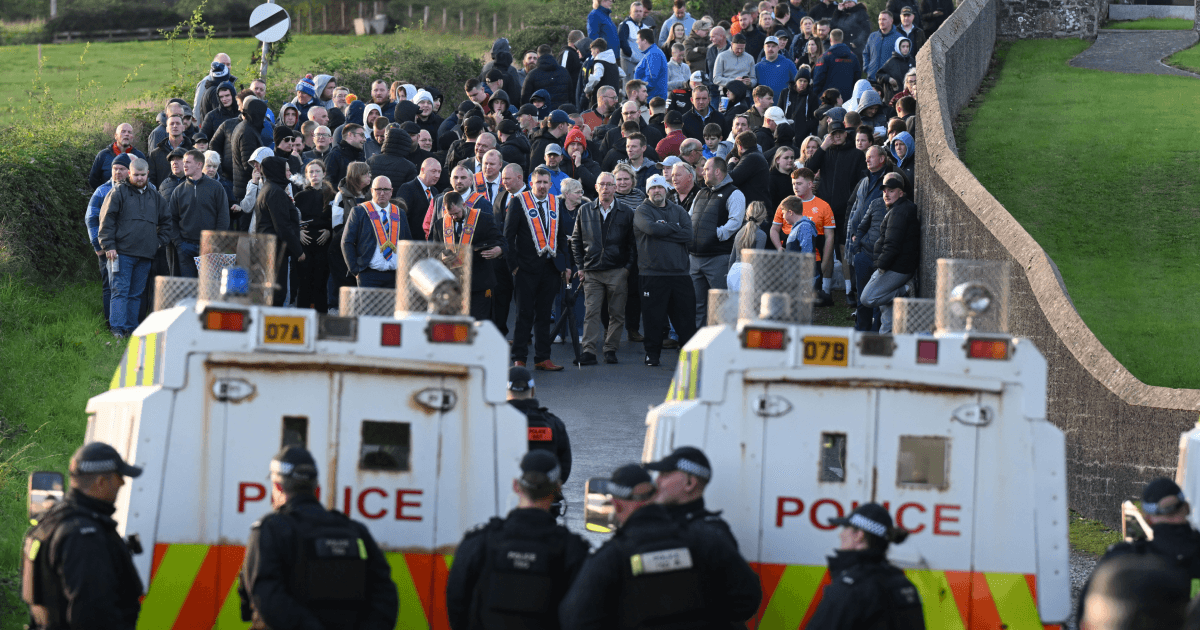
Church leaders urge Drumcree dialogue: ‘Too much is at stake’
The Catholic and Church of Ireland Archbishops of Armagh have urged a renewed commitment to peace and reconciliation amid the Drumcree stand-off
Corrie Douglas-Young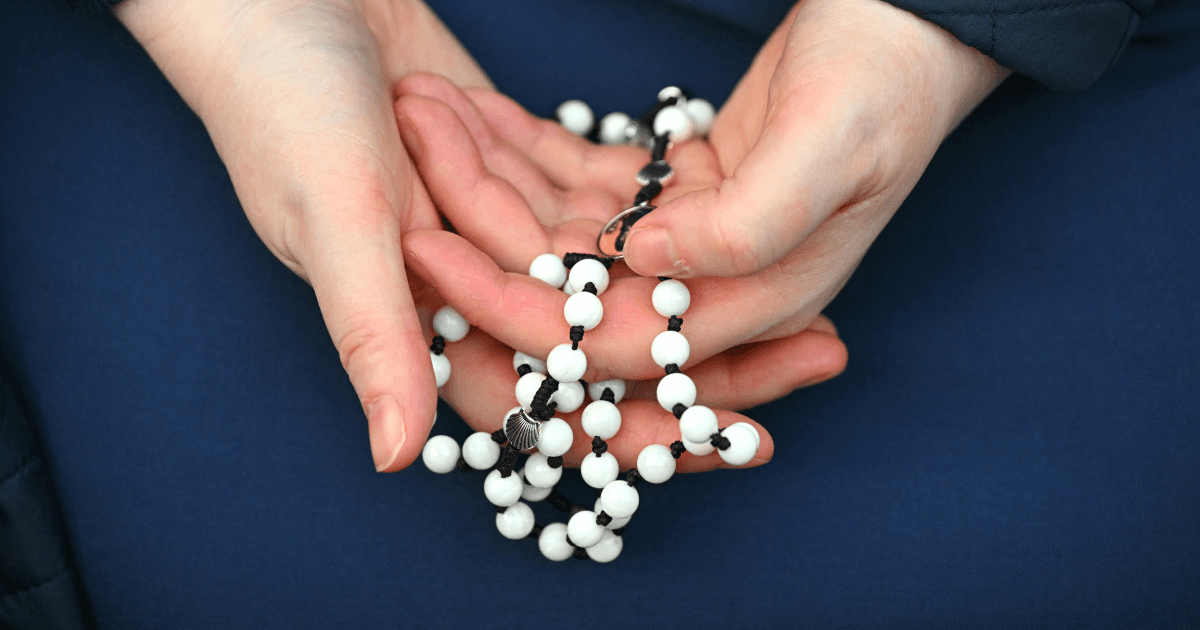 Newsroom
Thousands of Irish children to join global Rosary campaign
Corrie Douglas-Young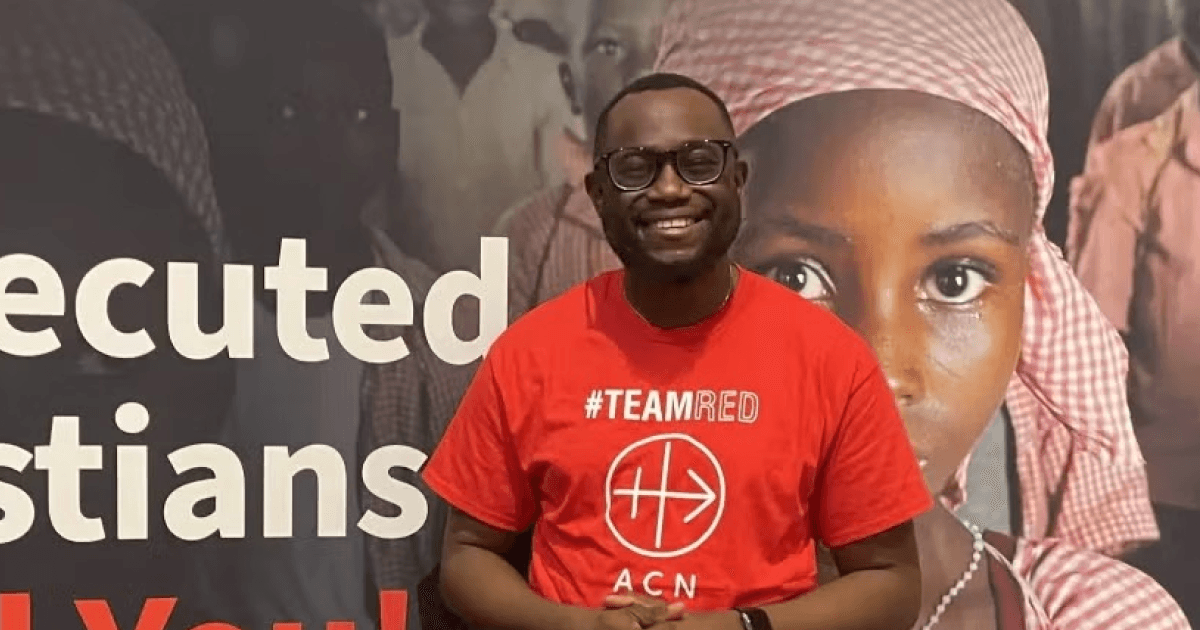 Newsroom
TikTok priest urges young people to stand with persecuted Christians
Nathalie Raffray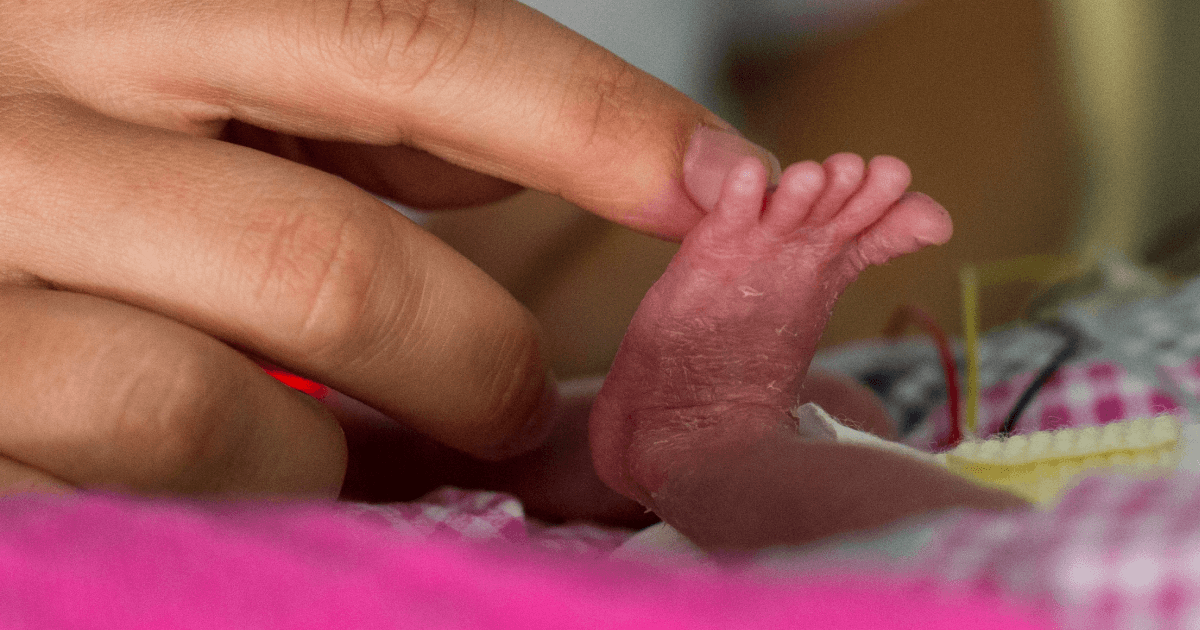 Newsroom
Baby born at 25 weeks reunites with neonatologist two years after leaving hospital
The Catholic Herald Newsroom
Joe Biden honoured by Planned Parenthood after defending abortion rights
Christine Rousselle
subscribe to the catholic herald today
Our best content is exclusively available to our subscribers. Subscribe today and gain instant access to expert analysis, in-depth articles, and thought-provoking insights—anytime, anywhere. Don’t miss out on the conversations that matter most.
Subscribe



