
February 12, 2026

The trouble with Wagner

Francis Phillips
More
Related
Min read
share

Reading Stephen Pollard’s article about anti-Semitism and social media in the Telegraph last week gave me a jolt. According to Pollard, figures from the Community Security Trust which monitors anti-Semitic incidents with the police, “show that in 2016 there was a 36% rise in incidents of Jew-hate over the figure for 2015 – and a 29% increase in violent assaults on Jews.”

It gave me a jolt because in my own daily life I never encounter it (though I have read of problems with anti-Semitism within the Labour Party). It seems such a strange and abstract crime, if an ancient one: hating a whole people simply because they come from a particular race or religion.
Interestingly though, I have come across anti-Semitism twice in the comment box when I have blogged: once, when I wrote about the Tridentine Mass and remarked that a Jewish convert who attended the Extraordinary Form had been upset by certain anti-Semitic remarks she had heard; and a second time when I wrote about a book called The Crime and the Silence: confronting the Massacre of Jews in Wartime Poland by Anna Bikont. On both occasions I was taken aback by some of the comments.

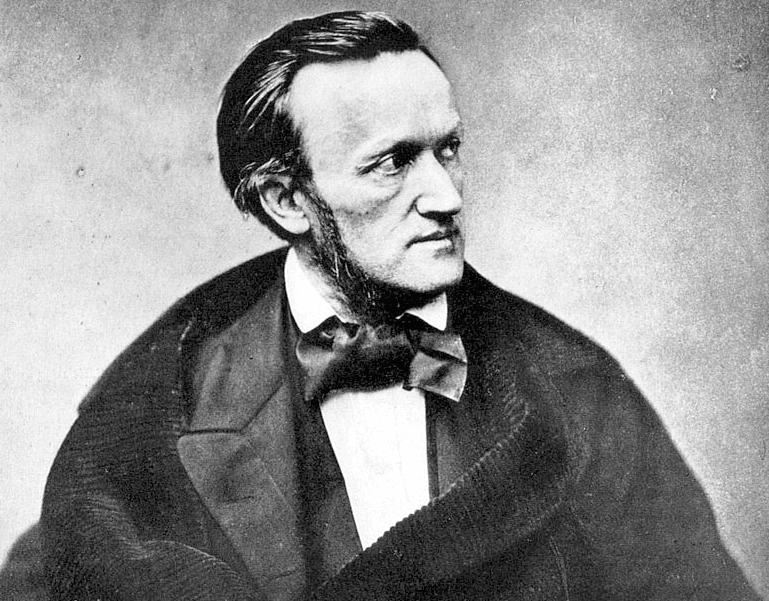
Apart from Pollard’s article my thoughts on the subject have been roused by reading Simon Callow’s Being Wagner: The Triumph of the Will (its subtitle eerily echoing Leni Riefenstahl’s notorious film about the dark glamour of the Nazi Party in its early days.) Callow, a lifelong devotee of Wagner’s musical dramas, does not gloss over the more unpleasant features of the composer's personality – in particular, his virulent anti-Semitism.

Callow writes that Wagner’s anti-Semitism was “more than a bizarre peccadillo, beyond a prejudice: it was an obsession, a monomania, a full-blown neurosis.” Being a fully paid-up genius does not excuse Wagner, any more than it excuses those who take to the social media in our times to publicise their deeply unpleasant prejudices.

Callow also remarks, “ music is banned, for goodness’ sake. We understand why.” I asked a friend, a music-lover and philosophy teacher, what he thought of Israel’s long-standing ban on Wagner’s music. He was not in favour of it, commenting, “Are Catholics to decline to listen to the remarkable Gesualdo, seeing that he murdered his wife? Wagner-as-a-thinker is not to be taken seriously.” Rationally this makes sense, but it fails to take account of the power the emotions have over our decision-making.

It seems to me that to be a Catholic and an anti-Semite is a contradiction in terms. As recent Popes have taught, the Jews are to be seen as our “elder brothers” – or as Archbishop Roncalli (later John XXIII) said to the Chief Rabbi of Paris when they were about to enter a room, “Please, the Old Testament first.”

Reading Stephen Pollard’s article about anti-Semitism and social media in the Telegraph last week gave me a jolt. According to Pollard, figures from the Community Security Trust which monitors anti-Semitic incidents with the police, “show that in 2016 there was a 36% rise in incidents of Jew-hate over the figure for 2015 – and a 29% increase in violent assaults on Jews.”

It gave me a jolt because in my own daily life I never encounter it (though I have read of problems with anti-Semitism within the Labour Party). It seems such a strange and abstract crime, if an ancient one: hating a whole people simply because they come from a particular race or religion.
Interestingly though, I have come across anti-Semitism twice in the comment box when I have blogged: once, when I wrote about the Tridentine Mass and remarked that a Jewish convert who attended the Extraordinary Form had been upset by certain anti-Semitic remarks she had heard; and a second time when I wrote about a book called The Crime and the Silence: confronting the Massacre of Jews in Wartime Poland by Anna Bikont. On both occasions I was taken aback by some of the comments.

Apart from Pollard’s article my thoughts on the subject have been roused by reading Simon Callow’s Being Wagner: The Triumph of the Will (its subtitle eerily echoing Leni Riefenstahl’s notorious film about the dark glamour of the Nazi Party in its early days.) Callow, a lifelong devotee of Wagner’s musical dramas, does not gloss over the more unpleasant features of the composer's personality – in particular, his virulent anti-Semitism.

Callow writes that Wagner’s anti-Semitism was “more than a bizarre peccadillo, beyond a prejudice: it was an obsession, a monomania, a full-blown neurosis.” Being a fully paid-up genius does not excuse Wagner, any more than it excuses those who take to the social media in our times to publicise their deeply unpleasant prejudices.

Callow also remarks, “ music is banned, for goodness’ sake. We understand why.” I asked a friend, a music-lover and philosophy teacher, what he thought of Israel’s long-standing ban on Wagner’s music. He was not in favour of it, commenting, “Are Catholics to decline to listen to the remarkable Gesualdo, seeing that he murdered his wife? Wagner-as-a-thinker is not to be taken seriously.” Rationally this makes sense, but it fails to take account of the power the emotions have over our decision-making.

It seems to me that to be a Catholic and an anti-Semite is a contradiction in terms. As recent Popes have taught, the Jews are to be seen as our “elder brothers” – or as Archbishop Roncalli (later John XXIII) said to the Chief Rabbi of Paris when they were about to enter a room, “Please, the Old Testament first.”

subscribe to
the catholic herald

Continue reading your article with a subscription.
Read 5 articles with our free plan.
Subscribe

subscribe to the catholic herald today

Our best content is exclusively available to our subscribers. Subscribe today and gain instant access to expert analysis, in-depth articles, and thought-provoking insights—anytime, anywhere. Don’t miss out on the conversations that matter most.
Subscribe