

February 12, 2026

Theatre: Even 39 children can’t upstage the rock slob

Robert Tanitch
More
No items found.
Related
Min read
share

School of Rock, Andrew Lloyd Webber’s exuberant new musical at New London Theatre, is based on the popular 2003 American musical-comedy movie starring Jack Black. The lyrics are by Glenn Slater; the book is by Julian Fellowes.

A wannabe rock star, out of work, takes a teaching job at an elite primary school, introduces the kids to hard rock and liberates them. Family audiences love musicals with lots of kids. Laurence Connor’s production has done extremely well in New York and there is no reason why it should not do equally well in London.

School of Rock is about self-expression and the empowering force of music. Lloyd Webber believes in it so strongly that he is allowing all schools in Britain to obtain a licence and perform the musical free of charge.

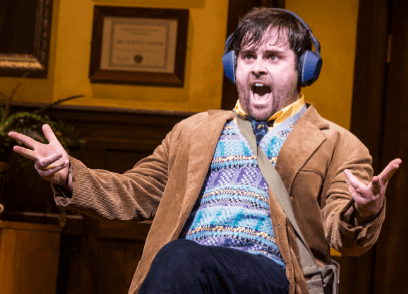
One of the most famous stage adages, attributed to WC Fields, is “Never work with children or animals” – and that’s because they will steal every scene they are in. David Fynn, who plays the teacher, has to act with 39 children. There are three rotating sets and 13 talented musicians in each set. He survives: nobody upstages David Fynn.

In real life, headteachers, parents and governing bodies would be up in arms and the teacher would probably end up in prison. On stage, thanks to Fynn’s performance, the shaggy-bearded, pot-bellied, illiterate, immature rock slob is very likeable and very funny.

Beverley Cross and David Heneker’s Half a Sixpence, the flash, bang, wallop musical at Noël Coward Theatre, is an adaptation of HG Wells’s comic parable, a satire on snobbery and social pretensions. It was never that good, but it was a good vehicle for Tommy Steele on stage and screen. The show has been given a facelift by the ubiquitous Julian Fellowes, who has written a new book, and by George Stiles and Anthony Drewe who provide seven new songs, including the show-stopping Pick Out a Simple Tune (with banjo accompaniment).

I have not read Wells’s novel for a long time, but I do not remember Kipps, the draper’s assistant who comes into a fortune, being patronised in quite such a squirm-making manner as he is here. The production’s big success is 22-year-old Charlie Stemp, who has gone straight from the chorus in Wicked to playing this massive leading role. Stemp can act, sing and dance and does so with considerable brio and charm.

There are two productions of King Lear on in London: one at The Old Vic with Glenda Jackson, the other at the Barbican with Antony Sher. There is no doubt in my mind which you should see. Gregory Doran’s production for the RSC at the Barbican is vastly superior, more coherent and better acted in the supporting roles. Sher’s Lear knows only too well he is a fond, foolish old man, but a shadow of his former self, and that gives his scenes, especially with blind Gloucester and his reunion with Cordelia, their poignancy.

Akram Khan’s touring version of Giselle is no longer the definitive statement on Romanticism that balletomanes know and love. Set in an abstract modern period, and featuring economic migrants, his reinterpretation, thrillingly choreographed, is a highly dramatic experience, a modern classic in the making.

School of Rock, Andrew Lloyd Webber’s exuberant new musical at New London Theatre, is based on the popular 2003 American musical-comedy movie starring Jack Black. The lyrics are by Glenn Slater; the book is by Julian Fellowes.

A wannabe rock star, out of work, takes a teaching job at an elite primary school, introduces the kids to hard rock and liberates them. Family audiences love musicals with lots of kids. Laurence Connor’s production has done extremely well in New York and there is no reason why it should not do equally well in London.
School of Rock is about self-expression and the empowering force of music. Lloyd Webber believes in it so strongly that he is allowing all schools in Britain to obtain a licence and perform the musical free of charge.

One of the most famous stage adages, attributed to WC Fields, is “Never work with children or animals” – and that’s because they will steal every scene they are in. David Fynn, who plays the teacher, has to act with 39 children. There are three rotating sets and 13 talented musicians in each set. He survives: nobody upstages David Fynn.

In real life, headteachers, parents and governing bodies would be up in arms and the teacher would probably end up in prison. On stage, thanks to Fynn’s performance, the shaggy-bearded, pot-bellied, illiterate, immature rock slob is very likeable and very funny.

Beverley Cross and David Heneker’s Half a Sixpence, the flash, bang, wallop musical at Noël Coward Theatre, is an adaptation of HG Wells’s comic parable, a satire on snobbery and social pretensions. It was never that good, but it was a good vehicle for Tommy Steele on stage and screen. The show has been given a facelift by the ubiquitous Julian Fellowes, who has written a new book, and by George Stiles and Anthony Drewe who provide seven new songs, including the show-stopping Pick Out a Simple Tune (with banjo accompaniment).

I have not read Wells’s novel for a long time, but I do not remember Kipps, the draper’s assistant who comes into a fortune, being patronised in quite such a squirm-making manner as he is here. The production’s big success is 22-year-old Charlie Stemp, who has gone straight from the chorus in Wicked to playing this massive leading role. Stemp can act, sing and dance and does so with considerable brio and charm.

There are two productions of King Lear on in London: one at The Old Vic with Glenda Jackson, the other at the Barbican with Antony Sher. There is no doubt in my mind which you should see. Gregory Doran’s production for the RSC at the Barbican is vastly superior, more coherent and better acted in the supporting roles. Sher’s Lear knows only too well he is a fond, foolish old man, but a shadow of his former self, and that gives his scenes, especially with blind Gloucester and his reunion with Cordelia, their poignancy.

Akram Khan’s touring version of Giselle is no longer the definitive statement on Romanticism that balletomanes know and love. Set in an abstract modern period, and featuring economic migrants, his reinterpretation, thrillingly choreographed, is a highly dramatic experience, a modern classic in the making.

subscribe to
the catholic herald

Continue reading your article with a subscription.
Read 5 articles with our free plan.
Subscribe

subscribe to the catholic herald today

Our best content is exclusively available to our subscribers. Subscribe today and gain instant access to expert analysis, in-depth articles, and thought-provoking insights—anytime, anywhere. Don’t miss out on the conversations that matter most.
Subscribe