
February 12, 2026

Theatre: Old poets fight it out in no man’s land

Robert Tanitch
More
No items found.
Related
Min read
share

No one who saw John Gielgud and Ralph Richardson in the original production of Harold Pinter’s No Man’s Land by Peter Hall will ever forget it. Such was their joint success on both sides of the Atlantic that nobody in England touched the play for nearly 20 years.

Pinter is always difficult to pin down. The action, a series of confrontations and trials of strength, takes place in no man’s land, “which never moves, which never changes, which never grows older, but which remains forever, icy and silent”. “What does it matter what it means,” said Gielgud, “so long as the audience is held and never bored?”
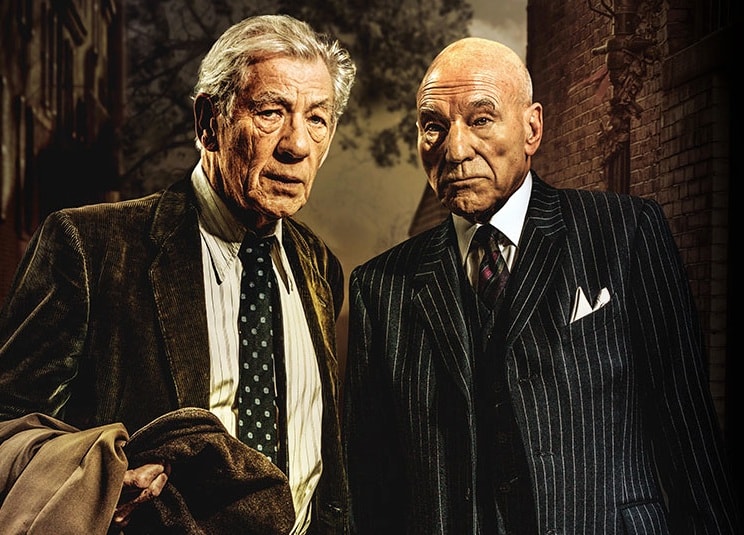
At Wyndham’s Theatre, Patrick Stewart plays Hirst, a wealthy old man and poet. Alcoholic and on his last legs, mentally and physically, he is a prisoner in his own home, guarded by his manservants. One drunken night, he picks up Spooner, an unsuccessful but voluble poet who, having wormed his way into his mansion, is determined to stay.

Sean Mathias’s production and the manservants/jailers in particular could do with a bit more Pinteresque wit and menace. But the two poets’ blatant game of one-upmanship is expertly fought. Ian McKellen’s body language as the seedy Spooner is consummate, and he has a great speech when he is grovelling, offering an inordinately long and absurd list of his accomplishments. Stewart just sits there, stonily silent, listening intently and giving no reaction. Perfect.

The RSC is at the Barbican with two plays. Doctor Faustus, Christopher Marlowe’s devilish exercise in blasphemy and necromancy, a classic enactment of sin and damnation, premiered circa 1588 when audiences really did believe in demons and hell. But in this poor production hell has no impact whatsoever; and the gimmick of Sandy Grierson and Oliver Ryan sharing the roles of Faustus and Mephistophilis is never developed.

The RSC performance to see is Ben Jonson’s The Alchemist, an always topical Jacobean satire on avarice and lust. Three confidence tricksters (led by the likable Ken Nwosu) join forces to fleece a galaxy of greedy, lustful and idiotically gullible victims who want to turn base metal into gold. The most prominent is that grandiose sensualist Sir Epicure Mammon (Ian Redford), a great comic character, drooling over the thought of untold wealth. He has some hilariously absurd voluptuous speeches.

In My Family: Not the Sitcom, his one-man show at the Vaudeville Theatre, David Baddiel talks about his mother’s colourful sex life and his father’s dementia. His candour is breathtaking. Some people may feel he has crossed the line and said things that might have been best left unsaid. But Baddiel is interested only in truth and the performance is his way of exorcising his grief. Laughter, he points out, is the only medicine.

Clapton Orient, the East London football club, was the first team to sign up its players, staff and supporters to fight in World War I. The Greater Game at Southwark Playhouse, which has the support of the Royal British Legion and the Professional Footballers Association, is a tribute to the men who fought and died in the Great War and as such is worthy and sincere. But the play is just a lot of short scenes. The major problem for many people will inevitably be the feeling of déjà vu.

No one who saw John Gielgud and Ralph Richardson in the original production of Harold Pinter’s No Man’s Land by Peter Hall will ever forget it. Such was their joint success on both sides of the Atlantic that nobody in England touched the play for nearly 20 years.

Pinter is always difficult to pin down. The action, a series of confrontations and trials of strength, takes place in no man’s land, “which never moves, which never changes, which never grows older, but which remains forever, icy and silent”. “What does it matter what it means,” said Gielgud, “so long as the audience is held and never bored?”
At Wyndham’s Theatre, Patrick Stewart plays Hirst, a wealthy old man and poet. Alcoholic and on his last legs, mentally and physically, he is a prisoner in his own home, guarded by his manservants. One drunken night, he picks up Spooner, an unsuccessful but voluble poet who, having wormed his way into his mansion, is determined to stay.

Sean Mathias’s production and the manservants/jailers in particular could do with a bit more Pinteresque wit and menace. But the two poets’ blatant game of one-upmanship is expertly fought. Ian McKellen’s body language as the seedy Spooner is consummate, and he has a great speech when he is grovelling, offering an inordinately long and absurd list of his accomplishments. Stewart just sits there, stonily silent, listening intently and giving no reaction. Perfect.

The RSC is at the Barbican with two plays. Doctor Faustus, Christopher Marlowe’s devilish exercise in blasphemy and necromancy, a classic enactment of sin and damnation, premiered circa 1588 when audiences really did believe in demons and hell. But in this poor production hell has no impact whatsoever; and the gimmick of Sandy Grierson and Oliver Ryan sharing the roles of Faustus and Mephistophilis is never developed.

The RSC performance to see is Ben Jonson’s The Alchemist, an always topical Jacobean satire on avarice and lust. Three confidence tricksters (led by the likable Ken Nwosu) join forces to fleece a galaxy of greedy, lustful and idiotically gullible victims who want to turn base metal into gold. The most prominent is that grandiose sensualist Sir Epicure Mammon (Ian Redford), a great comic character, drooling over the thought of untold wealth. He has some hilariously absurd voluptuous speeches.

In My Family: Not the Sitcom, his one-man show at the Vaudeville Theatre, David Baddiel talks about his mother’s colourful sex life and his father’s dementia. His candour is breathtaking. Some people may feel he has crossed the line and said things that might have been best left unsaid. But Baddiel is interested only in truth and the performance is his way of exorcising his grief. Laughter, he points out, is the only medicine.

Clapton Orient, the East London football club, was the first team to sign up its players, staff and supporters to fight in World War I. The Greater Game at Southwark Playhouse, which has the support of the Royal British Legion and the Professional Footballers Association, is a tribute to the men who fought and died in the Great War and as such is worthy and sincere. But the play is just a lot of short scenes. The major problem for many people will inevitably be the feeling of déjà vu.

subscribe to
the catholic herald

Continue reading your article with a subscription.
Read 5 articles with our free plan.
Subscribe

subscribe to the catholic herald today

Our best content is exclusively available to our subscribers. Subscribe today and gain instant access to expert analysis, in-depth articles, and thought-provoking insights—anytime, anywhere. Don’t miss out on the conversations that matter most.
Subscribe