




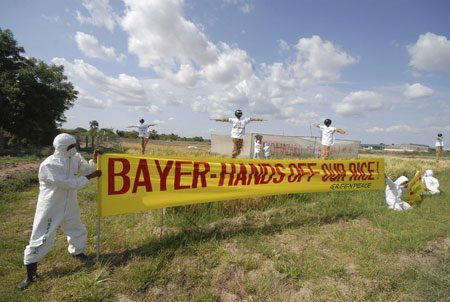
I think that of all the various brands of fanatic with which our society has been so bountifully endowed, the one I most detest (more even than the BNP, who have already discredited themselves and whose time is now over) are those who describe themselves as “environmentalists”: I emphasise that that is what they describe themselves as being, rather than what they actually are, since their effect on the environment in which we must all live is so frequently disastrous: witness, most dramatically perhaps, the destruction of hundreds of acres of unspoiled countryside by their ugly, noisy wind turbines, objects which are, in the immortal words of the Duke of Edinburgh (the great and good), “absolutely useless, completely reliant on subsidies and an absolute disgrace”. One reason that I dislike “environmentalism” as a creed (though let me interject that I am entirely in favour, in a non-ideological way, of protecting the environment) is that it has become a variety of religion substitute, perverted religion that is, religion gone wrong, as a source not of virtue but of feeling good about the virtue one ascribes to one’s own objectives and behaviour, a posture which used to be called self-righteousness. Many others have noticed this unpleasant element of bogus religiosity within the soi-disant ecological tendency: the Times this morning has a leader on the demonstration in Hertfordshire yesterday against an experiment being mounted by scientists attached to an outfit called Rothamsted Research, who are conducting trials of a strain of wheat that has been modified to release a natural chemical which repels aphids. Demonstrators wanted to destroy (or, infuriatingly, “decontaminate”) these experimental crops: the Times headlined its leader “Against the Grain”, giving it the subheading, “Threats to destroy GM crops amount to vandalism in the service of superstition”. The point is that one ultimate result of their work would be hugely to detoxify the natural world. The GM wheat that has been planted has been developed employing genes from the mint plant. Since the purpose of the research is to discover how to make crops more resistant to pests, and therefore greatly reduce their need for pesticides, it would, if successful, be enormously beneficial to the environment. So who are the real “environmentalists”: the GM scientists or the protestors? The simple fact is that the latter don’t know what they are talking about, and won’t be informed by those who know more than they do. It wasn’t possible for surrounding wheatfields to be “contaminated”, as those conducting the experiment have attempted to explain; but you can’t explain to those who won’t listen. According to the report of the event in that excellent online organ Farmers’ Weekly,
4:30 PM
There are millions starving; GM foods (which the WHO says are harmless) could massively help feed them. The Greens say no: just who do they think they are?
‘No effects on human health have been shown as a result of the consumption of such foods by the general population in the countries where they have been approved'
William Oddie

6 min read



Already a subscriber? Sign in
5freearticles every month
Continue reading with a free account. No card needed.
- Five free articles every thirty days, on any device you sign in on
- The Catholic Herald newsletter, every morning
- Subscribe whenever you like for everything: every article and the magazine
Related articles
 Newsroom
Church leaders urge Drumcree dialogue: ‘Too much is at stake’
The Catholic and Church of Ireland Archbishops of Armagh have urged a renewed commitment to peace and reconciliation amid the Drumcree stand-off
Corrie Douglas-Young Newsroom
Thousands of Irish children to join global Rosary campaign
Corrie Douglas-Young Newsroom
TikTok priest urges young people to stand with persecuted Christians
Nathalie Raffray Newsroom
Baby born at 25 weeks reunites with neonatologist two years after leaving hospital
The Catholic Herald Newsroom
Joe Biden honoured by Planned Parenthood after defending abortion rights
Christine Rousselle
subscribe to the catholic herald today
Our best content is exclusively available to our subscribers. Subscribe today and gain instant access to expert analysis, in-depth articles, and thought-provoking insights—anytime, anywhere. Don’t miss out on the conversations that matter most.
Subscribe



