February 12, 2026

What Benedict XVI can tell us about Holy Thursday

C C Pecknold
More
No items found.
Related
Min read
share
The Last Supper is often likened to the Jewish Passover. The Synoptic Gospels suggest that it was on a Thursday evening at the start of Passover. The Gospel of John agrees that the Last Supper takes place on Thursday evening, however his chronology requires that the meal precede the Jewish Passover Feast (“before the feast of Passover” according to John 13.1). In his commentary on Holy Week, Benedict XVI says that St John penetrates more deeply into the sacrificial meaning of the Last Supper because he recognizes Jesus as the Lamb of God who will become a new Passover for the whole of humanity. Benedict writes:

“Jesus knew he was about to die. He knew that he would not be able to eat the Passover again. Fully aware of this, he invited his disciples to a Last Supper of a very special kind, one that followed no specific Jewish ritual...during the meal he gave them something new: he gave them himself as the true Lamb and thereby instituted his Passover.” (Benedict XVI, Jesus of Nazareth, Part Two: Holy Week, pg.113)

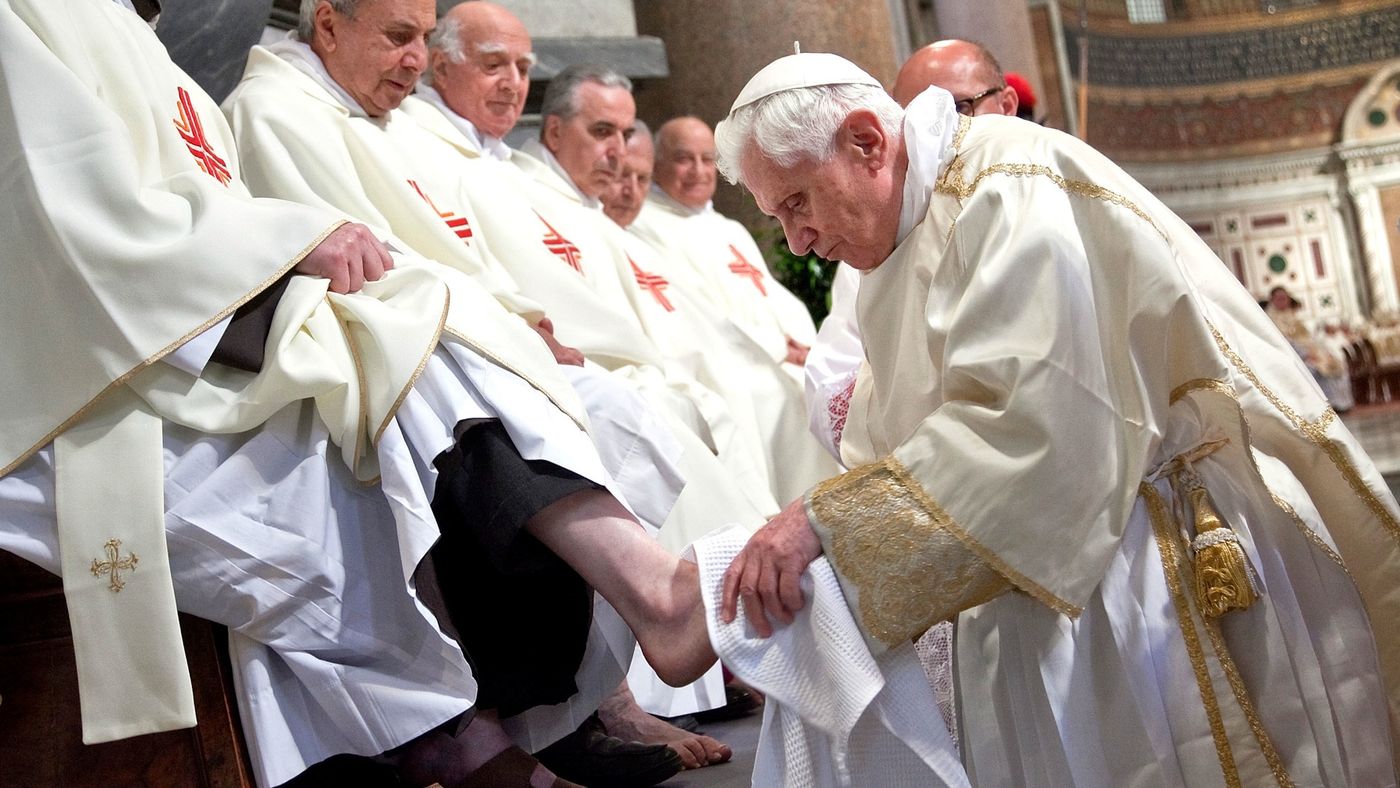
When he washes the feet of the disciples, he knows that he is about to lay down his life for his friends, and he knows that it is a sacrament of an interior cleansing of soul that only he can achieve. When he tells the disciples to eat and drink his body and blood, the Lord knows that it is a sacrament of his own sacrificial death at just the moment the paschal lambs will be slaughtered at Temple. And he knows that when he institutes the Eucharist, he is giving birth to a divine fire that will burn for our purification until he comes again in glory.

The Last Supper is often likened to the Jewish Passover. The Synoptic Gospels suggest that it was on a Thursday evening at the start of Passover. The Gospel of John agrees that the Last Supper takes place on Thursday evening, however his chronology requires that the meal precede the Jewish Passover Feast (“before the feast of Passover” according to John 13.1). In his commentary on Holy Week, Benedict XVI says that St John penetrates more deeply into the sacrificial meaning of the Last Supper because he recognizes Jesus as the Lamb of God who will become a new Passover for the whole of humanity. Benedict writes:

“Jesus knew he was about to die. He knew that he would not be able to eat the Passover again. Fully aware of this, he invited his disciples to a Last Supper of a very special kind, one that followed no specific Jewish ritual...during the meal he gave them something new: he gave them himself as the true Lamb and thereby instituted his Passover.” (Benedict XVI, Jesus of Nazareth, Part Two: Holy Week, pg.113)

When he washes the feet of the disciples, he knows that he is about to lay down his life for his friends, and he knows that it is a sacrament of an interior cleansing of soul that only he can achieve. When he tells the disciples to eat and drink his body and blood, the Lord knows that it is a sacrament of his own sacrificial death at just the moment the paschal lambs will be slaughtered at Temple. And he knows that when he institutes the Eucharist, he is giving birth to a divine fire that will burn for our purification until he comes again in glory.

subscribe to
the catholic herald

Continue reading your article with a subscription.
Read 5 articles with our free plan.
Subscribe

subscribe to the catholic herald today

Our best content is exclusively available to our subscribers. Subscribe today and gain instant access to expert analysis, in-depth articles, and thought-provoking insights—anytime, anywhere. Don’t miss out on the conversations that matter most.
Subscribe