
February 23, 2026

What Dante teaches us about sin, desire and redemption

Clement Harrold
More
Related
Min read
share

A recent re-reading of The Divine Comedy left me once again in awe of Dante’s genius. I turned to Penguin’s single-volume edition, guided by Robin Kirkpatrick’s translation, to weigh up all that I gained from this literary journey through hell, purgatory and heaven. Three general observations struck me and helped me discern a final reflection on what I consider to be one of the keys to unlocking the Commedia as a whole.

The first thing to notice about Dante’s masterpiece is that it is a story operating on multiple levels. It is epic quest, theological exposition, spiritual autobiography and Christian allegory all in one. Yet this last genre is the one that has stuck with me the most. If we read the Commedia as little more than a riveting safari through the afterlife then we lose sight of the work’s true literary and theological depth.

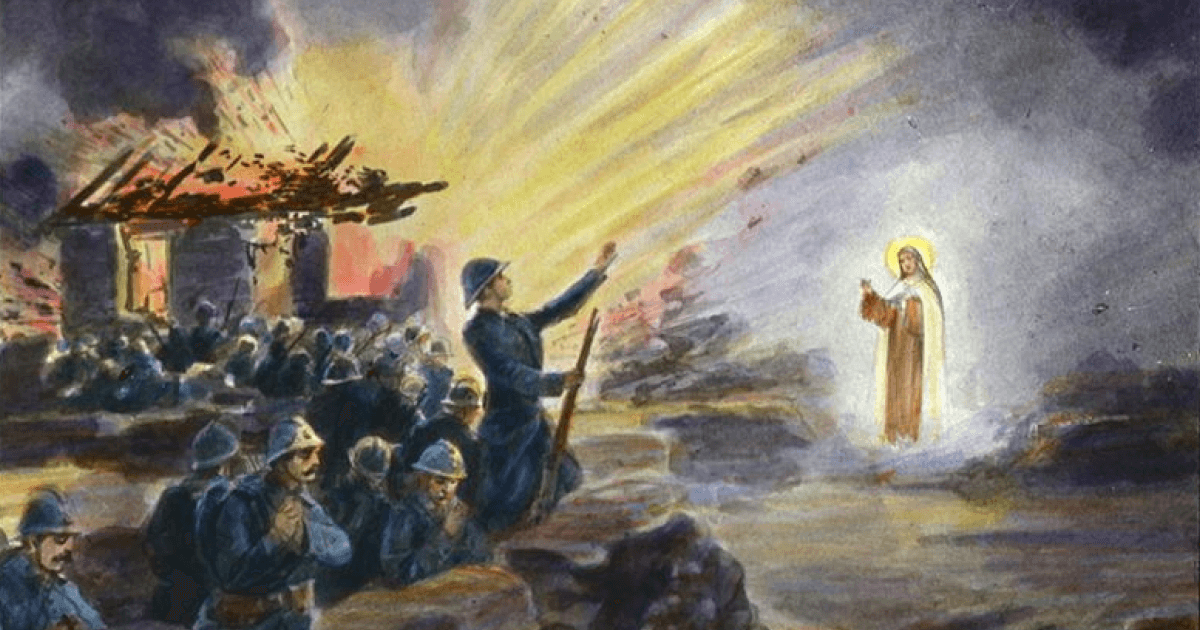
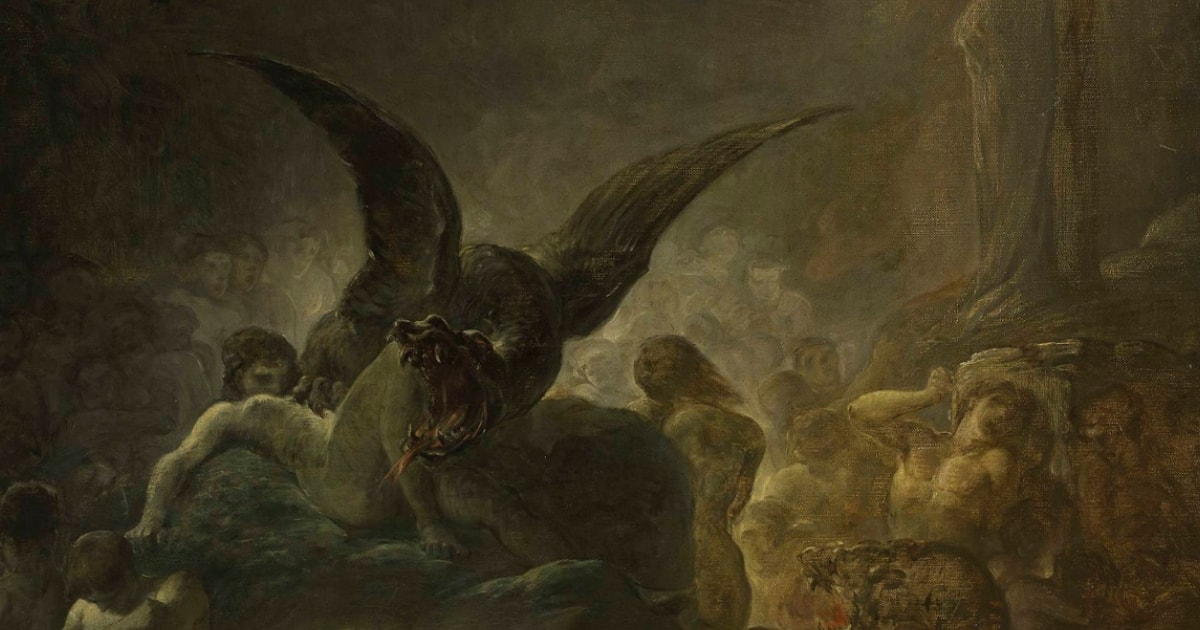
At its heart, the Commedia is a description of the threefold spiritual cycle that every Christian is called to go through. Both on a daily basis and in our lives as a whole, we must become aware of the horror of our sin (Inferno), undergo the painful process of dying to that sin (Purgatorio), and then reap the fruits that follow (Paradiso).

Secondly, the reader of the Commedia can only properly appreciate the narrative if he is willing to enter the story alongside Dante. In the opening lines of the poem, Dante makes it clear that the journey on which he is embarking is one we must all go on: “At one point midway on our path in life, I came around, and found myself now searching through a dark wood, the right way blurred and lost” (Inferno I.1–3). This is our story, and like Dante we need to have the humility to recognise when we have lost our way.

Incidentally, this is part of the reason I disagree with those modern critics who take issue with Dante’s decision to include all manner of named individuals in hell. While some of the poet’s choices of names are regrettable – such as his decision to condemn Pope Celestine V, who was later declared a saint – on literary grounds the move makes perfect sense.

Dante is not setting out to offer a measured theological prediction on who is or is not damned. Rather, he is offering an allegory that is designed to wake us from our slumber and rouse our hearts to respond to grace before it is too late. When we consider the poem from this perspective, we realise the named persons in hell are not there for us to gawk at or even to pity. Instead, they hold up a mirror to our own sinful condition – and,  if we do not change our ways, to our eternal fate.

In short, Dante places named individuals in hell to remind us that hell is a real place filled with real people with real names. Yet he does this neither as a Pharisee nor as a hypocrite, for Dante makes it clear that he himself was on a hell-bound trajectory before he set off on the journey. As Beatrice explains near the end of the Purgatorio: “He fell so far that every other means to save this man, by now, came short, unless he saw, himself, those people who are lost” (XXX.136–38; cf. I.58–63).

The third thing to notice about Dante’s interpretation of reality is that everybody gets what they want in the end. The souls in heaven truly wanted God, and so they found Him. The souls in purgatory wanted God as their highest good, yet they also wanted to cling to some souvenirs of sin. As for the souls in hell, by choosing to place their love in created goods alone, they too get what they want: “It’s only right that all know endless grief who, loving only things that can’t endure, steal from themselves, eternally, true love” (Paradiso XV.10–12). For Dante, the souls of the damned choose hell for themselves, and it is striking that none of the inhabitants of the Inferno ever once express contrition for the sins they committed during their time on earth.

This notion of everyone achieving their heart’s desire is ingeniously captured by Dante’s usage of the contrapasso. The idea here is not simply that the punishments of hell and purgatory are designed to fit the crime – though that is certainly part of it. Even more than that, the contrapasso reveals to the sinners (and to the reader) the inevitable consequences of their disordered desires. For instance, the souls of the lustful in hell are condemned to an eternity of being thrown around by a violent wind. Just as in life these souls chose to be dominated by their unruly desires, so in death this choice, together with its painful consequences, is cemented for all eternity.

Speaking of lust, when I read the Paradiso on this occasion, it struck me that the sixth beatitude is in many respects the key to unlocking the third part of Dante’s triptych. At the outset of his journey into heaven, the Florentine poet is frequently dazzled by the luminous quality of its heavenly residents. But as his heart is purified, Dante is capable of seeing brighter and brighter reflections of the divine glory. In time, he is able to look directly on the smiling face of his beloved Beatrice, then on Our Lady in her radiance, and finally on God Himself: “My sight, becoming pure and wholly free, entered still more, then more, along the ray of that one light which, of itself, is true” (Paradiso XXXIII.52–54).

The first time I read the Commedia, I admit I was puzzled and slightly unsettled by the role Dante attributes to Beatrice. In life, she appears to have been the object of his infatuation, yet it happened that she wedded another man and then died young. This leads the casual reader to wonder: is Dante’s decision to place her at the centre of his epic poem the ultimate example of a heartbroken man who failed to move on?

I think not. While Dante clearly had a strong romantic attraction to Beatrice, there are several points in the Paradiso when he describes her using specifically maternal language. This suggests what should be obvious to the more careful reader, which is that Beatrice in Dante’s literary vision is not simply some woman for whom he “had the hots”. Far more than that, she is present in the story to function as the feminine principle, the archetypal womanly figure who summons the hero (in this case, Dante) on the quest which he must undergo in order to escape a mortal threat (or in this case, an immortal threat).

At the very beginning of his journey through hell, Dante confesses that this quest is one which fills him with fear. Surely this is a description of us, too, in our own confrontation with sin. The prospect of dying to our sinful habits is a frightening one, and the danger is that we despair of ever achieving true freedom: “I lost all hope of reaching to those heights” (Inferno I.54).

Like Dante, therefore, we find ourselves in need of an incarnate beauty in front of us who gives us the courage and the hope to turn our backs on the counterfeit beauties we leave behind us. In the Commedia, Beatrice is that incarnate beauty whose loving mediation (which is itself the fruit of the intercession of two other ladies in the heavenly court, St Lucy and Our Lady) summons Virgil to lead Dante on his urgent quest to reach that blessed country where “[t]he cause and origin of joy shines” (Inferno I.78).

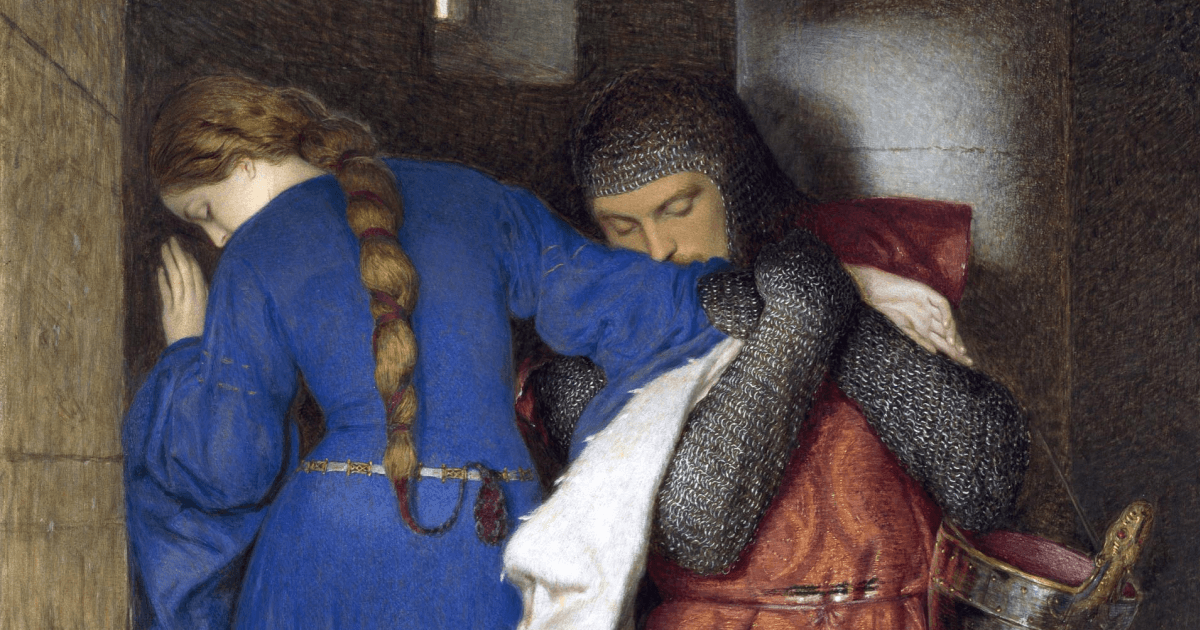
Beatrice’s role in the story is most vividly captured at the end of the Purgatorio, when Dante finds himself in the final terrace – the terrace of the lustful – before entering heaven. For Dante, lust is the least disordered of the seven deadly sins, though that in no way leads him to minimise its poisonous fruits. (One reading of his structuring of the Inferno is that lust is the “gateway vice” which opens the door to other, more wicked sins.) On the contrary, the soul wishing to free himself from attachment to sins of the flesh must undergo one last painful purification before attaining the joys of heaven.

The purification involves passing through a wall of fire so hot that Dante says he would have happily flung himself in a vat of boiling glass to gain some measure of relief. Nevertheless, the flames are something Dante must go through if he wishes to reach his goal. When the poet’s courage falters, his guide Virgil knows the words that will fortify his resolve: “To strengthen me, my sweetest father spoke, as on he went, of Beatrice always, saying, ‘It seems I see her eyes already’” (Purgatorio XXVII.52–4).

It is love of Beatrice that brings Dante through his final testing which cleanses all remnants of lust from his newly fashioned heart. Following this ordeal, the poet falls into a dream-filled sleep. When he awakes, Virgil announces to him the freedom and self-possession his purgation has brought him: “Your will is healthy, upright, free and whole… Lord of yourself, I crown and mitre you” (Purgatorio XXVII.140–42). Though the reader does not know it yet, these are Virgil’s last spoken words in the poem – a sign that Dante’s soul is now ready to advance to spiritual heights where his pagan guide cannot follow.

No doubt Dante’s love for Beatrice was not always pure, and he himself admits that upon her premature death his heart immediately went astray: “Mere things of here and now and their false pleasures turned my steps away the moment that your face had hid itself” (Purgatorio XXXI.34–36). Nevertheless, one of the overarching themes of the Commedia is the way that God still uses Dante’s imperfect and impure love to draw Dante to Himself. Over the course of the journey, the poet’s heart undergoes a process of gradual (and painful) purgation, the end result of which is not the abolition but rather the fulfilment of Dante’s deepest desires: “Holy delight is not excluded here. Rather, in rising it will grow more pure” (Paradiso XIV.138–39).

Seen in this light, we could say that Beatrice rescues Dante from his sinful condition by giving him the courage to, in the words of Psyche in C S Lewis’s Till We Have Faces, “find the place where all the beauty came from”. In this way, Beatrice becomes a kind of Christ figure. She is the archetype of purity and beauty who, like the true Christ, descends into the depths of Dante’s darkness in order to raise him to the light: “to greet me and to make me whole, you left your footprint in the depth of Hell” (Paradiso XXXI.80–81). It is through his love of Beatrice that Dante escapes the prison of the self, purifies the eyes of his heart, and so comes face to face with the Love that moves the stars.

A recent re-reading of The Divine Comedy left me once again in awe of Dante’s genius. I turned to Penguin’s single-volume edition, guided by Robin Kirkpatrick’s translation, to weigh up all that I gained from this literary journey through hell, purgatory and heaven. Three general observations struck me and helped me discern a final reflection on what I consider to be one of the keys to unlocking the Commedia as a whole.

The first thing to notice about Dante’s masterpiece is that it is a story operating on multiple levels. It is epic quest, theological exposition, spiritual autobiography and Christian allegory all in one. Yet this last genre is the one that has stuck with me the most. If we read the Commedia as little more than a riveting safari through the afterlife then we lose sight of the work’s true literary and theological depth.
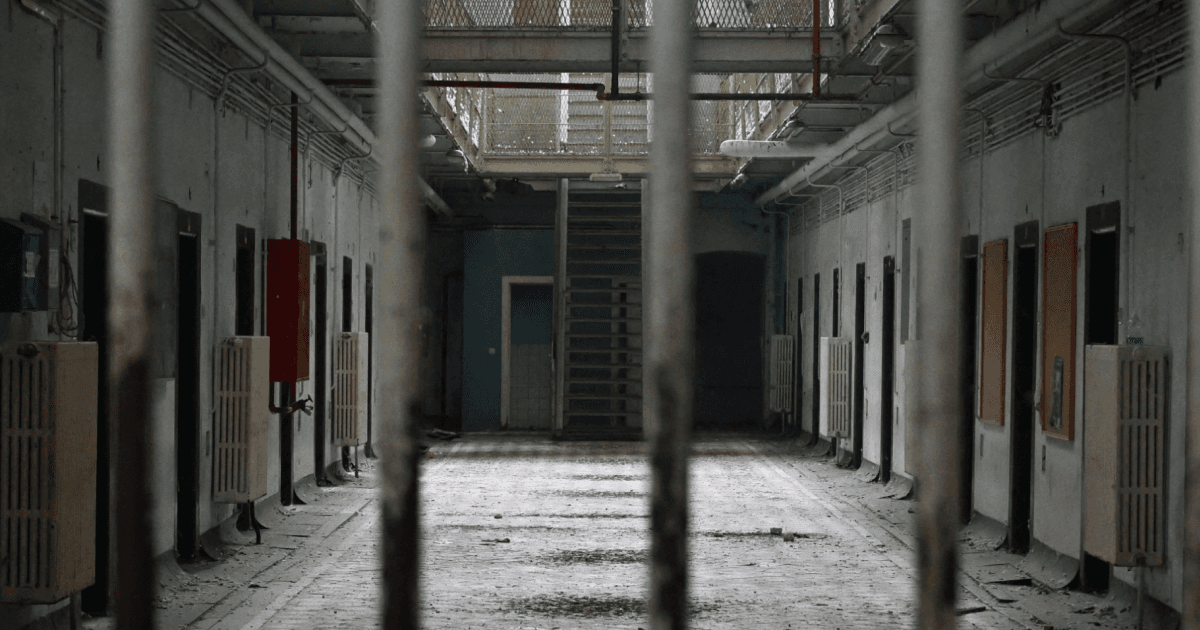
At its heart, the Commedia is a description of the threefold spiritual cycle that every Christian is called to go through. Both on a daily basis and in our lives as a whole, we must become aware of the horror of our sin (Inferno), undergo the painful process of dying to that sin (Purgatorio), and then reap the fruits that follow (Paradiso).

Secondly, the reader of the Commedia can only properly appreciate the narrative if he is willing to enter the story alongside Dante. In the opening lines of the poem, Dante makes it clear that the journey on which he is embarking is one we must all go on: “At one point midway on our path in life, I came around, and found myself now searching through a dark wood, the right way blurred and lost” (Inferno I.1–3). This is our story, and like Dante we need to have the humility to recognise when we have lost our way.

Incidentally, this is part of the reason I disagree with those modern critics who take issue with Dante’s decision to include all manner of named individuals in hell. While some of the poet’s choices of names are regrettable – such as his decision to condemn Pope Celestine V, who was later declared a saint – on literary grounds the move makes perfect sense.

Dante is not setting out to offer a measured theological prediction on who is or is not damned. Rather, he is offering an allegory that is designed to wake us from our slumber and rouse our hearts to respond to grace before it is too late. When we consider the poem from this perspective, we realise the named persons in hell are not there for us to gawk at or even to pity. Instead, they hold up a mirror to our own sinful condition – and,  if we do not change our ways, to our eternal fate.

In short, Dante places named individuals in hell to remind us that hell is a real place filled with real people with real names. Yet he does this neither as a Pharisee nor as a hypocrite, for Dante makes it clear that he himself was on a hell-bound trajectory before he set off on the journey. As Beatrice explains near the end of the Purgatorio: “He fell so far that every other means to save this man, by now, came short, unless he saw, himself, those people who are lost” (XXX.136–38; cf. I.58–63).

The third thing to notice about Dante’s interpretation of reality is that everybody gets what they want in the end. The souls in heaven truly wanted God, and so they found Him. The souls in purgatory wanted God as their highest good, yet they also wanted to cling to some souvenirs of sin. As for the souls in hell, by choosing to place their love in created goods alone, they too get what they want: “It’s only right that all know endless grief who, loving only things that can’t endure, steal from themselves, eternally, true love” (Paradiso XV.10–12). For Dante, the souls of the damned choose hell for themselves, and it is striking that none of the inhabitants of the Inferno ever once express contrition for the sins they committed during their time on earth.

This notion of everyone achieving their heart’s desire is ingeniously captured by Dante’s usage of the contrapasso. The idea here is not simply that the punishments of hell and purgatory are designed to fit the crime – though that is certainly part of it. Even more than that, the contrapasso reveals to the sinners (and to the reader) the inevitable consequences of their disordered desires. For instance, the souls of the lustful in hell are condemned to an eternity of being thrown around by a violent wind. Just as in life these souls chose to be dominated by their unruly desires, so in death this choice, together with its painful consequences, is cemented for all eternity.

Speaking of lust, when I read the Paradiso on this occasion, it struck me that the sixth beatitude is in many respects the key to unlocking the third part of Dante’s triptych. At the outset of his journey into heaven, the Florentine poet is frequently dazzled by the luminous quality of its heavenly residents. But as his heart is purified, Dante is capable of seeing brighter and brighter reflections of the divine glory. In time, he is able to look directly on the smiling face of his beloved Beatrice, then on Our Lady in her radiance, and finally on God Himself: “My sight, becoming pure and wholly free, entered still more, then more, along the ray of that one light which, of itself, is true” (Paradiso XXXIII.52–54).

The first time I read the Commedia, I admit I was puzzled and slightly unsettled by the role Dante attributes to Beatrice. In life, she appears to have been the object of his infatuation, yet it happened that she wedded another man and then died young. This leads the casual reader to wonder: is Dante’s decision to place her at the centre of his epic poem the ultimate example of a heartbroken man who failed to move on?

I think not. While Dante clearly had a strong romantic attraction to Beatrice, there are several points in the Paradiso when he describes her using specifically maternal language. This suggests what should be obvious to the more careful reader, which is that Beatrice in Dante’s literary vision is not simply some woman for whom he “had the hots”. Far more than that, she is present in the story to function as the feminine principle, the archetypal womanly figure who summons the hero (in this case, Dante) on the quest which he must undergo in order to escape a mortal threat (or in this case, an immortal threat).

At the very beginning of his journey through hell, Dante confesses that this quest is one which fills him with fear. Surely this is a description of us, too, in our own confrontation with sin. The prospect of dying to our sinful habits is a frightening one, and the danger is that we despair of ever achieving true freedom: “I lost all hope of reaching to those heights” (Inferno I.54).

Like Dante, therefore, we find ourselves in need of an incarnate beauty in front of us who gives us the courage and the hope to turn our backs on the counterfeit beauties we leave behind us. In the Commedia, Beatrice is that incarnate beauty whose loving mediation (which is itself the fruit of the intercession of two other ladies in the heavenly court, St Lucy and Our Lady) summons Virgil to lead Dante on his urgent quest to reach that blessed country where “[t]he cause and origin of joy shines” (Inferno I.78).

Beatrice’s role in the story is most vividly captured at the end of the Purgatorio, when Dante finds himself in the final terrace – the terrace of the lustful – before entering heaven. For Dante, lust is the least disordered of the seven deadly sins, though that in no way leads him to minimise its poisonous fruits. (One reading of his structuring of the Inferno is that lust is the “gateway vice” which opens the door to other, more wicked sins.) On the contrary, the soul wishing to free himself from attachment to sins of the flesh must undergo one last painful purification before attaining the joys of heaven.

The purification involves passing through a wall of fire so hot that Dante says he would have happily flung himself in a vat of boiling glass to gain some measure of relief. Nevertheless, the flames are something Dante must go through if he wishes to reach his goal. When the poet’s courage falters, his guide Virgil knows the words that will fortify his resolve: “To strengthen me, my sweetest father spoke, as on he went, of Beatrice always, saying, ‘It seems I see her eyes already’” (Purgatorio XXVII.52–4).

It is love of Beatrice that brings Dante through his final testing which cleanses all remnants of lust from his newly fashioned heart. Following this ordeal, the poet falls into a dream-filled sleep. When he awakes, Virgil announces to him the freedom and self-possession his purgation has brought him: “Your will is healthy, upright, free and whole… Lord of yourself, I crown and mitre you” (Purgatorio XXVII.140–42). Though the reader does not know it yet, these are Virgil’s last spoken words in the poem – a sign that Dante’s soul is now ready to advance to spiritual heights where his pagan guide cannot follow.

No doubt Dante’s love for Beatrice was not always pure, and he himself admits that upon her premature death his heart immediately went astray: “Mere things of here and now and their false pleasures turned my steps away the moment that your face had hid itself” (Purgatorio XXXI.34–36). Nevertheless, one of the overarching themes of the Commedia is the way that God still uses Dante’s imperfect and impure love to draw Dante to Himself. Over the course of the journey, the poet’s heart undergoes a process of gradual (and painful) purgation, the end result of which is not the abolition but rather the fulfilment of Dante’s deepest desires: “Holy delight is not excluded here. Rather, in rising it will grow more pure” (Paradiso XIV.138–39).

Seen in this light, we could say that Beatrice rescues Dante from his sinful condition by giving him the courage to, in the words of Psyche in C S Lewis’s Till We Have Faces, “find the place where all the beauty came from”. In this way, Beatrice becomes a kind of Christ figure. She is the archetype of purity and beauty who, like the true Christ, descends into the depths of Dante’s darkness in order to raise him to the light: “to greet me and to make me whole, you left your footprint in the depth of Hell” (Paradiso XXXI.80–81). It is through his love of Beatrice that Dante escapes the prison of the self, purifies the eyes of his heart, and so comes face to face with the Love that moves the stars.

subscribe to
the catholic herald

Continue reading your article with a subscription.
Read 5 articles with our free plan.
Subscribe

subscribe to the catholic herald today

Our best content is exclusively available to our subscribers. Subscribe today and gain instant access to expert analysis, in-depth articles, and thought-provoking insights—anytime, anywhere. Don’t miss out on the conversations that matter most.
Subscribe