


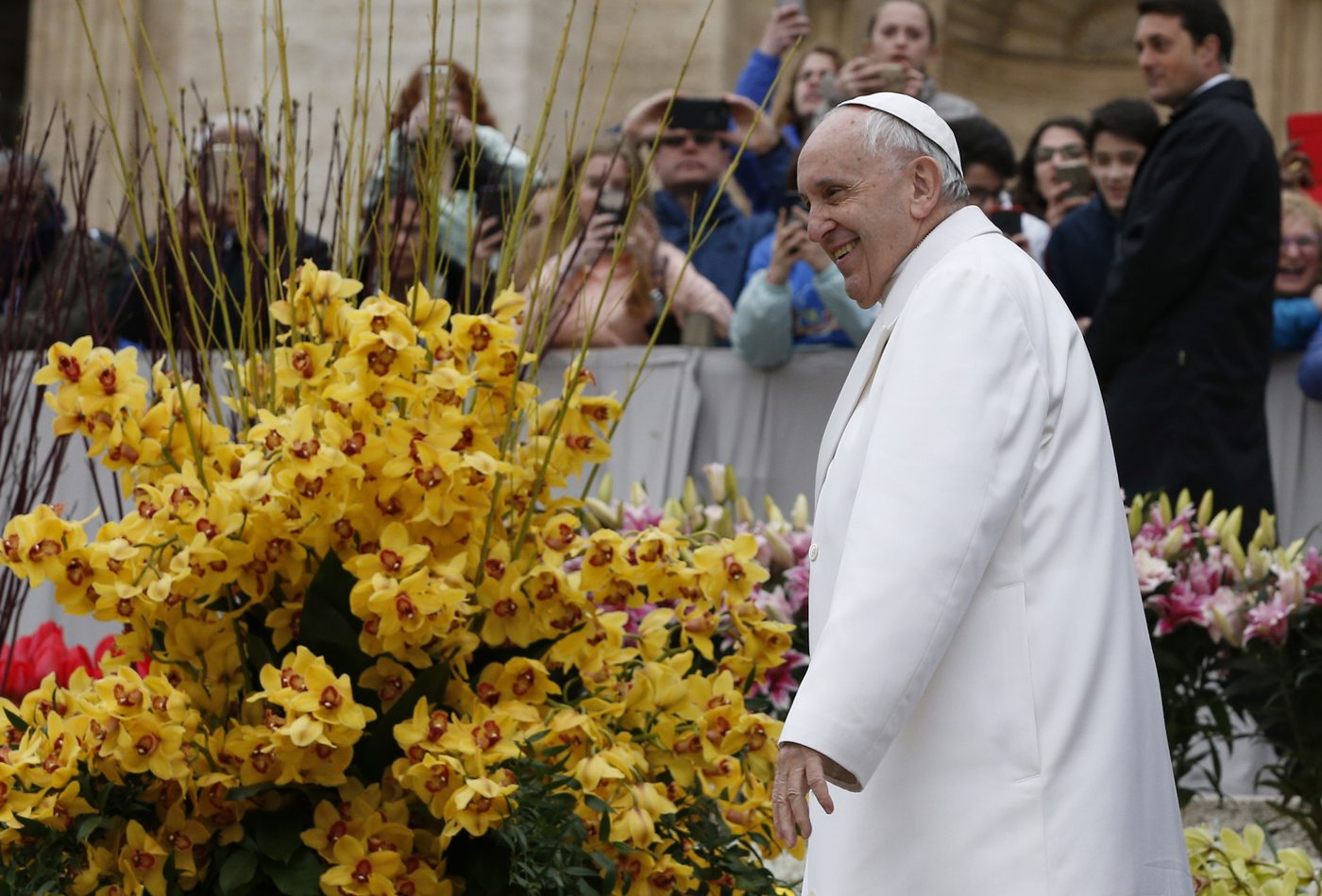
Pope Francis has written another Apostolic Exhortation, this one on the universal call to holiness, called Gaudete et exsultate — “Rejoice and be glad!” — which takes its title from the words of Jesus in the sermon on the mount as recorded in the Gospel according to St Matthew, specifically in the final “ninth” beatitude, which Christ addressed directly to the disciples, regarding the reward that awaits them and all who bear persecution for the sake of the Gospel. There’s a lot to say about this latest Exhortation — a lot of good to note in it, and a few things to note that do come to more than quibbles — a full rehearsal of which would run to considerable length. Here are the points that seem to be most salient after a first reading — “hot takes” as the kids say. First and foremost, Gaudete treats topics and themes we have come to recognise as hallmark concerns of the Holy Father. From the universal call to holiness as something to be lived in the suburbs and niches of everyday life, to the duty of perseverance that manifests itself in the stiff-necked stick-to-it-iveness of the habitual sinner who refuses to surrender to discouragement, to the responsibilities that all the baptised faithful share toward the less fortunate, the document is “classic” Francis. The Italians have an expression: la lingua batte dove il dente duole — “the tongue laps at the sore tooth”. If Gaudete is any indication, we may surmise that Pope Francis has several sore teeth. We knew that already, though. The interesting thing is the almost defiant tone with which he returns to them. In paragraph 102, the Holy Father writes:
1:06 PM
What does 'Gaudete et Exsultate' mean for the Church?
The document reads as a sort of summary view of the world according to Pope Francis
Christopher R. Altieri

8 min read



Already a subscriber? Sign in
5freearticles every month
Continue reading with a free account. No card needed.
- Five free articles every thirty days, on any device you sign in on
- The Catholic Herald newsletter, every morning
- Subscribe whenever you like for everything: every article and the magazine
Related articles
 Newsroom
Church leaders urge Drumcree dialogue: ‘Too much is at stake’
The Catholic and Church of Ireland Archbishops of Armagh have urged a renewed commitment to peace and reconciliation amid the Drumcree stand-off
Corrie Douglas-Young Newsroom
Thousands of Irish children to join global Rosary campaign
Corrie Douglas-Young Newsroom
TikTok priest urges young people to stand with persecuted Christians
Nathalie Raffray Newsroom
Baby born at 25 weeks reunites with neonatologist two years after leaving hospital
The Catholic Herald Newsroom
Joe Biden honoured by Planned Parenthood after defending abortion rights
Christine Rousselle
subscribe to the catholic herald today
Our best content is exclusively available to our subscribers. Subscribe today and gain instant access to expert analysis, in-depth articles, and thought-provoking insights—anytime, anywhere. Don’t miss out on the conversations that matter most.
Subscribe



