

Holy Week is a special week in the liturgical year, beginning with the waving of palm branches on Palm Sunday and ending with the singing of Alleluia on Easter Day. But between these two days of celebration, we commemorate the tragedy that Jesus had to endure in order ultimately to rise victorious from the grave and thereby bring about the redemption of all humanity. There are few weeks in which joy and suffering are so closely intertwined.
But let us focus our attention on the suffering that is the main theme of Holy Week and which we allow to penetrate us in a special way during the subdued liturgical celebration of Good Friday. On this day, we are indeed confronted with the most extreme form of suffering of someone who is totally unjustly tortured and must undergo crucifixion: "A stumbling block to Jews and foolishness to Gentiles" (1 Cor. 1:23). Regardless of the context, we can only rebel against such forms of suffering, in the same way that we are deeply outraged by the suffering caused by genocides and now by wars in so many places that cause so much misery. Christ dies every day in all those places where people are sacrificed to blind violence and mutual hatred.
Where is God in all this suffering? This is the question that was asked in the concentration camps and has been repeated so often since then. Why does God allow this suffering, especially when Christ has taught us to know God as a God of love? How can the immense suffering in the world be reconciled with this loving God? Or does God use this suffering to punish people for their immoral lives?
These questions were already asked in the texts of the Old Testament, and especially in the Book of Job, where the question is raised as to whether suffering can be seen as a punishment from God. This question is explored in depth in a magnificent piece of prose, which ultimately highlights two elements: suffering is not caused by God, but by evil, and there is no link between suffering and punishment by God. But of course, this only answered part of the question and left many questions unanswered.
The first pages of the Old Testament, particularly the Book of Genesis, also attempt to develop a unique anthropology through a narrative, describing the origin of humankind and how God created humans as good, entirely in His image and likeness, out of and with His love, and thus living in complete harmony with God, with themselves, with their fellow humans, and with all of creation. The only reason God created man was the desire to share with us what is most characteristic of Him, namely His infinite love as it is present in the relationship between the Father, the Son and the Holy Spirit. But in order to share in this love as a human being, freedom is necessary, because love cannot be forced, only invited.
This completes the image of man: created in God's image out of God's love and with the capacity to enter into this love in freedom. But when we say freedom, we also say that we can make choices, both for and against love. And it is this human drama that is vividly described in this same Book of Genesis, where man is tempted to become his own god and thus turn away from God's love.
This temptation comes from a power outside God and outside man, which we call the devil, whose existence we know only because we can still perceive his work in ourselves every day. Once again, it is Paul who aptly expresses this: "I do not do the good I want, but the evil I do not want. When I do what I do not want, it is no longer I who do it, but Sin, which dwells in me" (Rom. 7:19-20).
Every time we as human beings turn away from God and God's love and choose to become our own god, we allow ourselves to be taken over by evil and repeat what is described in Genesis as original sin. But with evil came suffering into human life because the original harmony was broken. Human nature became a broken nature, subject to suffering and death. Without wanting to interfere with human freedom or His love for humanity, God adapted His love and transformed it into mercy: compassion for those who suffer and forgiveness for those who sin. Compassion and forgiveness became the attributes with which God wanted to be close to humanity in its brokenness as a lasting expression of His love for humanity.
We often hear the question: is God not powerful enough to overcome evil? Is what we call evil more powerful than God? We call God almighty, do we not? Indeed, God is almighty and demonstrated His omnipotence in creation and will demonstrate it again in full at the end of time, but in the meantime, we can speak of a restrained omnipotence in God, an omnipotence that subordinates itself to what is unique to man: his freedom. And in that there is also room for the workings of evil. It is in human nature that evil constantly manifests itself in opposition to good and forces human beings to make choices.
Yet God went further than merely transforming His love into mercy. He chose to become present in our human nature Himself, the Creator becoming His own creature, in order to wage the battle against evil from within. That is the Incarnation, the becoming human, whereby God Himself became human in Jesus Christ. The entire life of Jesus Christ must be seen in that perspective: how He wanted to teach people the true face of God, calling them again and again to become equal to the image of God and thus to live authentically their true calling as human beings.
But Jesus Christ also fought against evil and the consequences of evil. Wherever He went, He showed God's mercy by forgiving sins and healing people. In this way, God's compassion for those who suffer and forgiveness for those who sin became very concrete through Jesus' actions.
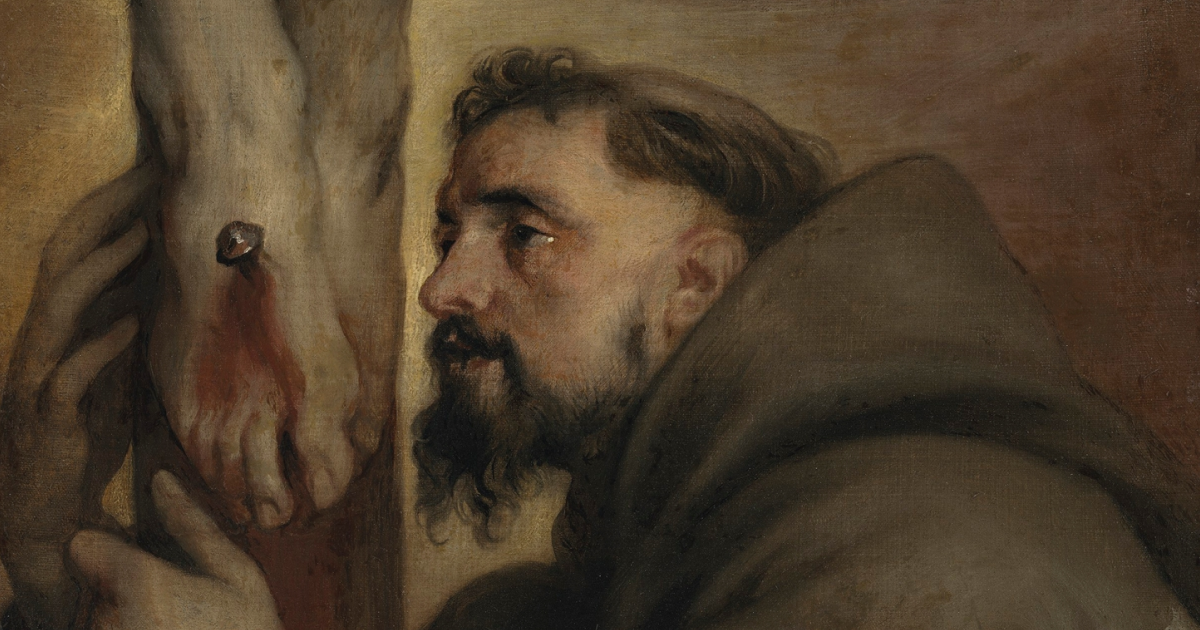
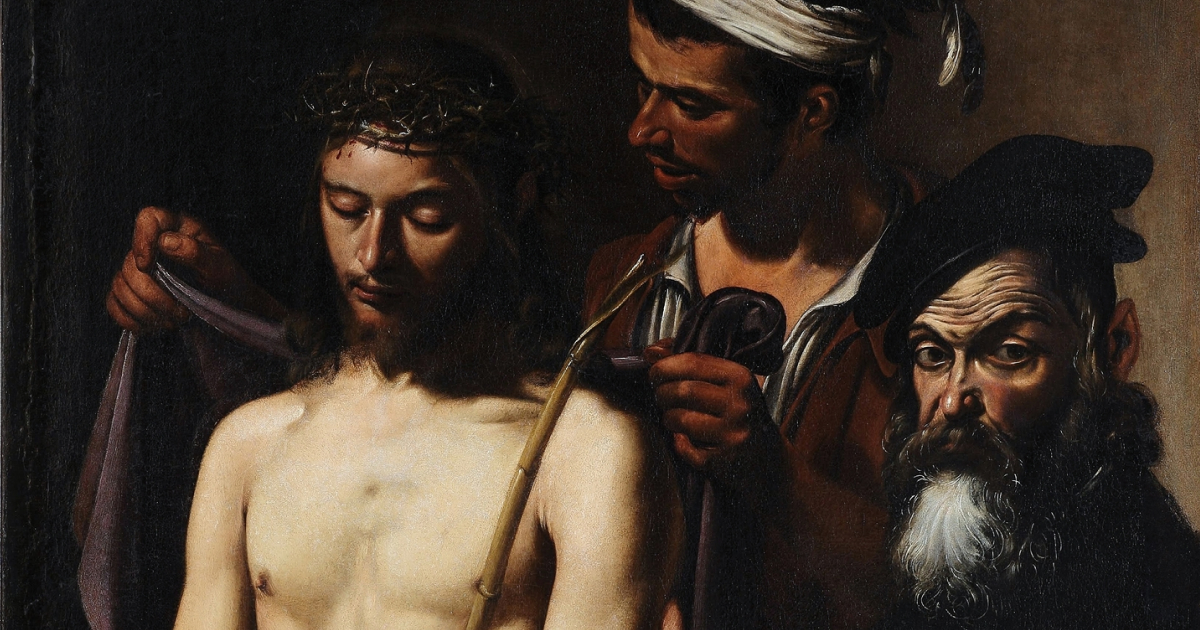
However, the ultimate mission of Jesus Christ went even further. And this is what we commemorate on Good Friday. Through Jesus Christ, God allowed Himself to be seized by evil and overcome by evil: not by sin, but by the consequence of evil, suffering. Death on the cross is the triumph of evil, where it was able to bring suffering to its peak. No, greater suffering is inconceivable, and in this Christ shows solidarity with all who suffer inhumanly. When we suffer, we can look up to the cross and realise that He too, who was God Himself, walked the same path. There is no greater form of solidarity and compassion possible.
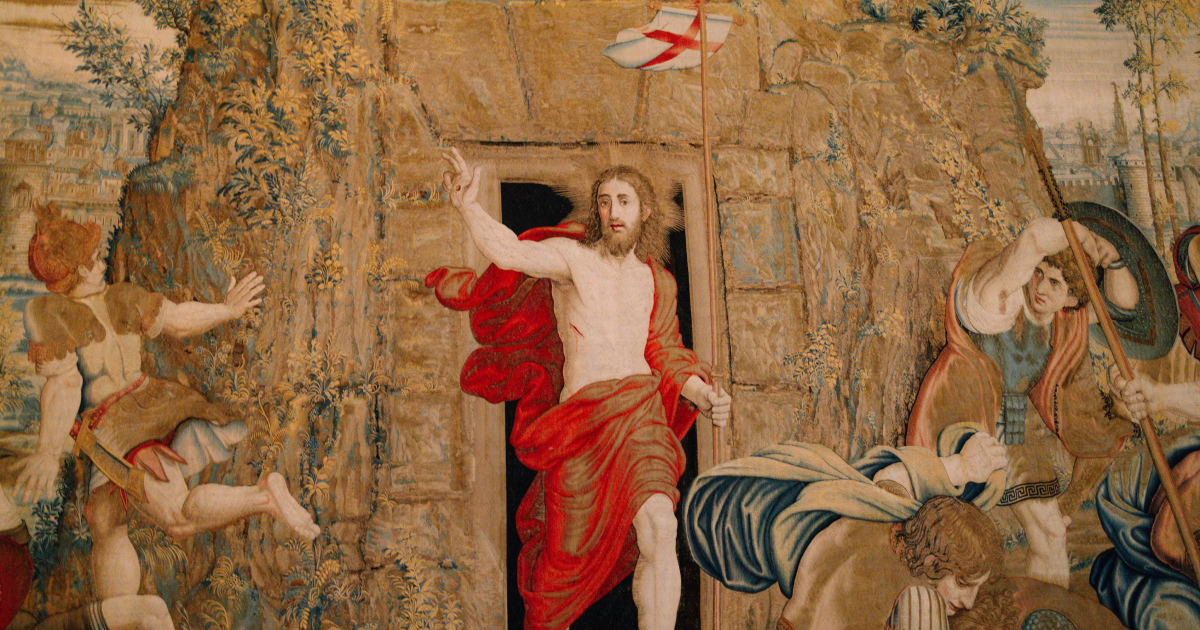
But at the moment when evil thought it had conquered God, it was stripped of its absolute power, and this happened in the Resurrection. The God-man Jesus Christ rose from the dead and triumphed over death. From then on, death would no longer have the last word, but eternal life in and with God. The suffering and death of Jesus Christ, which on a purely human level could be considered a total failure, became the divine path to redemption from the absolute grip of evil. That became the path to our redemption. While the suffering of Jesus Christ brought about great solidarity with all who suffer and was a strong sign of God's compassion for those who suffer, suffering as an event of redemption took on an extra meaning. The seemingly totally meaningless suffering thus acquired an ultimate meaning.
And here we come to the most important lesson we learn from Good Friday. Through the suffering, death and Resurrection of Jesus Christ, all humanity was redeemed from the absolute power of evil, death. This happened at a single moment and in a single place, but had repercussions for all people and all times. The redemption of those who lived and died in the past is commemorated on Holy Saturday and iconographically represented by Jesus powerfully grasping Adam's wrist in Sheol to bring him out of darkness into the light of Resurrection. But on Easter itself, we can celebrate the belief that we can all share in this Resurrection. Jesus Christ also suffered and died and rose again for me, offering me the prospect of eternal life.
Let us listen once more to Paul, who writes: "At present I rejoice in my sufferings for your sake, and in my flesh I complete what is lacking in Christ's afflictions" (Col. 1:24). Is there anything left to add to Christ's suffering? Was it not complete, for everyone, both those who lived in the past and those who will live in the future? Indeed, we cannot and need not add anything to this suffering, but we can participate in it in a mystical way, by placing our suffering with Jesus on the cross. I like to describe it as the fifteenth work of mercy. The thirteen works are very concrete, and the fourteenth suggests that we can supplement these activities, perfect them with our prayers for the living and the dead. It is asking God to accomplish, to complete, what we have begun. But perhaps we can also apply this to our suffering.
When we suffer, we no longer have the strength to perform any of the works of mercy. But with this suffering, we can still participate in the great work of redemption that Jesus Christ has accomplished for us. It is Jesus Christ Himself who can give meaning to our suffering, just as His seemingly meaningless suffering was the most meaningful thing He could and had to do: to redeem all humanity from the absolute grip of evil. By consciously offering up our suffering for the redemption of our fellow human beings, or perhaps for the redemption of this one fellow human being, our suffering takes on a meaning that we ourselves could never give it. It becomes a divine instrument to give concrete form to our mercy through suffering and not to lock our suffering away in what we today usually call hopeless and therefore meaningless. It is a path that is offered to us and in which we can participate with faith.
May this Holy Week be a moment par excellence to reflect deeply on the suffering that Jesus Christ endured, on the inhuman suffering of so many today, and also on our own suffering, from which no one is spared, and to place all this in the great dynamic that the death on the cross brought about: how we are all brought from Good Friday to Easter. It is in this dynamic that we too can participate with our suffering.
Brother René Stockman is the former Superior General of the Congregation of the Brothers of Charity and a specialist in psychiatric caregiving.