

Lebanon is one of the most historically rich places on earth. Praised throughout the pages of the Bible, its mountains shelter monasteries older than many European countries. The slopes of Mount Lebanon preserve a Christianity that survived Islam, Ottoman rule, and civil war alike. The Qadisha Valley, where Maronite monks carved out a life of ascetic endurance, is evidence of a civilisation that learned long ago how to survive as a minority without surrendering itself. But Lebanon is also, unmistakably, a wounded nation lurching from crisis to crisis.
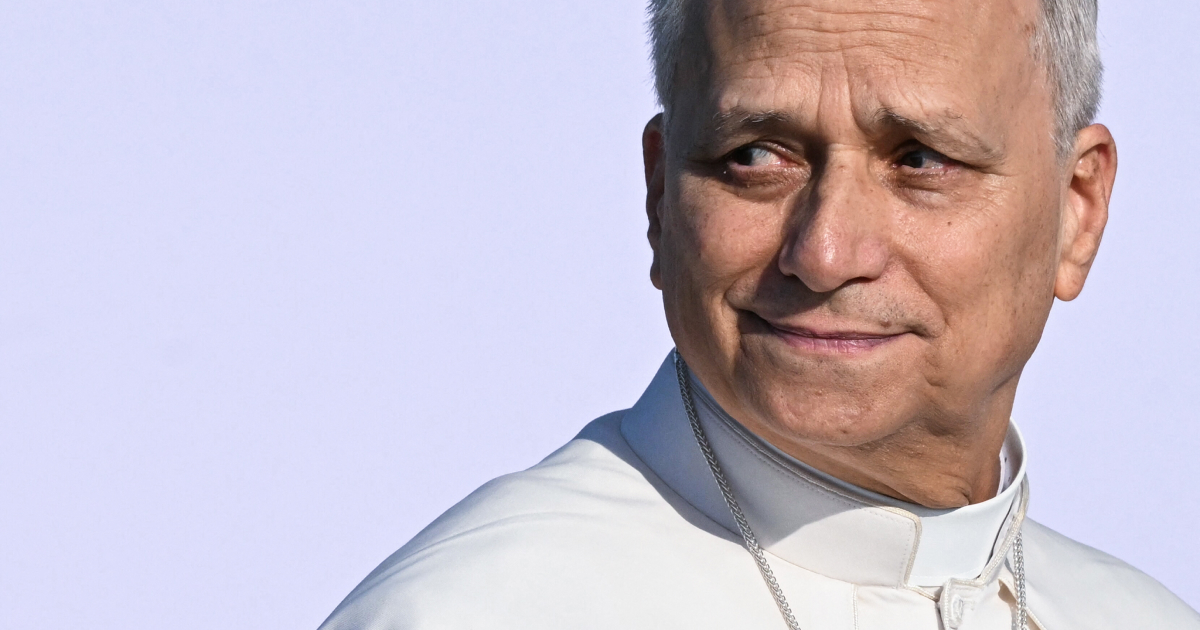
It was therefore understandable that Pope Leo XIV’s decision to visit Lebanon during his November–December travels, and to praise it as “a mosaic of coexistence” and a prime example of the success of “interreligious dialogue”, would both please and provoke unease among many Lebanese Christians, particularly those in the diaspora. This is to say nothing of the head-scratching it caused among Europeans concerned about the problems arising from the Islamification of large areas of the continent’s cities.
The Pope’s phrase, while not completely unfounded, sounds reassuring. To those who know the country intimately, however, and who have watched its Christian presence shrink within living memory, it can also sound like a diplomatic gloss applied to a far more complicated truth.
Leo spoke warmly of Lebanon as a place where coexistence is lived fruitfully, where difference does not automatically descend into violence. On the plane back from his visit, he stated: “One of the great lessons Lebanon can teach the world is precisely showing where Islam and Christianity are both present and respected, and that there is a possibility to live together and be friends.”
None of this is false. But it is incomplete, and potentially misleading.
I admit my own disposition here. I am a libanophile. I was meant to visit this year, and would have, had al-Julani’s Syria not proven unsafe. I have Lebanese friends, Catholic professionals, journalists, and consultants, whose private conversations do not trade in this same optimism. Some now hope for federalism or even partition, convinced that the post-war political settlement has failed beyond repair.
Lebanon was around 70 per cent Christian in 1900. Its modern state was founded by the French explicitly to safeguard a majority Christian nation in the Levant. Today, by most credible estimates, Christians make up somewhere between 30 and 38 per cent of the population, and the trend is unmistakably downward. This is the central fact of the country’s modern history.
Since the catastrophic fifteen years of the Lebanese Civil War in the late 20th century, occasional outbreaks of violence between religious groups, Alawites, Shias, Christians, Sunnis, and Druze, have erupted. Subject to massive influxes of migration from Palestine and Syria, upsetting precarious population balances, Lebanon then suffered the 2020 Beirut port explosion, which killed more than 200 people, injured around 7,000, and displaced over 300,000. Lebanon has had a hard time of it in the last century.
To understand why the Pope spoke as he did, one must first understand how popes speak about the Middle East at all. As Romy Haber, a young Lebanese Catholic and correspondent for Christian Middle East and North Africa who lives in Rome, explained to me, papal language in the region is never neutral.
What outsiders must understand, she said, is how much optics matter. “Lebanese politicians and media love the coexistence narrative, whether or not it reflects reality.”
“They adore the optics: church next to mosque, priests and sheikhs walking together,” Haber added. “Christmas tree lighting with the local mufti present, Ramadan iftar with bishops. It’s a whole show. They thrive on these images because it gives Lebanon a soft-power brand internationally, a brand the political class abuses to look civilised while the country collapses.”
When I asked whether the Pope might also be sugar-coating the problems of her homeland, she replied: “Popes never talk about a country in a vacuum.”
When Pope Leo praised Lebanon’s coexistence, he was repeating a long-established Vatican diplomatic register intended to protect Christians across the region. As Haber put it plainly: “The Church has no armies. Its only ‘weapon’ is the vocabulary of dialogue.”
She believes this language is not optional. “If the Pope stands in the Middle East and says anything that can be interpreted as ‘Muslims are killing minorities’, he would immediately inflame tensions and endanger the very people he came to encourage.”
I am no “popesplainer”, nor an ultramontane apologist for every papal word or pronouncement, but she is right. An English Catholic former MP I once knew, who worked in diplomacy in Lebanon, told me in 2020 that a British government classification of Hezbollah as a terrorist group was deeply “inopportune”. He had no sympathy for Hezbollah or Islamic radicalism, but feared the consequences for Christians living amid fragile realities.
Haber acknowledged that some Lebanese Christians, particularly abroad, might wish for greater candour. But the Pope carries responsibility far beyond one country. “His words in Lebanon will echo in Iraq, Egypt, Turkey, Syria, Jordan, and the Gulf,” she explained.
In that light, she rejected the accusation that the Pope had betrayed his own people. “He’s not throwing us under the bus. He’s shielding us.”
Lebanon does indeed possess a form of everyday coexistence that is genuine and often striking. Haber described it as “very natural” and something that frequently “works beautifully”.
“Go to a Christmas market and you’ll see Muslim families taking selfies with the tree and the nativity scene,” she told me.
Many Muslims attend Catholic schools. In her own middle school class in Beirut, ten of thirty students were Muslim. “Some were curious and came to daily Mass, others didn’t. Some joined catechism class, others sat it out.” On Easter and Ramadan, Christians and Muslims exchange messages, visit one another, and share food. With the exception of “a tiny minority of extremists on all sides”, she said, “there is a genuine sense of mutual respect in everyday life”.
In that sense, the Pope was not wrong. Lebanon’s social fabric, at the level of ordinary human interaction, often functions better than outsiders expect. Yet sectarianism remains strong and is a very real latent problem. “Sect”, Haber insisted, does not merely denote religious belief. “It is more than faith. It is identity, and identity is tied to power.”
Conflicts erupt, she argued, because sectarian identity determines political representation, access to resources, and collective security, all intensified by demographic anxiety and historical trauma. Lebanese communities tend not to fight over theology but over “power-sharing formulas collapsing” and “external actors weaponising communities and turning them into proxies”.
In her view, the post-war confessional system, in which the President must be a Maronite Catholic and the Prime Minister a Sunni Muslim, did not resolve these pressures but institutionalised them. Religious coexistence may function socially, but political-sectarian coexistence is broken.
“The system forces communities into permanent competition,” Haber said. The Pope, in praising religious coexistence, was not addressing this deeper structural failure, but nor should he be expected to. “I don’t think we can blame the Pope for not addressing that when our own political elite refuses to address the elephant in the room: the failed Taif system.”
Demography presses relentlessly beneath all of this. Lebanon has not conducted an official census since 1932 precisely because everyone understands what the results would reveal. Christians are no longer a majority; they are a shrinking plurality at best. Emigration, lower birth rates, economic collapse, and regional instability have all pushed in the same direction. Once numbers change, power follows. Goodwill does not reverse that logic.
This is why Lebanon cannot honestly be presented as a simple success story. At best, it is an uneasy equilibrium. At worst, it is a warning. The example of Nazareth, not far to the south in modern-day Israel, once overwhelmingly Christian and now nearly 70 per cent Muslim, shows how demographic change reshapes a place without theological conflict. Lebanon’s situation is not identical, but the pattern is familiar.
Some critics argue that by emphasising dialogue, the Pope downplays the dangers posed by Islamic migration into historically Christian societies. Haber rejected this. “I wouldn’t say the Pope is downplaying the ‘threat’ of Islamic immigration. I think he is reframing it entirely.”
“The Pope speaks pastorally, not geopolitically,” she reminded me. His task is “to speak as a shepherd of souls”, not as a security analyst or politician.
That pastoral emphasis was most visible in the spiritual heart of the visit. Lebanon is not only a place of decline. It is also, as the Pope rightly emphasised, “the land of saints”. Christian communities continue to endure, and his visit was emphatically received. Banners lined roads across the country to welcome him. An estimated 150,000 gathered for Mass by Beirut’s waterfront. Harissa, where the great Marian statue of Our Lady of Lebanon overlooks the Mediterranean, was packed with cheering crowds.
Yet, as if to underline the demographic challenge, these numbers were already roughly half those recorded during Pope Benedict XVI’s visit in 2012.
Devotion to Saints Charbel, Maroun, Rafqa, and Hardini continues to animate Lebanese life. “In Lebanon, saints are active intercessors,” Haber said. Many Muslims themselves attest to miracles attributed to St Charbel, approach these saints with reverence, and seek care from Christian hospitals and charities. This complicates any simplistic narrative of inevitable religious hostility.
When I asked Haber what most struck her about Pope Leo’s visit, she did not mention politics. She spoke of tone. “Usually, when foreign figures speak to us, it is the language of threats: sanctions, war, weapons, missiles, warnings, economic reforms, banking collapse,” she said. “He came as a shepherd, carrying his people in his heart.”
There is something admirable in that insistence, and something unsatisfying. Other Lebanese contacts were willing to speak privately but declined to go on record. A common thread emerged: fear about the volatility of their homeland. Each expressed deep respect for the Holy Father and gratitude for his visit, yet held a more sober view of Lebanon’s prospects.
As Lebanese Maronite commentator Firas Mordad has observed, Lebanon long exported its people. Despite its culture and beauty, the country has been deemed by many to be unliveable.
Lebanon should therefore be read by Western Catholics as both reassurance and caution. It is not proof that demographic change is harmless or that coexistence sustains itself automatically. It is proof that, even under sub-optimal conditions, grace can be found, and ancient Christian communities can survive immense pressure for a very long time.
The Pope’s visit was a necessary olive branch to an imperilled Christian nation. It was pastorally sincere, diplomatically cautious, and spiritually meaningful. But it should not be mistaken for a verdict on Lebanon’s health. If anything, it was a reminder of just how fragile that health has become, and how much the Church in the West still has to learn from what Lebanon has already endured.