



To the poet and composer Ivor Gurney, Hill 35 must have seemed an insignificant dent in the landscape. For a Gloucestershire man those slight ridges emerging from the flatlands around the Belgian town of Ypres could not compare with the great rolling landscapes he knew and longed for. Yet, as an experienced soldier, Private Gurney knew the importance of holding even just a few feet of ground that was higher than his enemy. Three weeks previously, on August 22 1917, the Germans had been pushed off Hill 35 in bitter fighting. Now, from the vantage point afforded by those extra 35 metres of height, Gurney could see the battlefield unfold in front of him. All around was a mass of churned mud, twisting trench lines and broken stumps of trees. Three miles to the north-east lay the battle’s objective: another ridge of modest, yet awesome height, known by the name of its principal village, Passchendaele. The 1917 campaign had started well for the British. A series of mines on the Messines Ridge had blown great holes in the German lines allowing rapid advances across the southern sector of the Ypres salient. On July 31 the next phase of the battle commenced but rain, and the destruction of the drainage systems which controlled the water table, soon turned the fields into quagmire. Any hope of a quick advance died in the mud, along with some quarter of a million men from the opposing armies. When Passchendaele itself was finally captured on November 6 1917 its name had become synonymous with a special type of hell, where men were consumed by mud, and broken by a relentless rain of iron. Today, the battlefields of Passchendaele form a peaceful landscape, its farms intact and its woodlands rich and full. Walking the quiet lanes there is little traffic and a great sense of open space. When you climb the gentle gradients and reach their top you can see for miles. On the crest of Hill 35 a memorial at Gallipoli Farm records that Ivor Gurney’s war ended here on September 12 1917. He was gassed and sent back to England to recover. Although his physical wounds were modest, his ordeal was not over. In February 1917, he had written a poem, “Pain”, which suggests some of the terrors he carried with him back to the home he’d longed for:
2:18 PM
When Christ lay dying on the battlefield
Nick Dunne visits a humble roadside shrine near the trenches of Passchendaele built to house an extraordinary image of Christ crucified
Nick Dunne

6 min read



Already a subscriber? Sign in
5freearticles every month
Continue reading with a free account. No card needed.
- Five free articles every thirty days, on any device you sign in on
- The Catholic Herald newsletter, every morning
- Subscribe whenever you like for everything: every article and the magazine
Related articles
 Newsroom
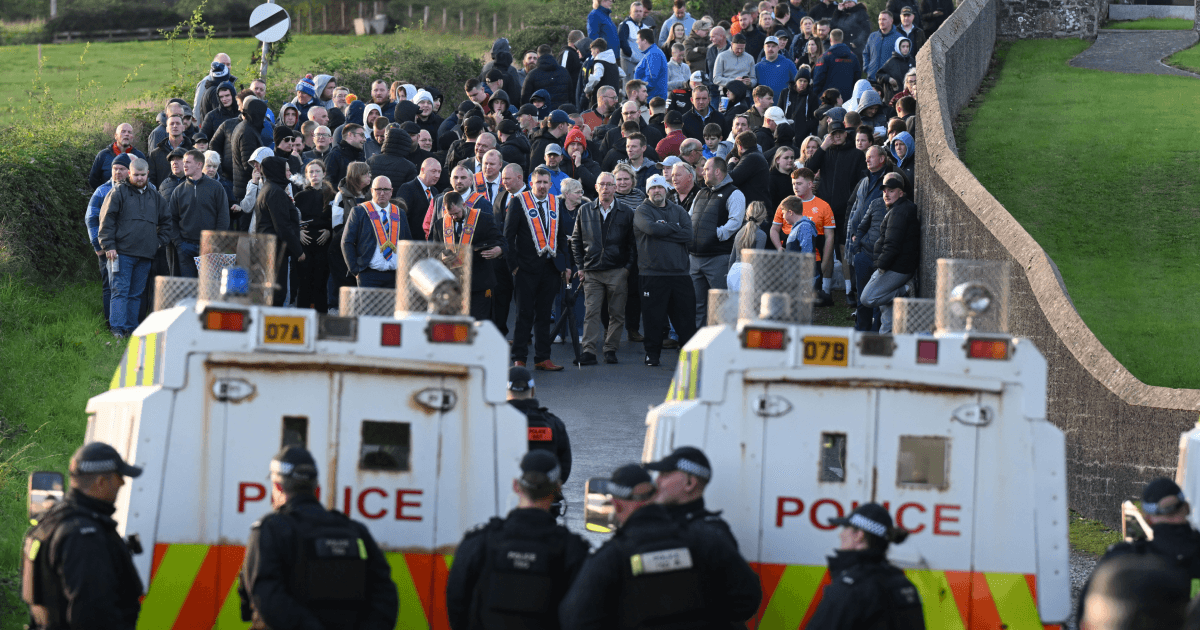
Church leaders urge Drumcree dialogue: ‘Too much is at stake’
The Catholic and Church of Ireland Archbishops of Armagh have urged a renewed commitment to peace and reconciliation amid the Drumcree stand-off
Corrie Douglas-Young Newsroom
Thousands of Irish children to join global Rosary campaign
Corrie Douglas-Young Newsroom
TikTok priest urges young people to stand with persecuted Christians
Nathalie Raffray Newsroom
Baby born at 25 weeks reunites with neonatologist two years after leaving hospital
The Catholic Herald Newsroom
Joe Biden honoured by Planned Parenthood after defending abortion rights
Christine Rousselle
subscribe to the catholic herald today
Our best content is exclusively available to our subscribers. Subscribe today and gain instant access to expert analysis, in-depth articles, and thought-provoking insights—anytime, anywhere. Don’t miss out on the conversations that matter most.
Subscribe



