
June 11, 2026

Where Catholics talk books

Robin Aitken
More
Related
Min read
share

Is there any pleasure more life-sustaining than losing yourself in a good book? I know of none. But there is an ancillary pleasure, nearly equal to it, which is to share one’s thoughts about a book with others; to compare notes and critiques, to argue a point and perhaps to learn from someone else’s insights. That is the essential purpose behind every book group and it is the one that lay behind the formation of a reading group at the Oxford Oratory. I would wager that few churches in the English-speaking world could be a more appropriate home for a group of Catholics who love books – and love talking about them.

As parishes go, the Oxford Oratory Church of St Aloysius Gonzaga has an impressive wealth of literary connections. It was here that the great Victorian poet Gerard Manley Hopkins SJ served as a curate in the 1870s; it was here that JRR Tolkien worshipped on a near-daily basis (it is said Tolkien so disliked the reforms introduced by the Council in the 1960s that in protest he continued to give all responses at Mass in Latin – which must have been disconcerting for his fellow parishioners); it was here that St John Henry Newman preached sermons in what was then the first Catholic church built in Oxford after the Emancipation Act of 1829; and it was here too that Oscar Wilde first acquired a taste for Catholicism when he attended the church’s ticket-only opening in 1875. So we current parishioners tread in hallowed literary footsteps.

The idea for a book group came from a conversation I had with one of the Oratory priests, Fr Joseph Welch, himself a keen reader. It was my contention that it is not always easy for Catholics to find a communal space in which they can talk freely, and without embarrassment, about matters of faith. That has certainly been my own experience; though I have many friends, few of them are Catholic, which is often a constraint when a point of doctrine or teaching is under discussion. We agreed to try a reading group and have been going strong ever since.

The initial response was enthusiastic – some of the early meetings had 20 or more attendees – but as time went by numbers settled down; we now get somewhere between 12 and 15, a manageable number which makes for stimulating evenings. This being Oxford, we have a professor or two as regulars, a Newman expert and others who come from a range of professional backgrounds in the law, architecture and science. And sometimes we can invite authors along to speak to us: there’s an old Oxford joke which says that if you’re stuck for conversation at a drinks party you can always fall back on “How’s the book going...?” It rarely fails – writers are thick on the ground here.

We’ve largely avoided controversy in our eight years; only one instance springs to mind, which was the suggestion that we should read The Testament of Mary by Colm Tóibín, a bitter critic of the Church. Some of the members felt it would give scandal if it became known that we were reading a novel that some consider blasphemous. My own view was that it is the proper role of novelists to exercise their artistic imaginations and that grown-up Catholics should not be afraid to engage even with writing that might give offence; how else should we know our enemies? But we dropped the book so as not to offend anyone.

One aspect of our book group that has helped make it a success is our method for choosing books to read. In many groups the choice of book is often decided by the person with the loudest voice and strongest opinions, but we thought a more democratic approach would serve us better. Everyone can nominate a title for the next tranche of books to read and then we vote according to our preferences. It means we often end up reading books we would not have chosen ourselves: an excellent way of going beyond one’s literary comfort zone.

For all the group this has been the most rewarding thing; it has opened up for us a world of books (not all, but mostly written by Catholics) which have enriched our understanding and widened our horizons. Since we started we have read a total of 78 books in all. Some of them good, some forgettable and some which go deep and have enriched our spiritual lives. I’ve selected a few of the notable books we’ve read and which might have passed you by. The list reflects, inevitably, my personal preferences, but I think they all offer something of real value to the discerning reader.

1) Going to Church in Medieval England by Nicholas Orme

Emeritus professor of history at Exeter University. A deep dive into the reality of the Church in pre-Reformation England; what the upheaval changed – and what it did not. A book that teaches how “Shrive and Housel” were integral to English life at a time when the Church was at the very heart of daily existence.

2) Nest of Vipers by François Mauriac

Unfashionable and too often unremembered, Mauriac, who won the Nobel Prize for Literature, was one of the 20th century’s great Catholic writers. This novel, seen by many as his masterpiece, tells the story of Monsieur Louis, an embittered man estranged from his family through pride, avarice and hatred; it is the story of one man’s struggle for redemption and offers a gateway into Mauriac’s oeuvre, which is extensive and rewarding.

3) Introduction to Christianity by Joseph Ratzinger

Written in 1968, this is a profound reflection on what Catholics believe. Structured around a detailed investigation of each element of the Apostles’ Creed, the future Pope Emeritus Benedict XVI brought clarity and authority to this modern interpretation of the meaning of Christ’s message. A bracing and instructive book.

4) The Best Catholics in the World by Derek Scally

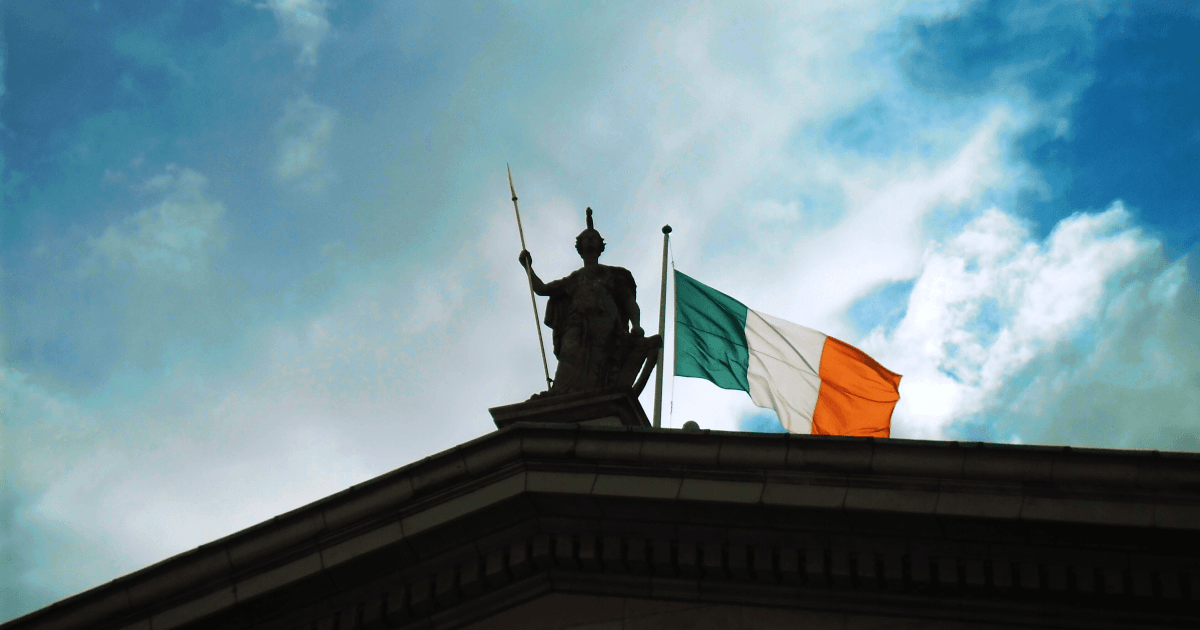
For anyone seeking to understand why the Church in Ireland has suffered such a calamitous decline, this is required reading. Scally, a journalist brought up in working-class Dublin, tells the story with clarity and concision, illustrated with episodes from his own personal story. Not a comfort read for any Catholic, Scally highlights the faults which undermined the Church’s standing – a necessary step towards rectifying them.

5) That They May Face the Rising Sun by John McGahern

Many of McGahern’s novels about Ireland, though masterly, are dark and somewhat joyless; this book is different. It is short and spare, with affectionately drawn characters who draw the reader into a simple story of a wanderer’s return. An uplifting novel which confirms McGahern as one of Ireland’s greatest novelists.

6) The Restless Republic by Anna Keay

This history of Britain’s short-lived experiment with republicanism brings into focus a formative episode in British history through vividly told stories of some of the major players of that period. In contemporary British popular culture the Tudors and the Second World War loom large; the Civil War and the Interregnum attract less attention. Keay’s book offers many new insights and surprising details – a very worthwhile book for anyone who wants to understand Britain’s history.

7) The Bridge of San Luis Rey by Thornton Wilder

In 18th-century Peru a bridge collapses, throwing a party of travellers to their deaths in the chasm below. The event is witnessed by a monk. There, in outline, is the basis of this famous novel. Not just a gripping story, it is also a profound reflection on the human condition.

8) God’s Secret Agents by Alice Hogge

This is a gripping account of the tragic, but uplifting, story of the priests who were infiltrated into England during the years of persecution under Elizabeth I to keep the Faith alive. Many of these men gave their lives for their ministry; Hogge’s book is a reminder that while contemporary Catholics face many challenges, the Church has weathered worse in previous centuries.

9) The Man on the Donkey by H F M Prescott

A wonderful novel which tells the story of the Pilgrimage of Grace – the doomed protest against the dissolution of the monasteries under Henry VIII. Though Hilda Prescott was not herself Catholic, this book is infused with a sympathy for the popular uprising against the larcenous Henry and his henchman Thomas Cromwell. A largely forgotten masterpiece of historical fiction and well worth seeking out.

Continue reading with a free account

Create a free account to read up to five articles each month
Create free account

You have # free articles remaining this month.

Subscribe to get unlimited access.
Sign up

subscribe to the catholic herald today

Our best content is exclusively available to our subscribers. Subscribe today and gain instant access to expert analysis, in-depth articles, and thought-provoking insights—anytime, anywhere. Don’t miss out on the conversations that matter most.
Subscribe