




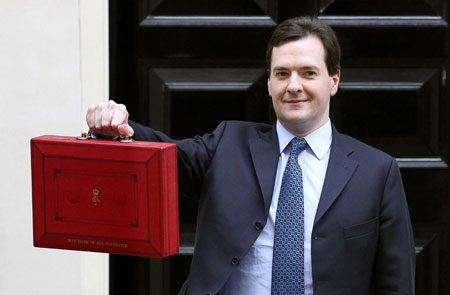
Here’s a question: would you rather rich people’s taxes went to Macmillan Cancer Support, Save the Chidren, Help the Aged, university bursaries for poor students, free entry to our museums and hospice care for the terminally ill (all of which would be threatened without the help of the wealthy) on the one hand, or to paying for the Government to carry on with its plans for funding Trident (a wholly unnecessary defence system if ever there was one), a non-functioning NHS computer system and any one of a whole series of wasteful and unnecessary governmental big ideas (fill in your own details) on the other? In other words, who consistently spends money more beneficially, responsibly and carefully: the Government or the major charities? Of course it is, to some extent at least, an unfair question. There are things that Government does, and has to do, which cost money and which won’t get done if the Government doesn’t do them. So there has to be tax revenue. Nobody is going to start a charity to maintain the road system. But there is also massive, unnecessary and grossly expensive incompetence by governments. And when the Treasury tells me that for a rich man to pay no tax at all is “unfair” to me with my pitiful income, even when every penny of the tax some millionaire is legally avoiding goes not to maintaining an extravagant lifestyle but to charities which have had their funding cut by Government, what the Government is in fact patronisingly telling me is that it is fairer to me to spend that money on my behalf on what the government decides to spend it on rather than allowing the charities to spend it, and that I ought to support that intention and be pleased with the Government’s superior fairness in this respect. Well, ******** (fill this in with your own expletive of choice). It is quite clear that the charities will suffer, and massively. It’s not in fact true to say that (as I had supposed) overwhelmingly the greater part of the income of the charities comes from relatively small charitable gifts. In fact, nearly half the giving to charities comes from seven per cent of all donors. The Treasury is trying to argue that putting a cap on giving, of either £50,000 or 25 per cent of an individual’s income, whichever is greater, won’t really affect how much he gives to charity: he’ll just raise his non-tax-relieved giving to make up the difference. But that’s almost certainly not what would happen. Take the case of someone earning £1 million a year. Approximately half of that will go in taxes and he will be left with £500,000. But if he decides that half his total of £1million should go to charity, the charity or charities would get £400,000, with £100,000 returned by HMRC. The Government, having begun by taking £350,000, would keep about £250,000. The high earner is left with £250,000 to live on, or approximately half what he would otherwise have kept. Under the Government’s new proposals, if he still wanted to give the same sum to charity, he would be left with a maximum of £150,000. He’s almost certainly not going to do that. Some much wealthier individuals would simply adjust their donations. But some will probably stop giving altogether. That analysis isn’t mine, in fact, though it seems plausible enough; it’s based on an argument made over the weekend by the famously wealthy Zac Goldsmith MP, who wrote in the Mail on Sunday yesterday, under the headline “I am ashamed of my own Chancellor's tax on giving”, that
1:24 PM
Who would you rather the tax-avoiding rich gave their money to: charities or the Treasury? Give it up, George: this is one battle you can’t (and shouldn’t) win
Everyone knows that charities spend money carefully and beneficially: not so, necessarily, the government
William Oddie

7 min read



Already a subscriber? Sign in
5freearticles every month
Continue reading with a free account. No card needed.
- Five free articles every thirty days, on any device you sign in on
- The Catholic Herald newsletter, every morning
- Subscribe whenever you like for everything: every article and the magazine
Related articles
 Newsroom
Church leaders urge Drumcree dialogue: ‘Too much is at stake’
The Catholic and Church of Ireland Archbishops of Armagh have urged a renewed commitment to peace and reconciliation amid the Drumcree stand-off
Corrie Douglas-Young Newsroom
Thousands of Irish children to join global Rosary campaign
Corrie Douglas-Young Newsroom
TikTok priest urges young people to stand with persecuted Christians
Nathalie Raffray Newsroom
Baby born at 25 weeks reunites with neonatologist two years after leaving hospital
The Catholic Herald Newsroom
Joe Biden honoured by Planned Parenthood after defending abortion rights
Christine Rousselle
subscribe to the catholic herald today
Our best content is exclusively available to our subscribers. Subscribe today and gain instant access to expert analysis, in-depth articles, and thought-provoking insights—anytime, anywhere. Don’t miss out on the conversations that matter most.
Subscribe



